First Known Photos of an Argali Sheep Crossing a River

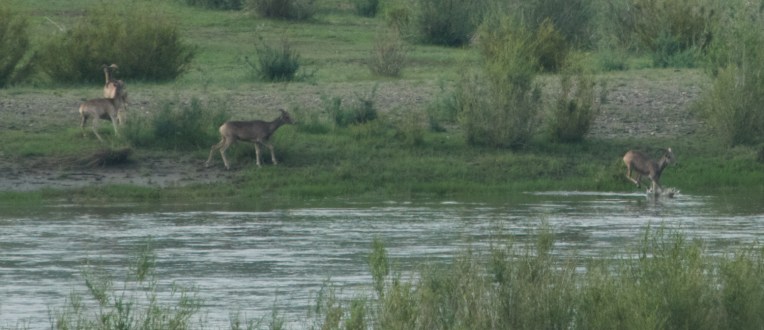
I have just received confirmation that I have taken the only known photographs of a Mongolian argali sheep crossing a river. This occurred at the Gun-Galuut Nature Reserve during my Flag Expedition on the very first morning of observations. In fact, he (Dr. Reading believes it was a yearling ram) was one of four of the first argali I saw on the trip.

Dr. Reading also noted in his reply to my query that “Well, I don’t think anyone ever doubted that argali cross these relatively shallow, relatively slow rivers (at least I never did).  All ungulates (and most mammals) swim pretty well and you need something a LOT more substantial that the Kherlen River to stop them.”

The main reason, I believe, that no one has gotten photographs is that the only place where argali have been studied in any depth is at the Ikh Nartiin Chuluu Nature Reserve, which has a few small streams, but no rivers. Research has begun at Gun-Galuut and, in fact, an Earthwatch team is scheduled to be there for part of their time in September, but the emphasis has been on capturing and putting radio collars on the argali, not behavioral observations.

The four sheep that I watched were on the opposite side of the river from their home range, Mt. Baits. Their behavior appeared anxious and finally one bolted back across the river. He climbed up on a high point and looked back. The young ram finally turned and ran back up onto the mountain. The other three argali seemed indecisive and ultimately did not cross, but moved up onto a smaller mountain where I finally lost sight of them.

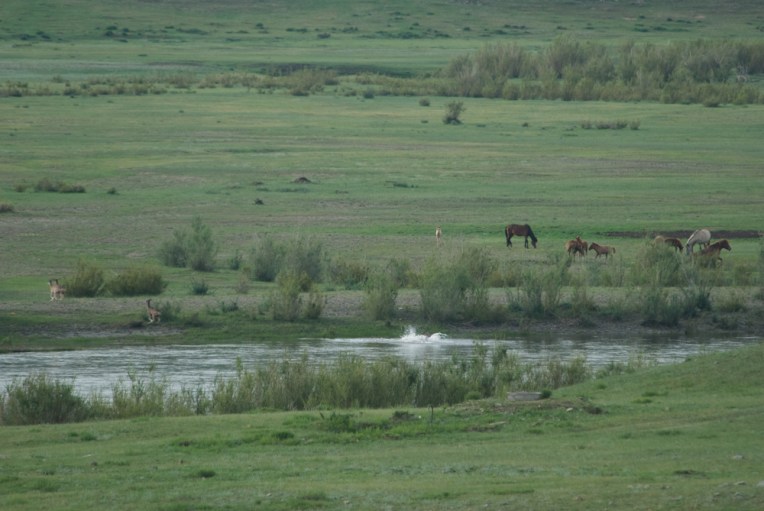
The group of argali down at the Kherlen River
Suddenly one jumped in
And made quite a splash
And then swam directly towards us
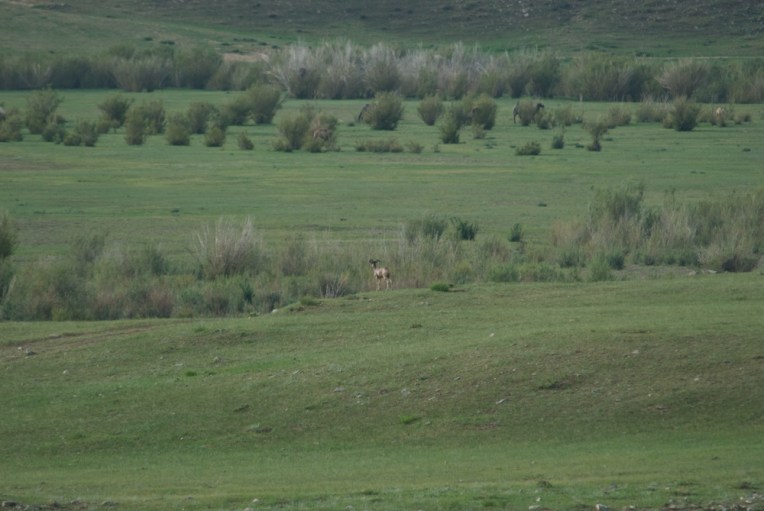
Where's everyone else?

Here are detail shots of the main three photos:

Detail: jumping in the river
Detail: the splash
Detail: the splash
Detail: swimming across the Kherlen River

Visit my official Artists for Conservation Flag Expedition page

Images from the Field; Gun-Galuut and Baga Gazriin Chuluu

My guide/driver, Khatnaa, picked me up at the hotel at 9am and off to the countryside we went. I’m just going to hit the highlights here due to time constraints. I’ll cover each location more in separate posts after I get home.

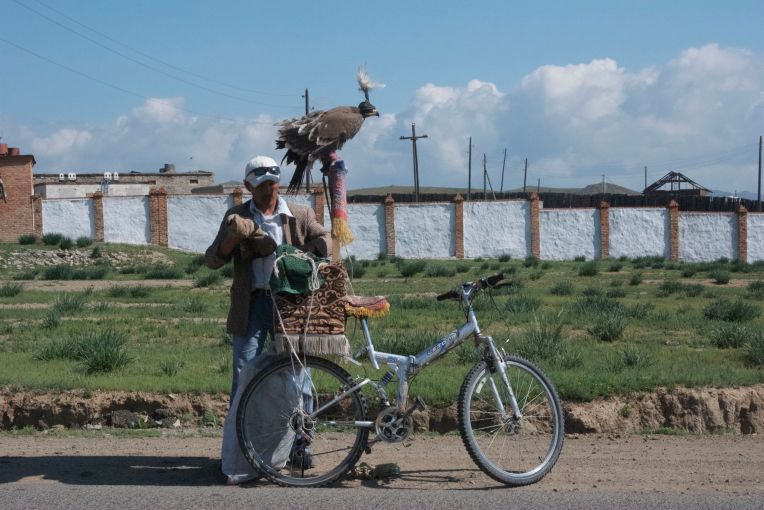
We were about 40 minutes out of UB when we came upon a Kazakh man on a bicycle with his two year old golden eagle perched on the top of stack of parcels. What a way to start the trip!

Kazakh
Kazakh Man and his eagle

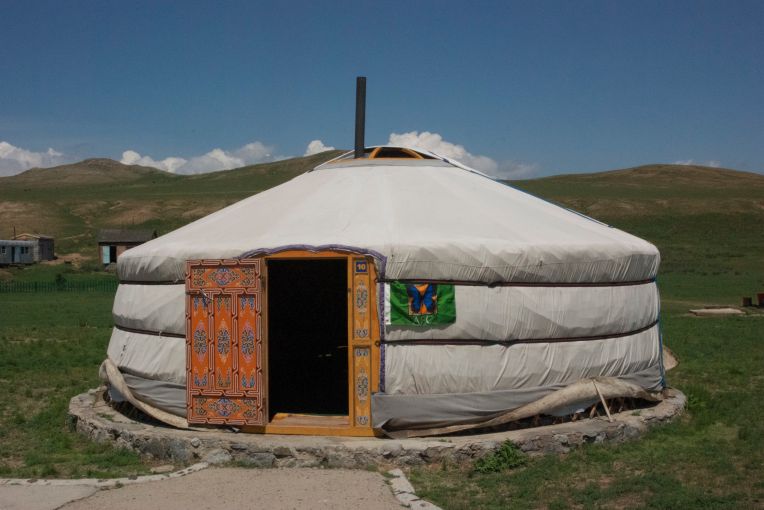
We arrived at the Gun-Galuut (pronounced “goon-galote”) after a pleasant two-hour drive. Lovely tourist ger camp overlooking the valley of the Kherlen River. Here’s my ger-

My ger at Gun-Galuut with AFC flag

We got settled in. I walked down to the river and sat by it for awhile, caught up on the Journal and got organized for the upcoming fieldwork.

View from my ger
View from my ger

The next four days took on a basic pattern of getting up at 6am, out the door by 6:30, game drive until about 9, back for breakfast, do what needed doing, back out after early dinner by 6:30, drive until light gone between 8:30 and 9. Fall over. Repeat.

The first morning, while Khatnaa was scanning the hills, I took a look along the river and, halfway through the first sweep from left to right spotted four young argali rams on the other side of the river. We were off to a good start. Here’s a selection of other images. I’m saving all the best stuff for the paintings, but these will give you an idea of what I saw.

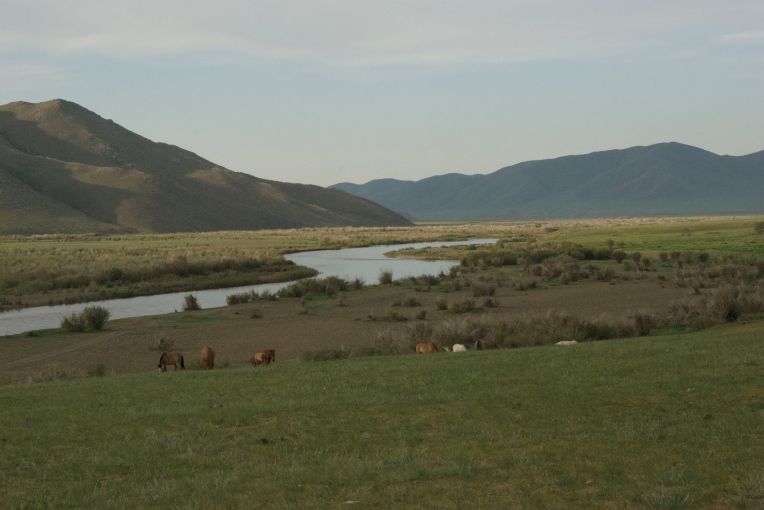
Kherlen Gul valley
Kherlen Gul valley
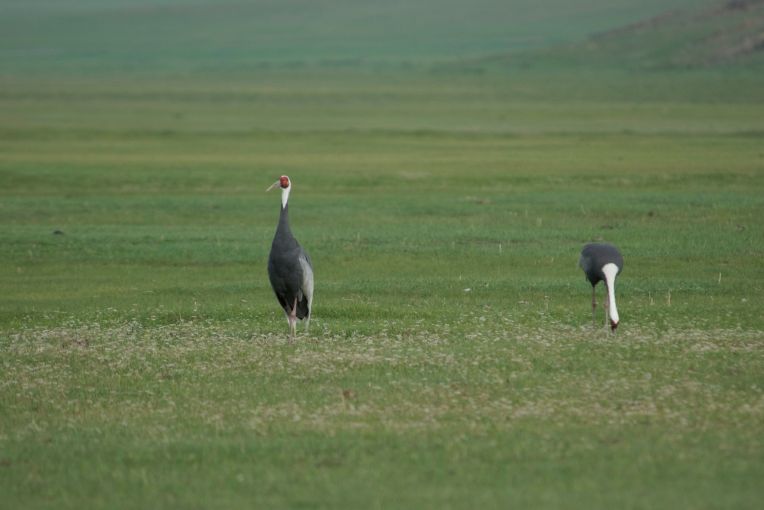
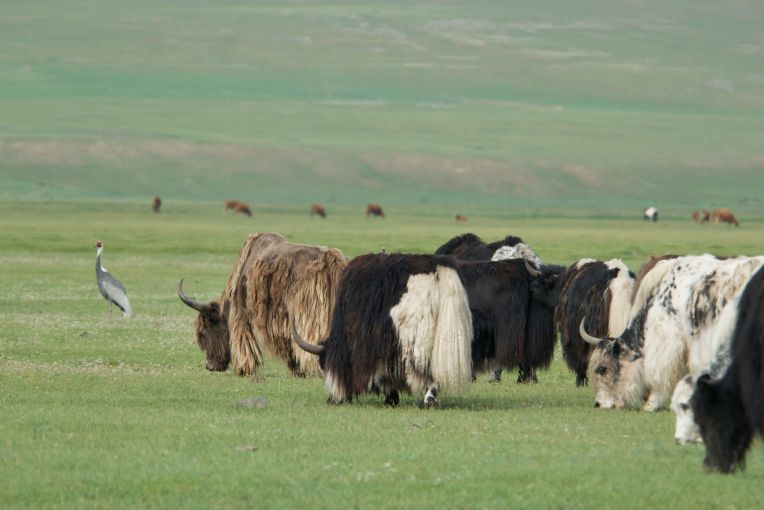
Endangered Siberian white-napped cranes; one of three pair in the reserve
Endangered white-napped cranes; one of three pair in the reserve
Siberian white-napped crane and domestic yaks White-napped crane and domestic yaks
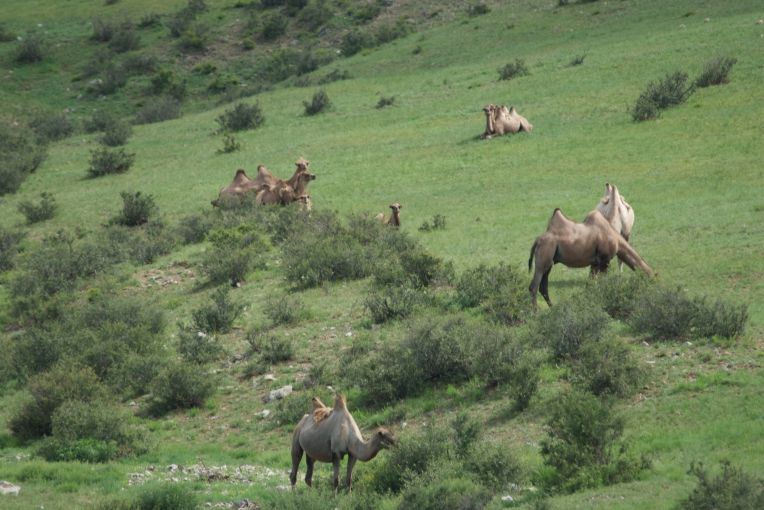
Domestic bactrian camels
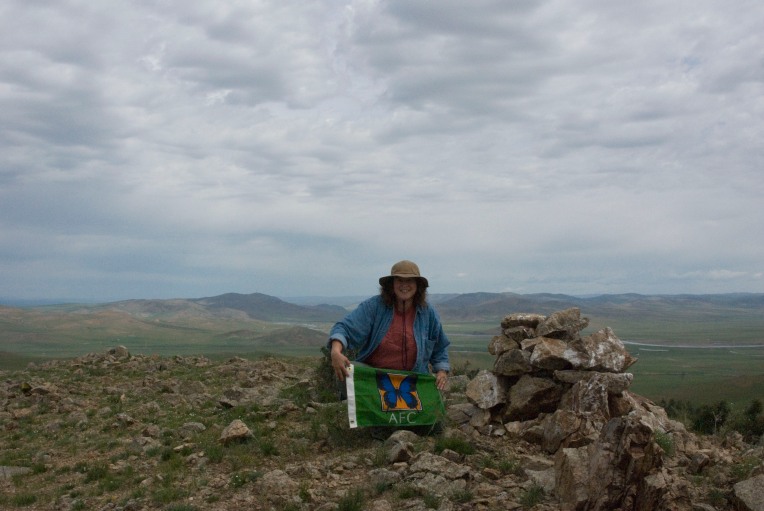
Posing with the flag
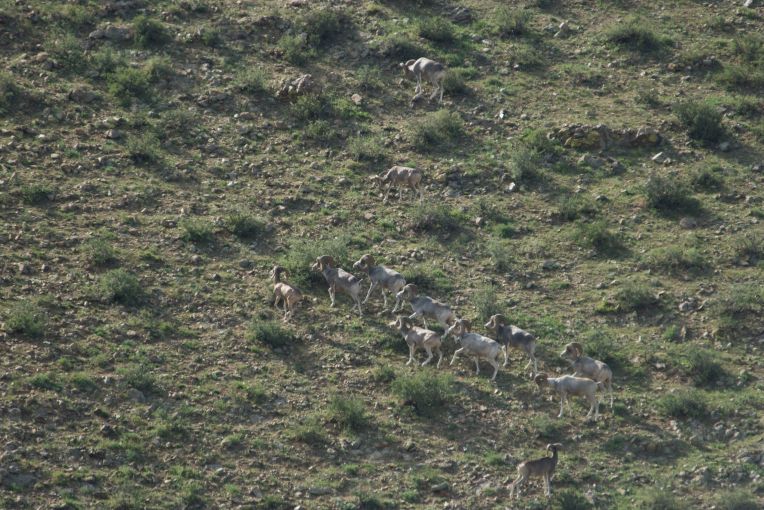
Argali
Argali; the big group of 14 we saw

After four fabulous days at Gun-Galuut, we drove back through UB, where I picked up a copy of a bird guide and we ran a couple of other errands. Then it was south to Baga Gazriin Chuluu,  with a one night stay at Arburd Sands. It was windy and there were dark clouds around. We stopped for lunch and could hear thunder in the distance. Then it got interesting.

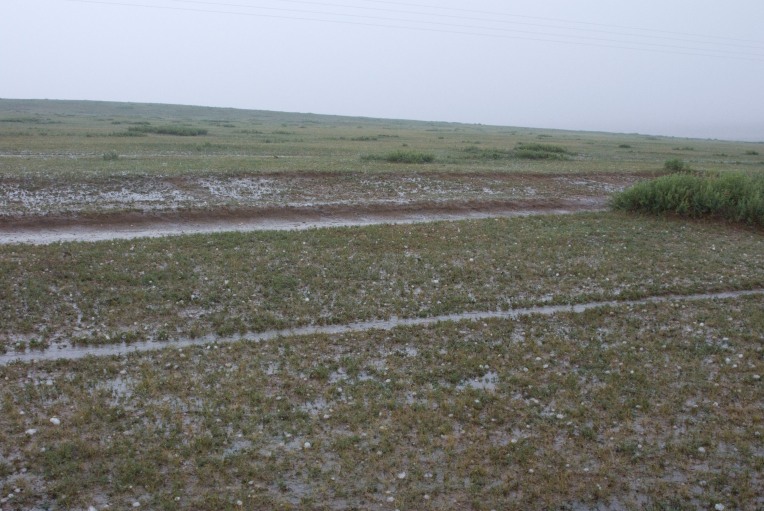
Hail; looking out car window

We found ourselves out in the open on the steppe in a violent rain and then hail storm. It was so bad that Khatnaa turned the car so that the back was to the wind to protect the windshield. The sound of the hail hitting the top of the car was really loud and left dents. All we could do was sit tight and wait it out.

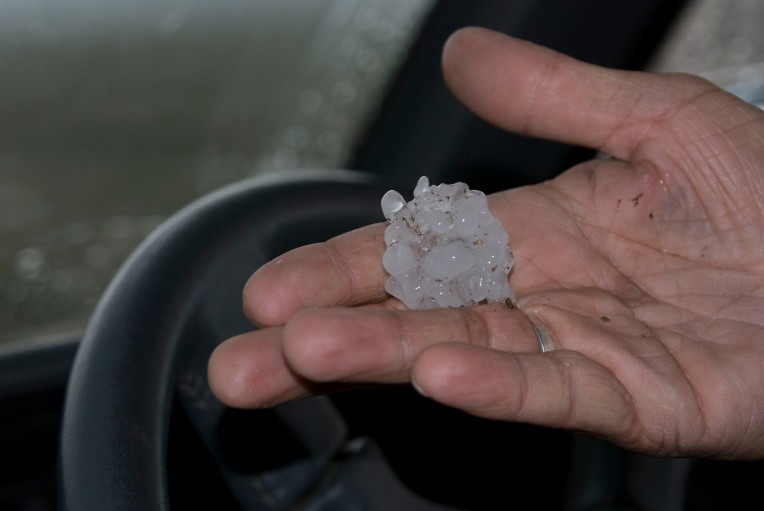
Hailstone Hatnaa picke up off the ground
Hailstone that Khatnaa picked up off the ground
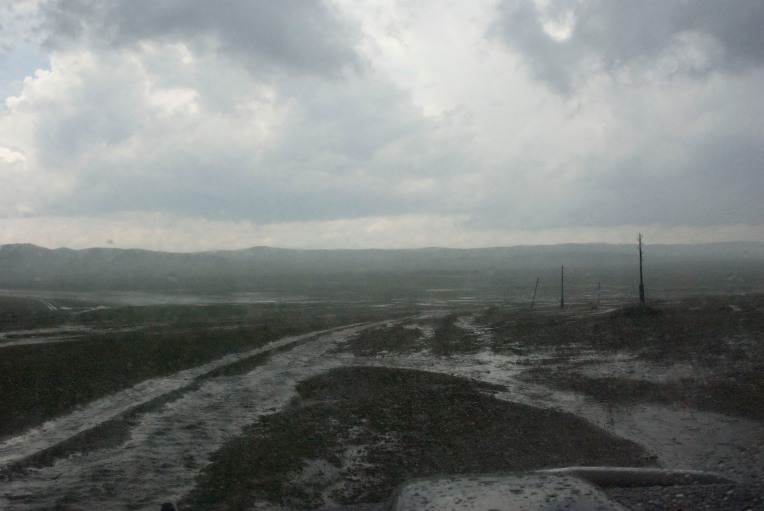
Road after hailstorm; the direction we were heading

All the dirt track, or as Khatnaa called them, earth roads had become rushing rivers of water. Amazingly, he was able to pick our way across this safely and without getting stuck in his Mitsubishi Pajaro diesel SUV.

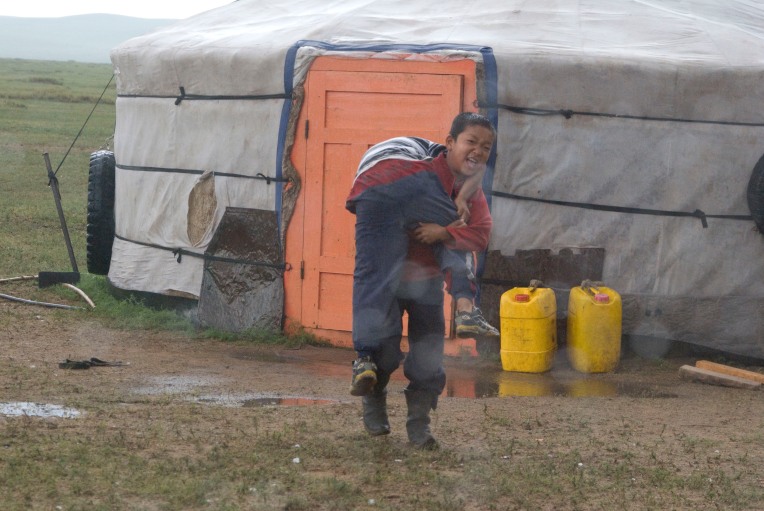
Kids wrestling in the rain

Finally, the hail stopped and we were able to go on. Khatnaa had only been to Arburd Sands once a number of years ago and when he became unsure of the route, he stopped a couple of times and asked for directions. These kids put on a wrestling demo for me while I waited in the car. They were really showing off their moves.

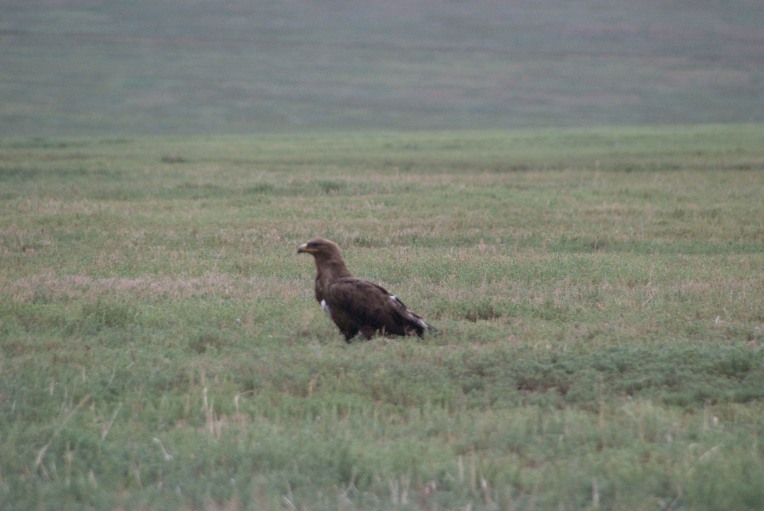
Young golden eagle by side of road

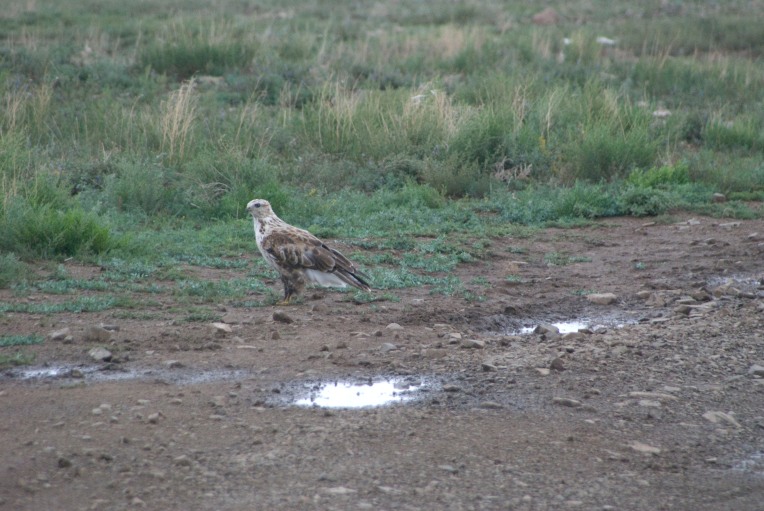
We started to see raptors by the side of the road once we got out past the storm front.

Upland buzzard
Upland buzzard

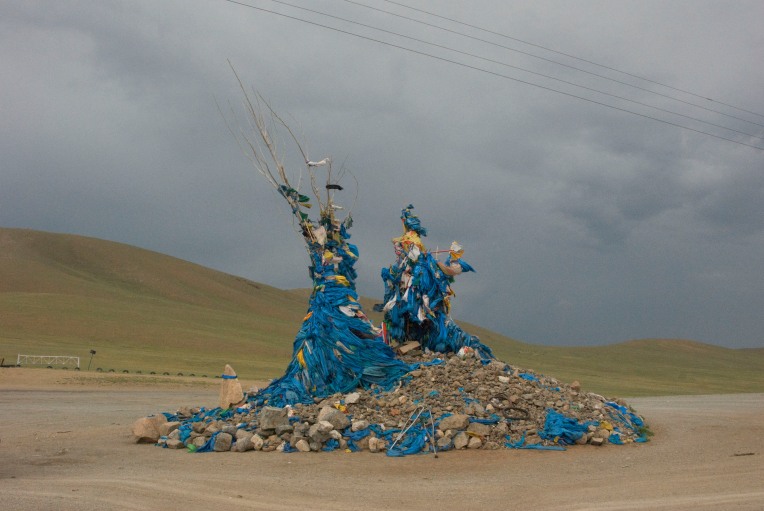
We also passed a number of ovoo. If it was a major one, we stopped, got out and circled it, adding a stone or small tugrik bills. Khatnaa honked at smaller ones as we went by them. More on ovoos in a future post.

Large ovoo
Large ovoo

We arrived at Arburd Sands and found out that the storm we had sat through had hit UB, causing the worst flooding in many years. At least 21 people died. If we had not gotten out of UB when we did, we might not have made it out of town at all.

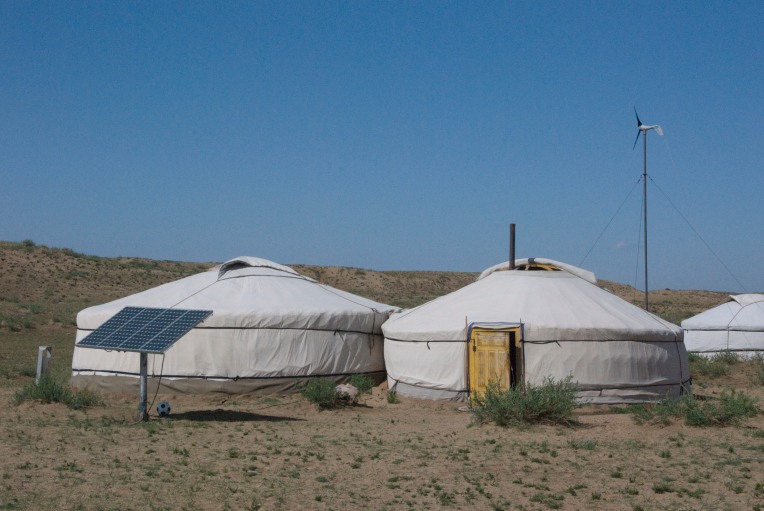
Arburd Sands ger camp is a seasonable sustainable operation which is planned so that it leaves as little a mark on the land as possible. They use solar and wind for power.

Sustainable energy at Arburd Sands

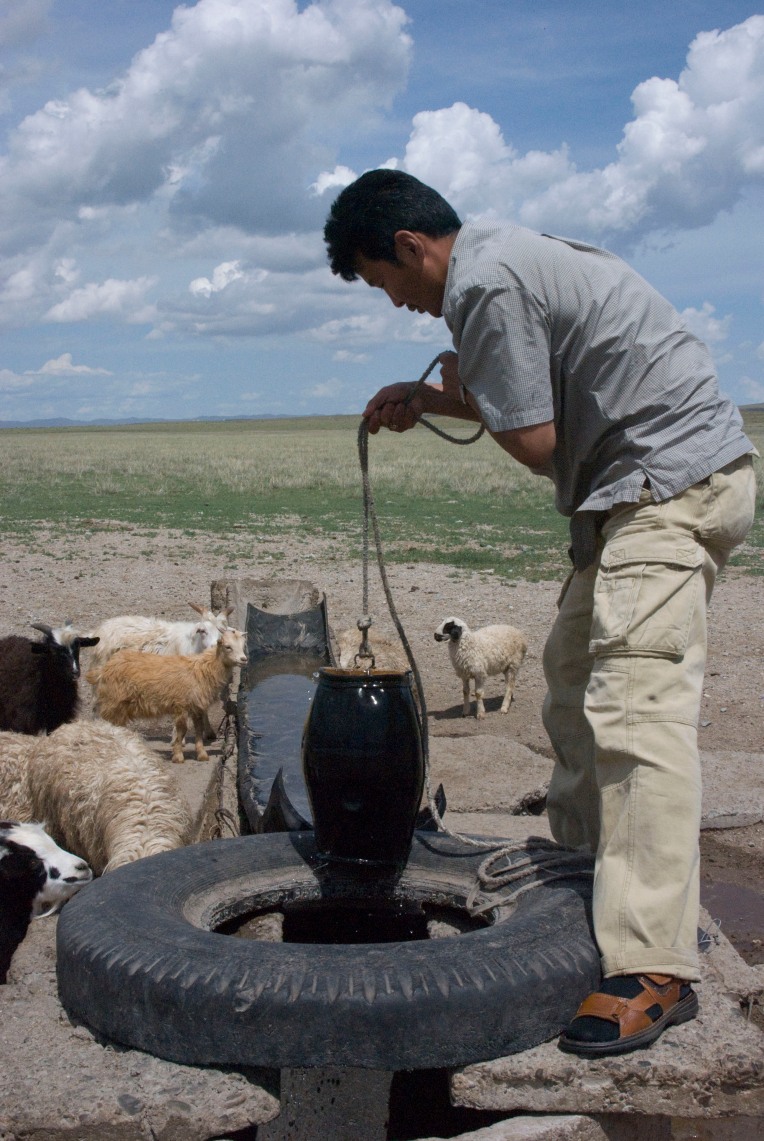
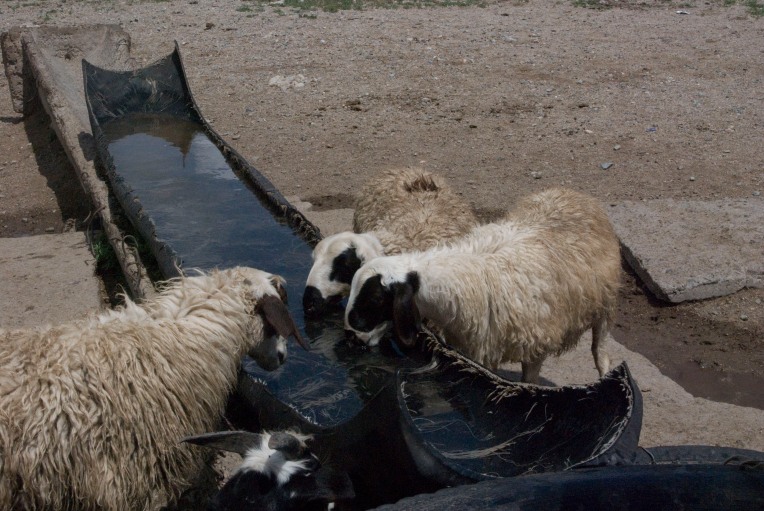
There was an amazing display of thunder and lightning that evening, stretching from east to west. But it only rained during the night. No hail. The next morning we continued on to Baga Gazriin Chuluu Nature Reserve. But, as I am coming to realize is routine when one travels in Mongolia, there were interesting things along the way. Like when Khatnaa stopped at this well and, following the ancient Mongol tradition, drew a couple of buckets of cool water for the animals.

Hatnaa pulls water from the well
Khatnaa pulls water from the well
Sheep drinking the cool well water

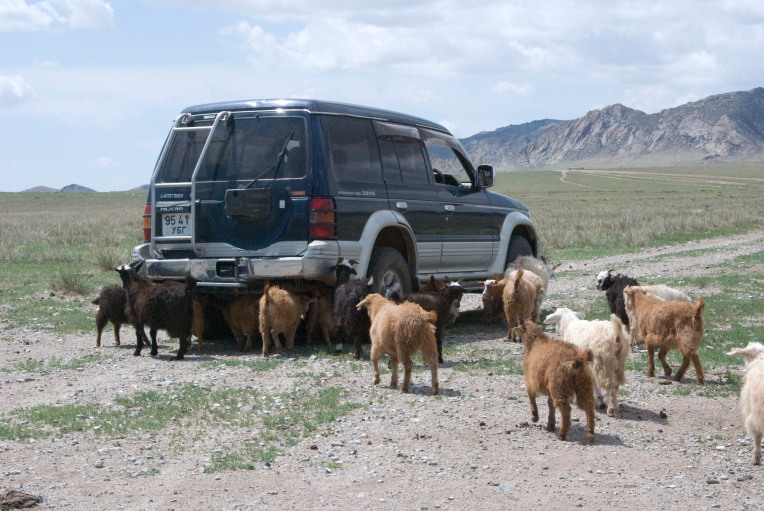
Meanwhile, the goats were seizing another, albeit temporary, opportunity to take advantage of the shade under the car.

Goats going for the shade

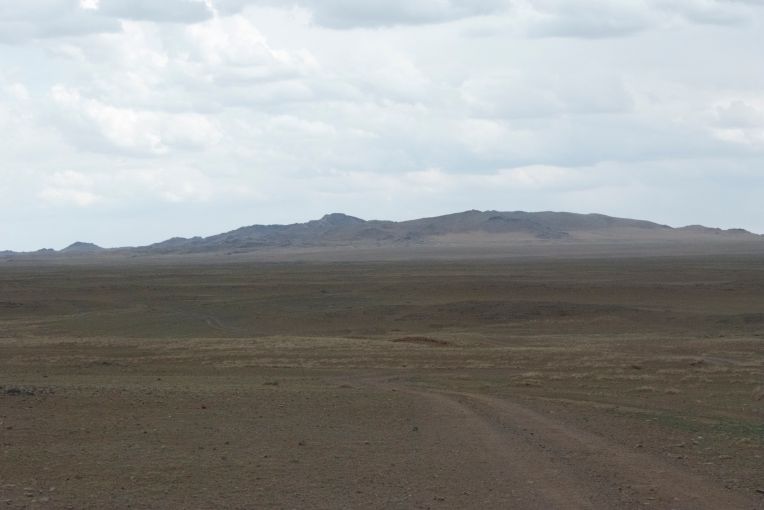
We traveled across the rolling steppe, passing an enormous and impressive mountain, a small lake and many country people and their flocks of animals. Finally, in the distance, we could see our destination, Baga Gazriin Chuluu.

Baga Gazriin Chuluu rises out of the steppe

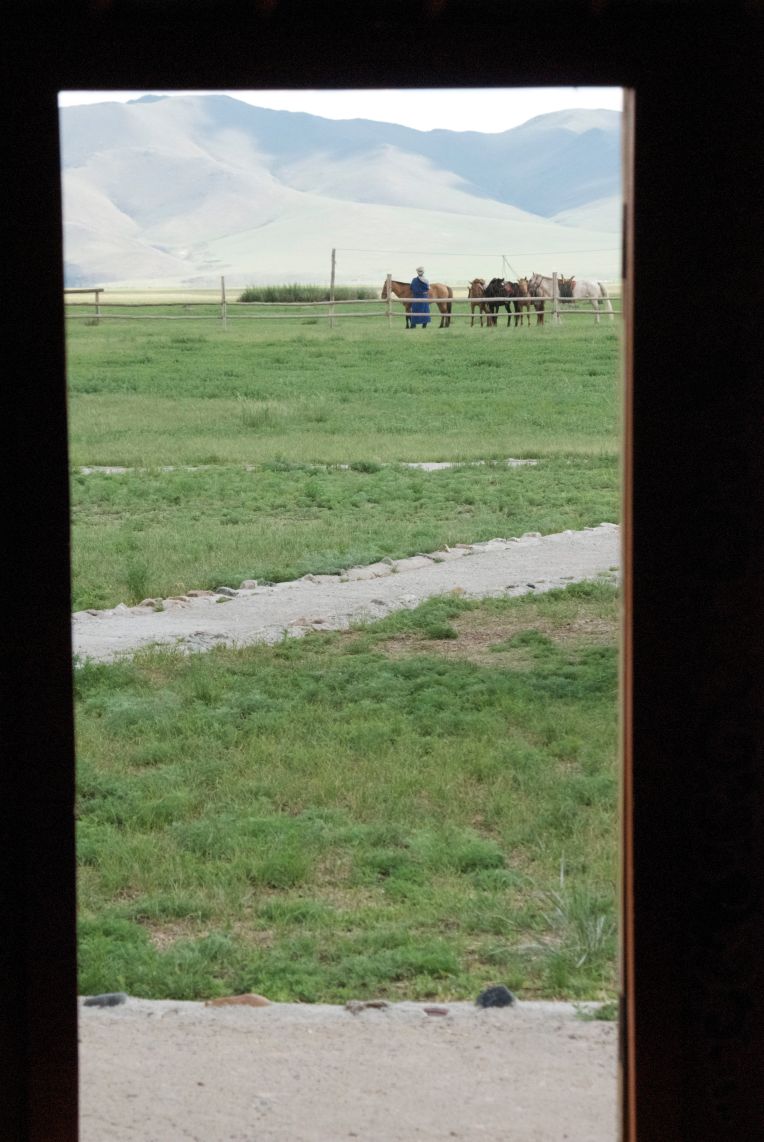
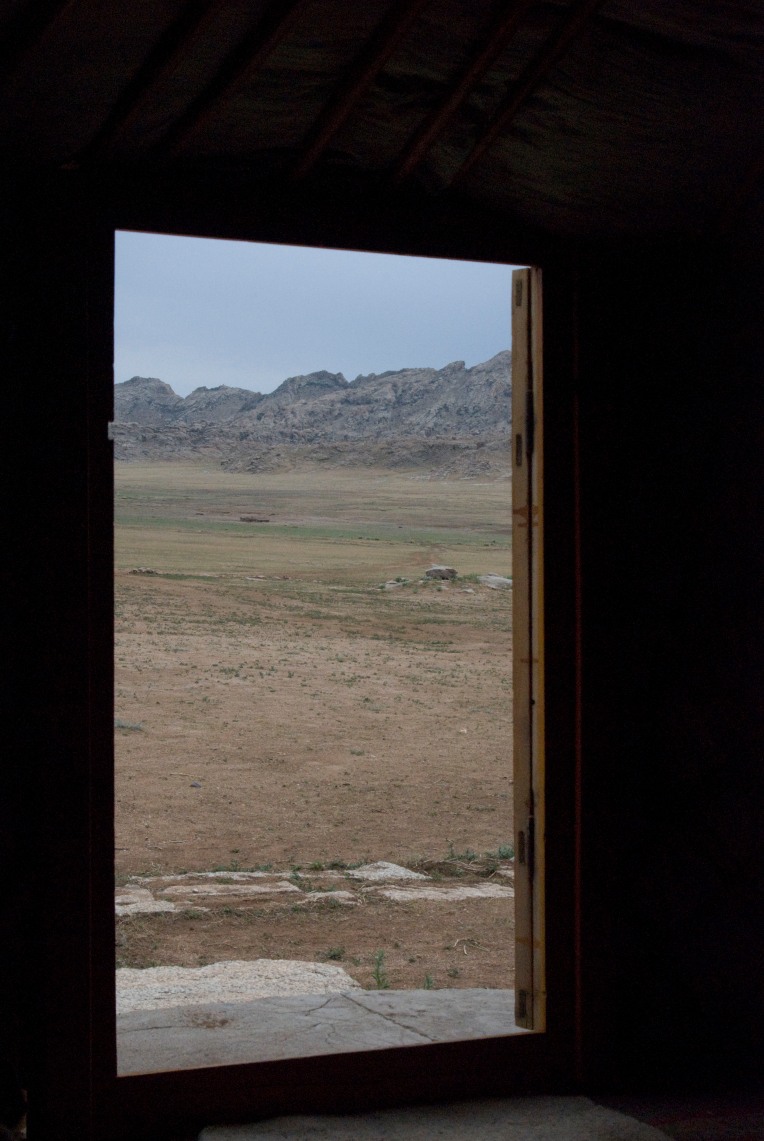
We arrived at the ger camp and went through the usual routine of settling in. Here’s my view through the door of my small, but comfortable ger.

View throught the door of my ger
View through the door of my ger

Khatnaa, as the guides usually do, started to chat up the camp staff. He found that one man, Onroo, had lived full-time at the reserve for three years and had a pretty good idea of where the animals were to be found. He went with us both mornings and proved to be indispensable.

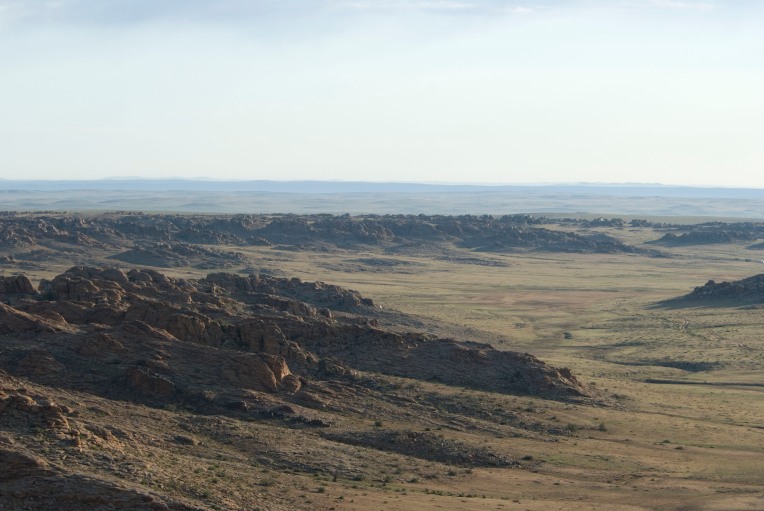
The setting
The setting

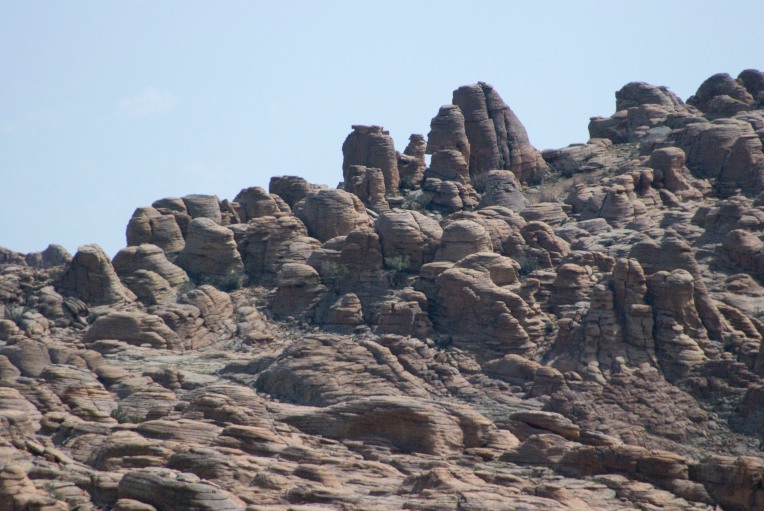
Some of the fantastic rock formations.

Rock formations
Rock formations
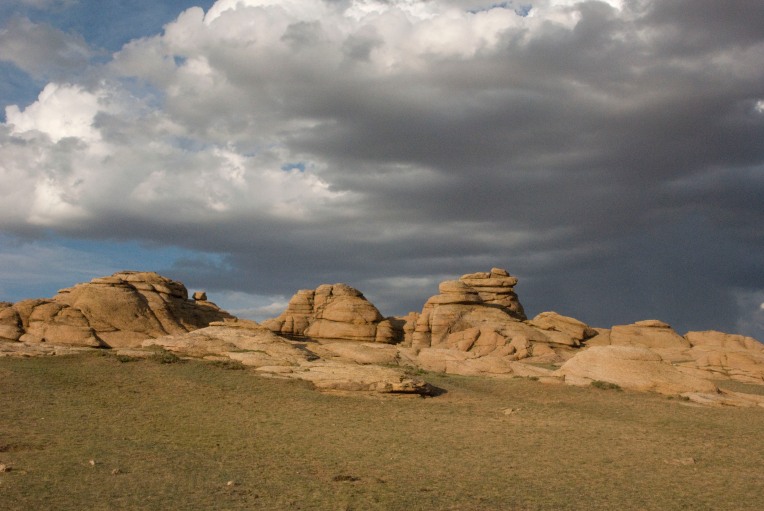
Rocks, late afternoon

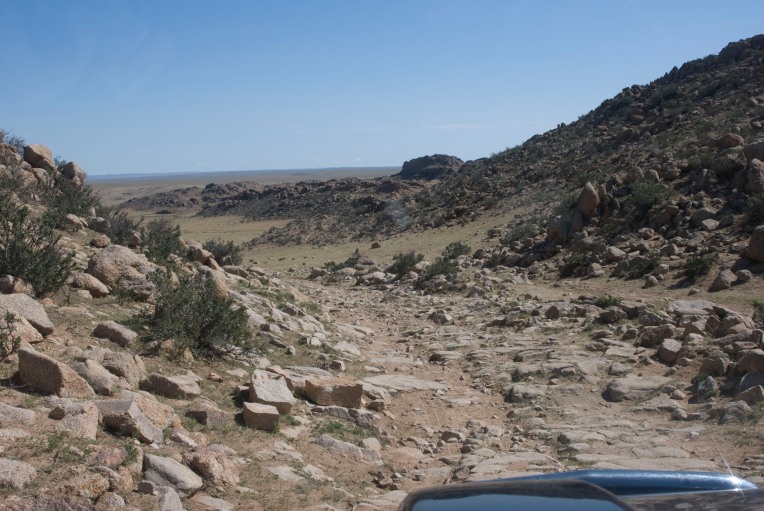
Sometimes the going got interesting as we worked our way around the reserve.

Rocky road
Rocky road

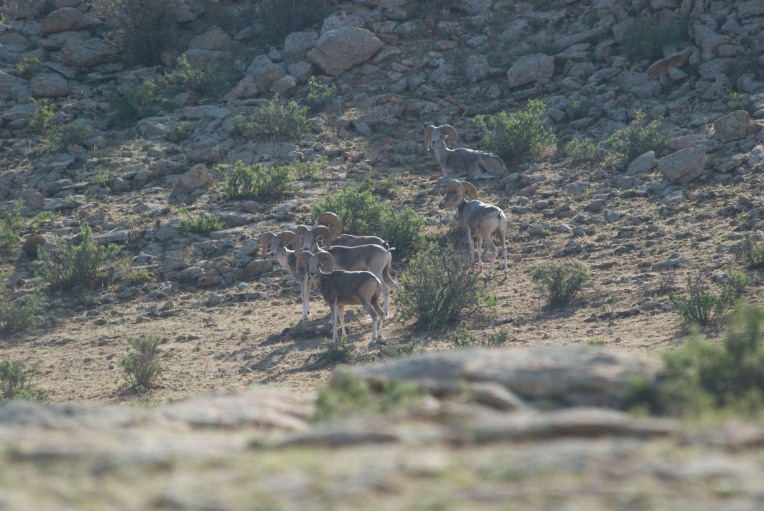
The main species of interest here are argali, ibex and the cinereous vultures.

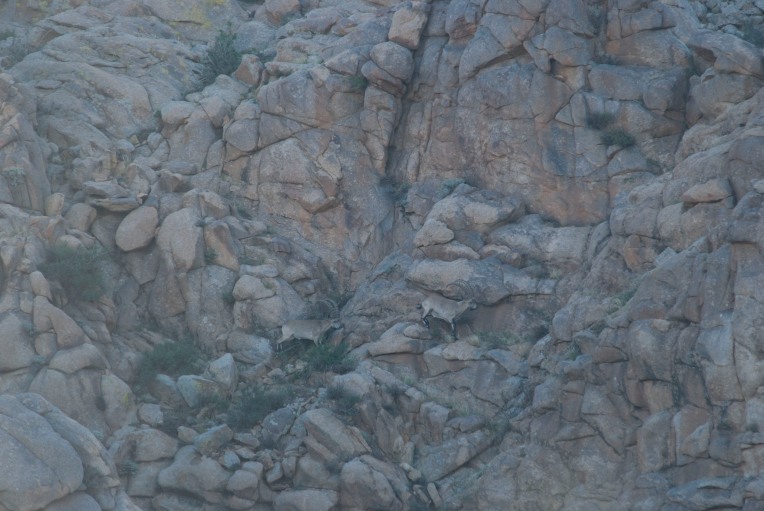
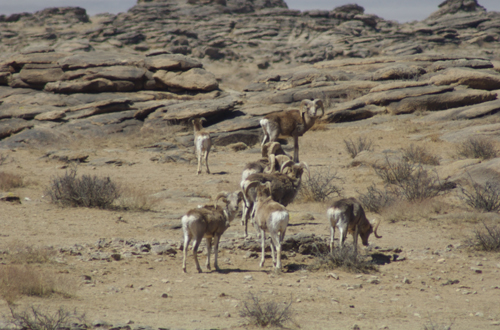
Six argali
Six argali

These animals were so tolerant of our presence that we were able to get out of the car and take pictures of each other with the sheep in the (somewhat distant, about 800 meters) background.

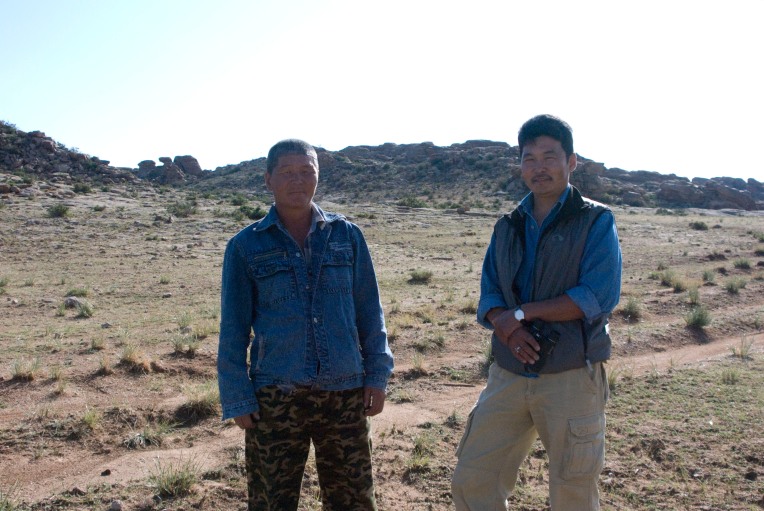
Onroo and Hatnaa in front of argali
Onroo and Khatnaa in front of argali
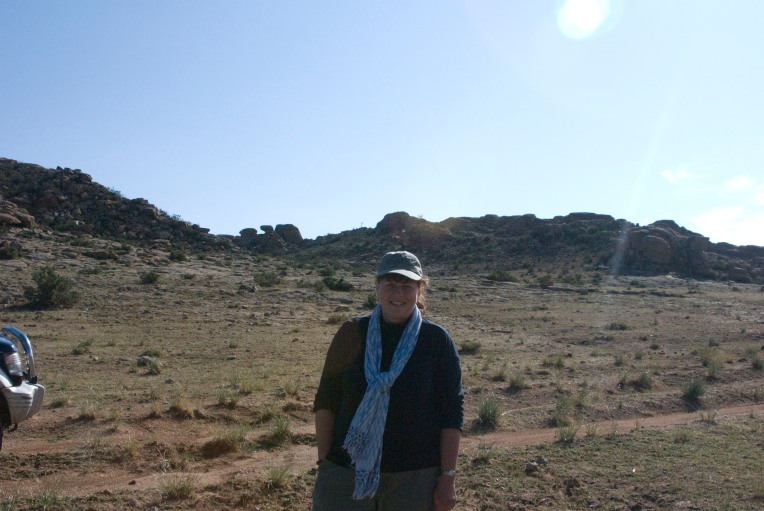
Me in front of argali

They’re at the base of the rocky hill to my right on a line with my cap.

Ibex; two large billies
Ibex; two large billies of a group of five
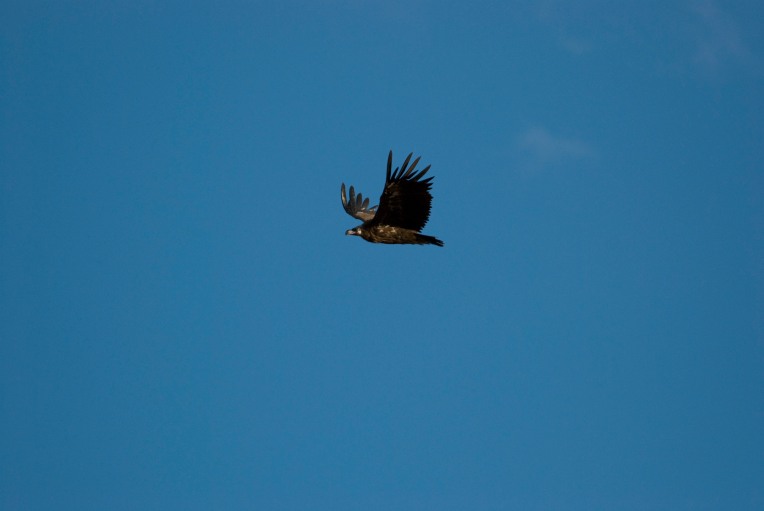
Cinereous vulture
Cinereous vulture
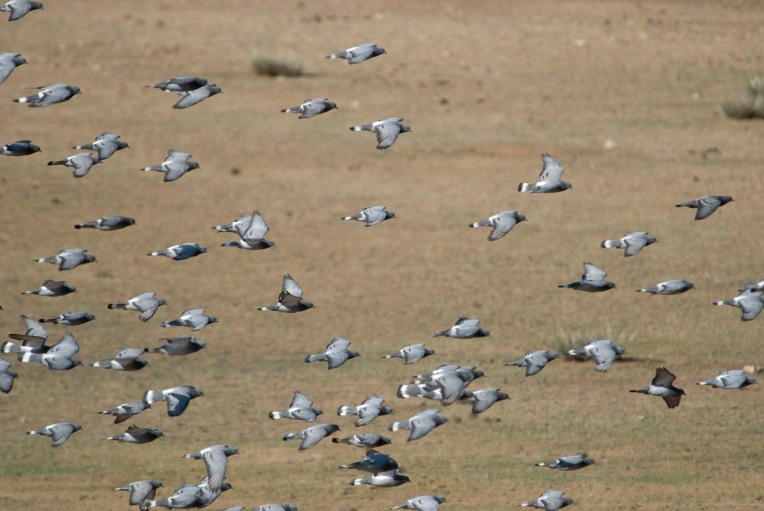
Rock doves  in home habitat
Hill pigeons (Columba rupestris); a relative of our "beloved"urban rock pigeon

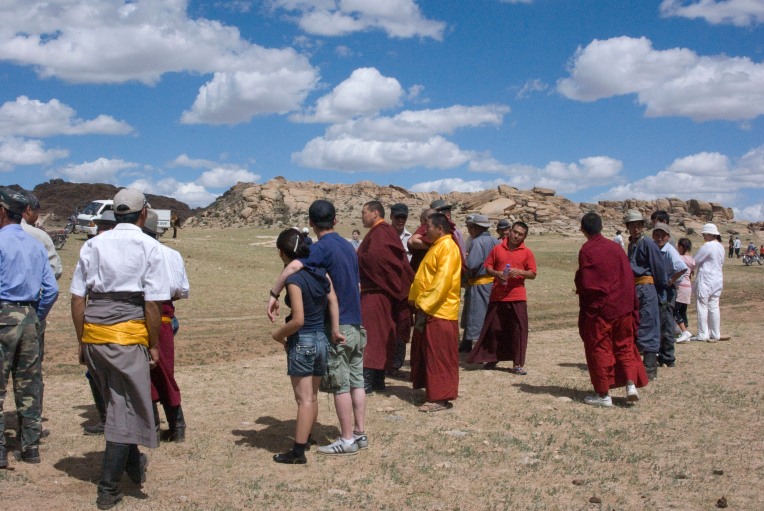
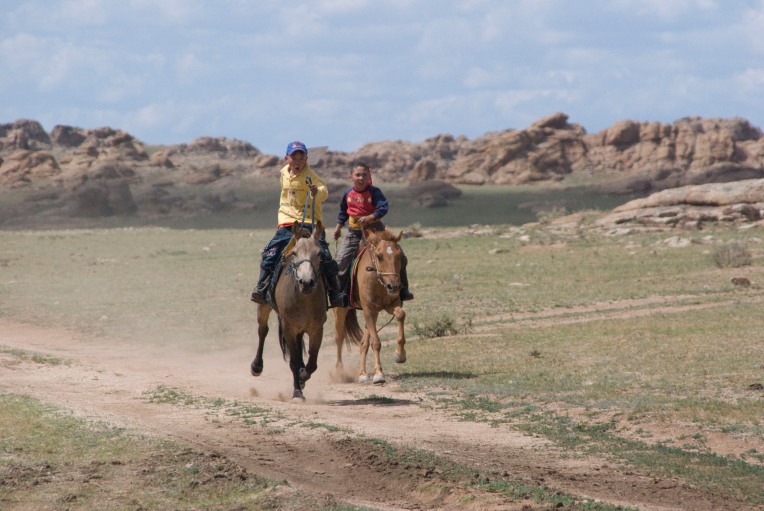
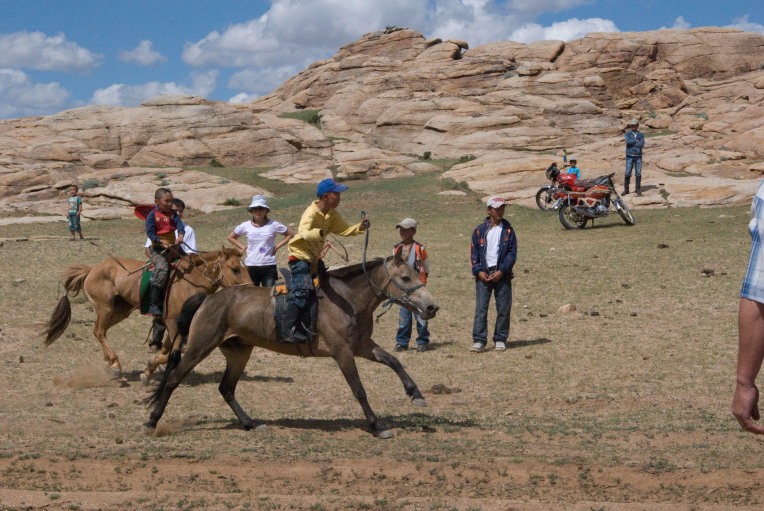
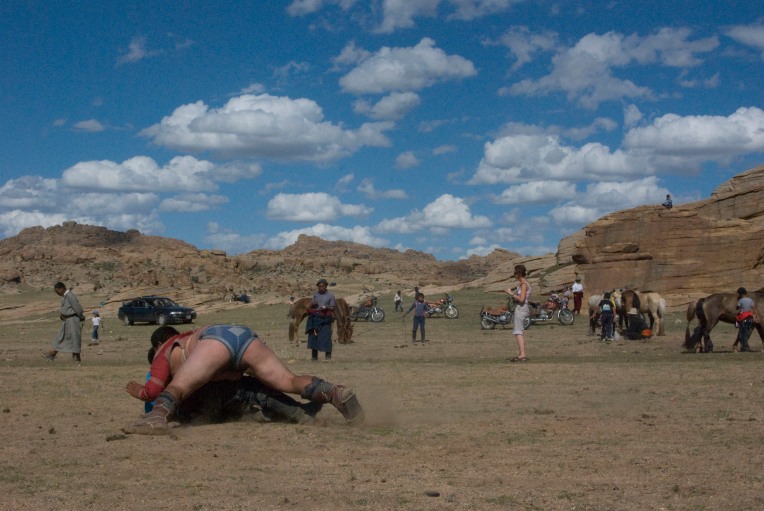
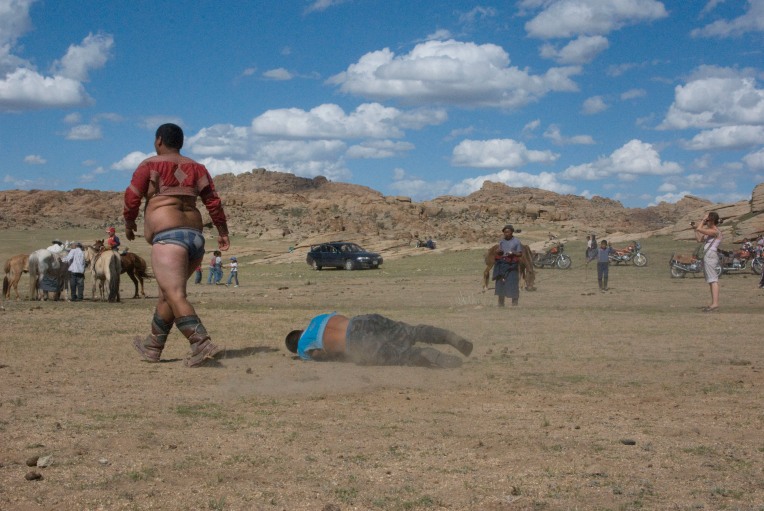
I ended up having a couple of wonderful cultural experiences also, which included a ger visit where I got to watch soup made with boortz, dried meat, and where we were served that and cream, aruul, yogurt and milk tea and also getting to attend a “mountain washing” ceremony that included chanting Buddhist monks, a horse race, wrestling and anklebone shooting.

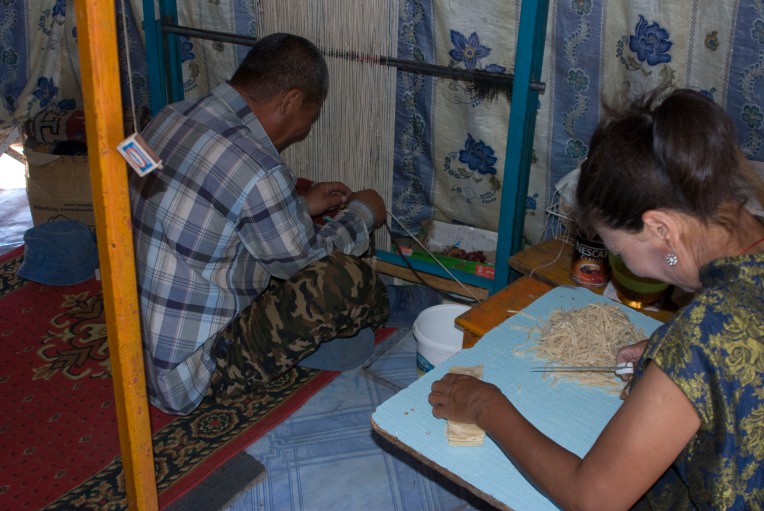
In Yanjmaa's ger
In Yanjmaa's ger; she's making noodles for soup and Onroo is doing some weaving on her loom
Horse race spectators
Horse race
Horse race
Horse race
Horse race
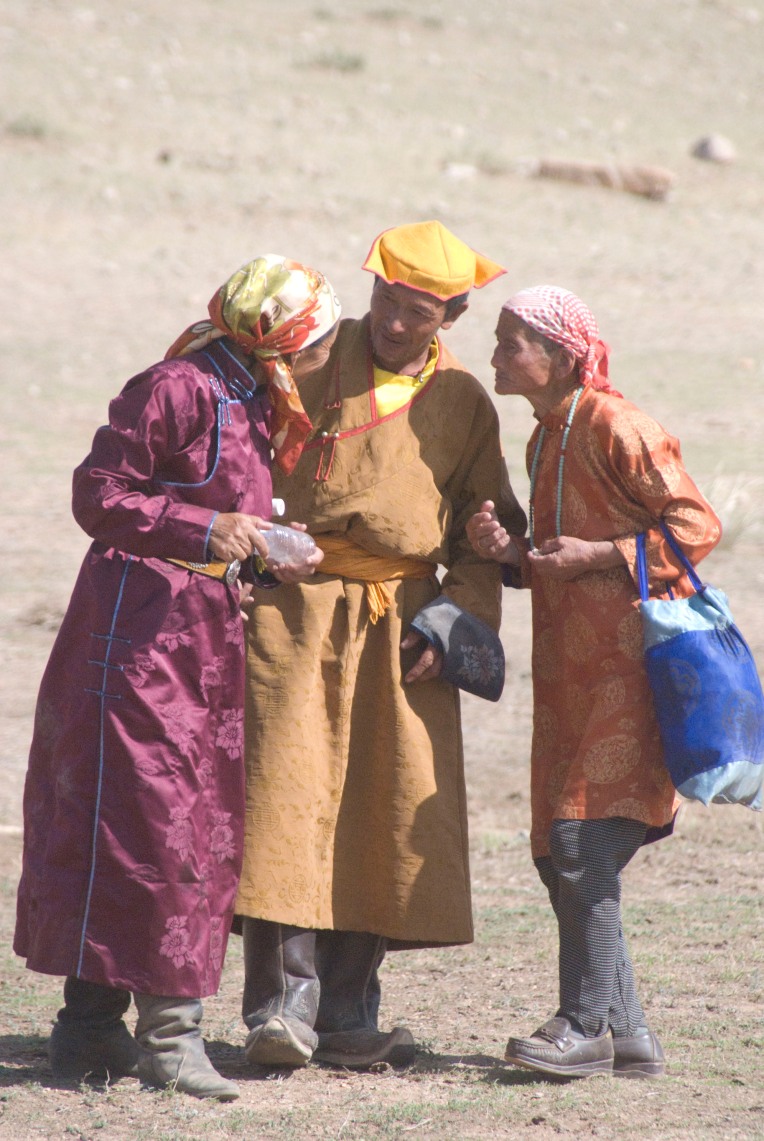
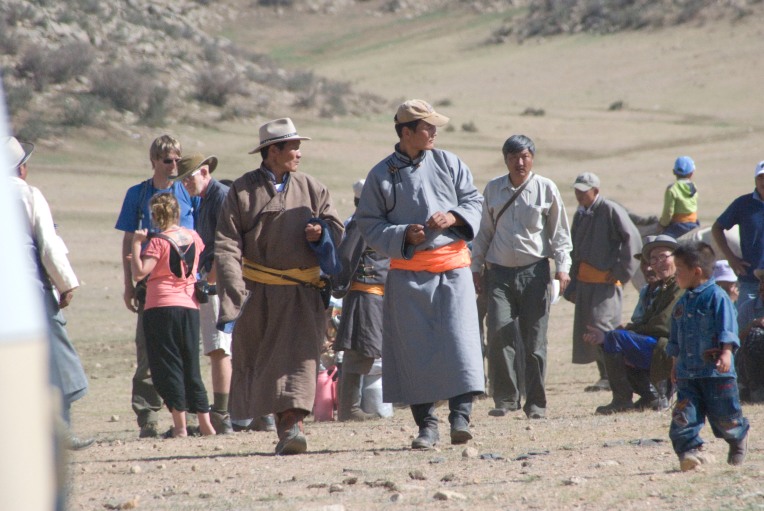
Mountain ceremony attendees
Men in del and sashes; they look good and they know it
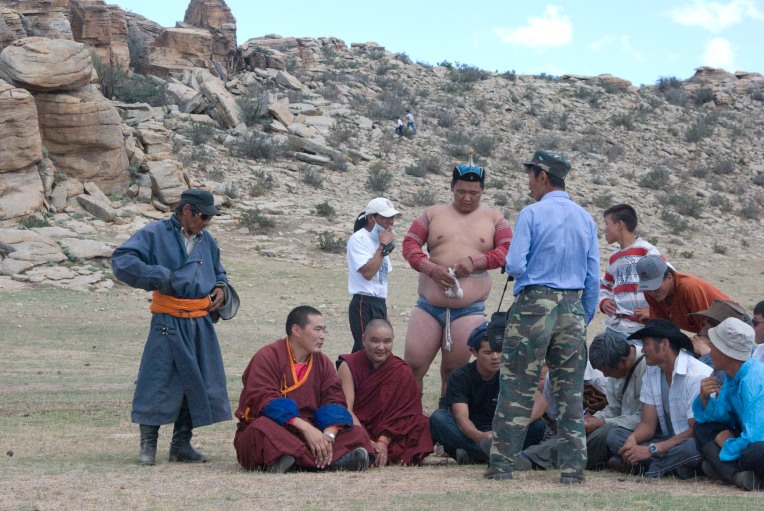
Wrestling
Wrestling; almost ready to start
Wrestling
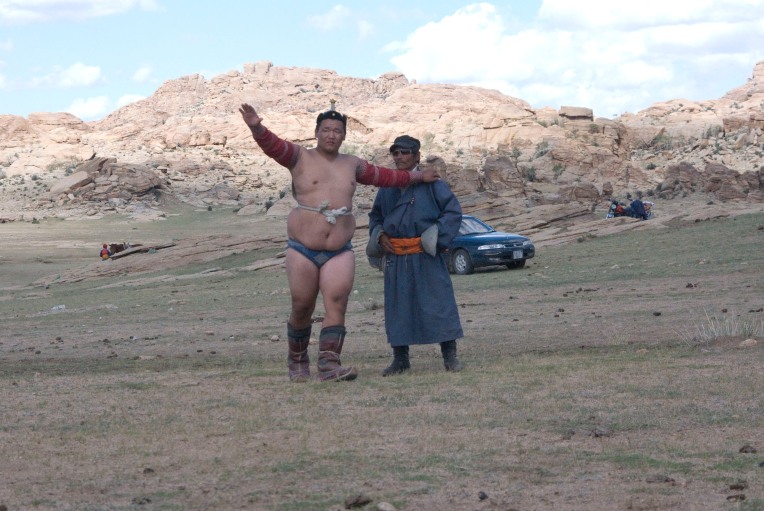
The Falcon of the Aimag doing the traditional Eagle Dance before a bout
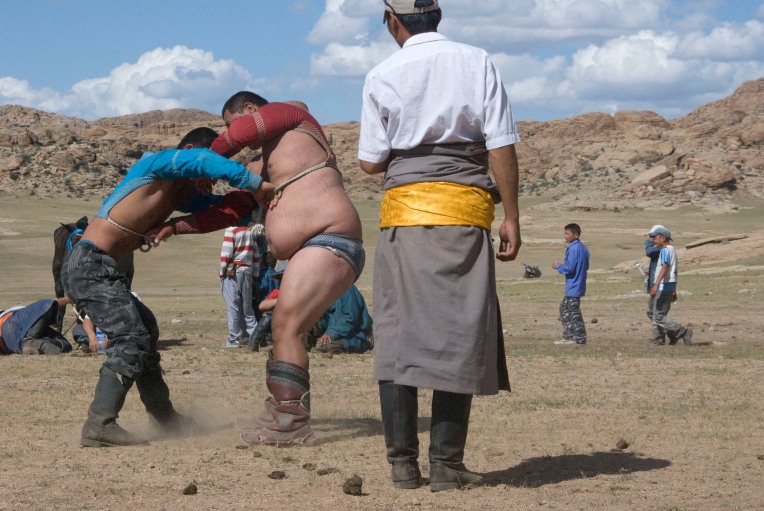
Wrestling
Grappling for advantage
Wrestling
He fell on every opponent like this
Wrestling
The guy on the ground was up in a moment and ok; the Falcon won the competition
End of the event; last chance to chat

Visit the AFC site here

Back from the Mongolian Countryside!

I got back to UB a few hours ago. It was the road trip of a lifetime, wildlife wise. At both Gun-Galuut and Baga Gazriin Chuluu, I saw and photographed argali almost every time we went out on a “game drive”.

Some sightings yielded over 100 images in 20 or so minutes. I got argali in morning light, argali in evening light, argali at dusk, argali in shadow but doing interesting things.

There were large groups of rams, small groups of rams, nursery groups of ewes and lambs and mixed groups of both sexes.

I photographed one group of rams at Baga Gazriin Chuluu that was out in the open at the base of a rocky hill about 800 meters from the road. They were a little nervous, but didn’t run away. In fact, they ended up being so tolerant of our presence that we were able to get out of the car and take turns taking pictures of each other with them in the background.

A lion’s share of the credit for this has to go to one of the Best Guides Ever, Khatnaa, who seemed to have an uncanny feel for where the animals might be, even though he hadn’t really done this kind of thing before. He runs his own tour company, but took me on via Nomadic Journeys. His English is very good, so I learned a lot about Mongol history and culture and he helped me on my pronunciation since I am determined to learn at least conversational Mongolian.

Besides argali, I’ve photographed ibex, cinereous vultures, golden eagles, upland buzzards, black kites, demoiselle cranes, endangered Siberian white-napped cranes and even a lady bug. Plus Mongol horses and bactrian camels.

I’ve also been able to visit gers, eat Mongolian summer “white food” like aruul, cheese, yogurt, cream and airag and yesterday went to a local “mountain washing” ceremony, complete with chanting Buddhist monks, tons of mutton and gallons of airag, plus a 7km horse race, anklebone shooting contest and a wrestling competition.

I’m in UB tomorrow and then off to Ikh Nart, I hope. The weather has been, shall we say, unusual. About two hours out of UB last week, we got clobbered by a hail storm so serious that Khatnaa turned the car around to protect the windshield. Some of the hailstones were an inch across. He has dents in the roof of his Mitsubishi SUV. That fast-moving front caused serious flooding in UB in which 21 people died.

As we approached the hotel this afternoon, it started to rain here in UB. By the time Khatnaa had pulled into the parking lot, it had started to hail. We sat in the car for almost 20 minutes until it was just raining hard. Once again he turned the car so that its back was to the storm. He commented that he could never remember two storms like this in one month.

The scientist who I am to travel to Ikh Nart with is due in at 10:40 tonight. Whether the flight will come in is anybody’s guess with this weather. Stay tuned.

And photos to come as soon as I do the jpeg conversions.

Visit the AFC website here

Plans are Coming Together

Let’s see….my Flag Expedition page should be live soon over at Artists for Conservation. I have confirmed that the weather is likely to be hot, hot, hot. Unless it rains, in which case it could be cold enough that I’ll want my down bag.

I spent three hours on the phone last night with Gana Wingard, the scientist with whom I am working on the women’s craft cooperative. She sent me a great email this morning entitled “The Grand Plan” and then noted that, of course, it’s all subject to change. But we now have hashed out a way forward and know what we need to do, who we need to talk to over there and when and in what order it will probably happen.

It reminds me of one of my favorite exchanges towards the end of one of my all-time favorite movies “The Wind and the Lion”. The Raisuli and his men are on their way to a small village, returning Mrs. Pedicaris and her two children to a contingent of American marines and, after hearing their destination described, along with the myriad dangers likely to be lurking there and the possibility that he could be killed,  The Raisuli says “It is good”. His right hand man says “What is good?’. The Raisuli answers “It is good to know where we are going.”

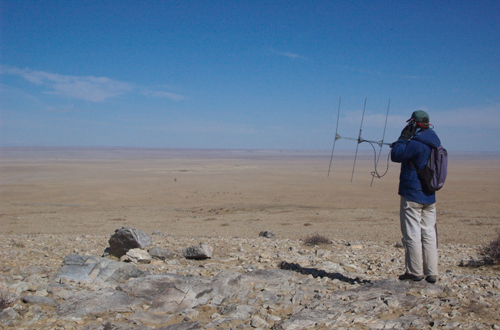
It turns out that Gana will be bringing radio telemetry equipment because she needs to find all the radio-collared argali or as many as possible before the next Earthwatch team arrives on August 2. There are plans to try a new population survey method since, at this point, it’s not really known how many animals are in the reserve. This is great news for me, since I will now be able to go out looking for sheep with someone who knows the reserve really well and is as motivated as I am to spot the animals.

Here are a couple of photos that I took on previous trips of the scientists using radio telemetry equipment. The research project now has some GPS collars, which send in the data via satellite, but those are relatively expensive, so there are still animals that need to be tracked the old fashioned way.

Amgaa doing radio telemetry just below an ovoo, Sept. 2006
Jed Murdoch searching for a collared Pallas Cat; he never got a signal and the cat had vanished, April 2005
Jed Murdoch searching for a Pallas Cat he had captured and collared; he never got a signal and the collar was never found, April 2005
My "grand finale" sighting in 2005; a good-sized group; note the ewe left front wearing a radio collar
My "grand finale" sighting in 2005; a mixed group of eight argali; note the ewe left front wearing a radio collar; one of the handy things about argali is their habit of stopping to look back, which provides an opportunity to get photos of something besides their butts as they run away

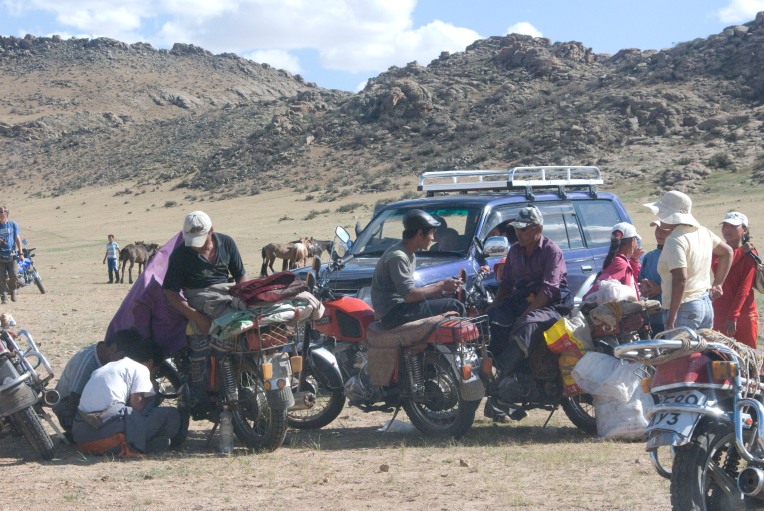
Our plan is to “game drive” in the mornings and evenings, when it’s relatively cooler (Gana said that temperatures went over 100F last July. Okaaay.). During the day we will have our meetings with the women, for which the groundwork is being laid by another of the scientists, Amgalanbaatar (which means “peace hero” in Mongolian; see above photo), who we all call “Amgaa”. He is now at the reserve and is passing the word about the meeting and the hoped-for dates. Everything is tentative because summer is when the women have the most work do to, milking animals, making aruul and airag and also felt. We don’t know how many will come, but we know that they are interested. They will need to arrange to have someone watch the children and will want to be home in time to make dinner. Gana expects that they will arrive both on horses and motorbikes.

There are about 100 families living in and around the reserve, depending on their livestock for their living. The women all know how to sew and, in fact, the country women are the repository of the skills needed to make garments like del (the long robes). The younger women who have been brought up in town don’t learn to sew anymore. The material to make a del, outer fabric, liner fabric and trim costs about $30. Some of the women also do embroidery and since that’s something I’ve done on and off for many years, I’m really looking forward to seeing their work.

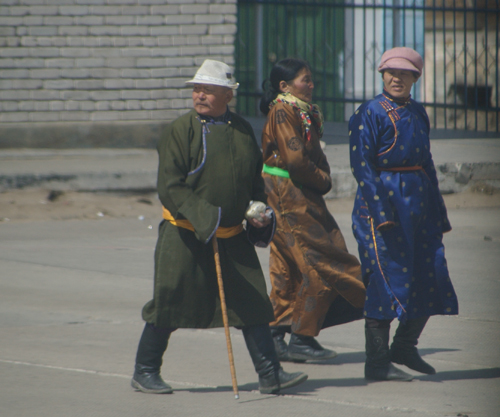
Three Mongols wearing del; train station, April 2005

After talking with Gana, we’ve scheduled a third day for me to get together with any of the kids who are interested in art. I’m taking some sketchpads, pens and pencils. Should be a fun way to pass a hot afternoon.

We plan to go to Ikh Nart on the 23rd and return to UB on the morning of the 28th. That will give me a day and a half to tie up loose ends. Five days and counting………..

Visit the AFC site here

Additional Comments On Game Ranches and How I See the Issue

My name came up on Julie Chapman’s blog about the article by Thomas Mangelsen in Wildlife Art Journal. In addressing the post and comments there, I ended up adding to my thinking about the issue. The post is here. Here’s my comment.

I guess since my name has come up, I ought to show up and comment here, although I suspect that my comments on the Wildlife Art Journal article make my feelings about the subject pretty clear. I have thought a lot about game ranches since my two experiences at them and have come to feel that they are not a place that I choose to go, for the reasons that I and Mangelsen enumerate.

So, FWIW:

I don’t believe that for him, and I agree, the issue is being a purist, but of being honest about how and where one collects images of genetically wild animals. If the photo is not labeled “captive”, then people are free to assume, as most do, that the image was taken in the wild, as Larry, and I at one time, believed. Truth in advertising, I guess. That’s not at all the game ranch’s fault or responsibility.

Painters don’t have the same issue of attribution that a photographer has, since a good artist generally uses multiple reference, or brings a unique point of view, for a painting and doesn’t simply copy a single photograph, theirs or anyone else’s.

I think as we live our lives we all end up in the position of having friends, sometimes quite good friends, who do things or have beliefs that we don’t agree with. The choice is either to accept that or end the friendship. Mangelsen chose to stay friends with Bob Kuhn.

By “old school”, I think that he may have been referring more to a way of thinking about animals that has changed dramatically in the last twenty years. We have gone from Descartes’ view that they are “machines”, driven by instinct, feeling no pain and having no souls to a recognition that we share the world with many sentient species. Year by year, the definition of what separates homo sapiens from animals has to be modified. Oh, they use tools. Oh, they recognize themselves in a mirror. Oh, they have culture. Oh, they have a sense of fairness. Oh, they lie and cheat. And the list goes on.

I have found that in order to reconcile, and be personally ethically consistent with, what I have learned over the years about animals and from my involvement in animal welfare (definitely not PETA-type animal rights, a whole different deal) and dog and cat rescue, I can’t justify going to game ranches.

I can, with reluctance, accept zoos that are heavily involved with education, conservation and the preservation of endangered species. I’ve pretty much reached the point where I choose not to support activities in which animals are used for human entertainment where there is a significant risk of abuse, either physical, emotional or psychological. I await the day when animals are no longer needed in any kind of research because computer models are superior.

My thinking is constantly evolving in this area as I add to my knowledge. My husband and I decided last year to no longer eat meat that we cannot source and that we do not know to have come from animals who have been treated humanely. This includes eggs. We refuse to support industrial animal agriculture, with its battery cages, feedlots and cruel confinement.

I wish to emphasize that these are all personal choices. I have no wish to dictate what other artists, photographers or people, in general, choose to do.

I think you can see that my decision about game ranches is just one part of a larger question that I’ve been thinking about for years- What is the appropriate relationship between humans and the fellow creatures we share this planet with?

PS, Larry- Barry Bonds- Being a Giants fan, I watched the whole thing play out. My opinion, and it is just my opinion, is that he probably used something in the 1980s at a time when many players did, so maybe the playing field was effectively re-leveled during The Steroid Era. Maybe he should be prosecuted (he’s charged with perjury, not substance use per se), but then there’s quite a few other ball players who used stuff and lied about it. How come they’re not on trial? His biggest problem has maybe been his attitude, which alienated the sports media, who often seem to feel an amazing sense of entitlement in what they feel they are owed by pro athletes. I’m not pro or anti Barry, by the way. It is what it is. Giants fans have moved on.

Should Artists Go To Game Ranches To Shoot Reference?

Every artist and photographer will have to decide for themselves.  For me, after having been to two of game ranches and having been involved in animal welfare and rescue for the past four years, the answer is “no”.

I do want to make the point, as did Mangelsen, that I am specifically addressing game ranches; not zoos, reserves, sanctuaries or other places with wild animals which have vets and other staff trained in animal care and where the animals are not there for the purpose of “modeling” or “acting” for photographers or artists or to be used in movies, tv or advertising.

Here’s the link to a blog post in the new online publication, Wildlife Art Journal, in which Todd Wilkinson introduces an article by legendary wildlife photographer Thomas Mangelsen. Mangelsen pulls no punches and I applaud him for exposing to the light of day something that’s been hidden for too long: the price the animals pay so photographers and artists can get “that perfect shot”. For example:
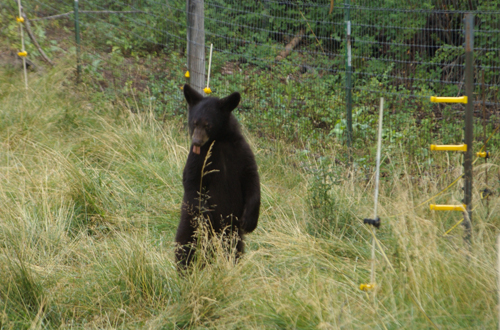
baby-bearThis bear cub was allowed to repeatedly shock itself on the electric wire in order to “teach” it to stay within the enclosure. The cub cried in pain every time and is seen here licking the spot that touched the wire. The keeper also “cuffed”, as in hit, the cub to “discipline it the way a mother bear would”.  To my knowledge, the keeper had no formal training, certification or degree in animal behavior. This was in front of a number of artists, including me, and clearly the keeper had no problem with us seeing how the cub was being introduced to working with humans.

Is any painting or photograph worth being complicit in a fellow creature being treated this way?

UPDATE 6-17-09: I have just learned that the person who is referred to above no longer works for that game ranch. He was fired because of how he treated the animals. Very good news indeed.

Here’s the comment that I left for Mangelsen’s article, which is here:

Finally. It’s not just me who’s wondered….

Posted By Susan Fox on Jun 14, 2009

I’ve been to workshops at two of these places and came away very ambivalent since I am also involved in animal welfare (NOT PETA-style animal rights) and dog and cat rescue. Yes, I got some “great” photos, but the other 10-20 artists who were there got almost exactly the same image.

I’ve noticed a proliferation of cougar paintings over the past few years, which coincide with a whole bunch of artists going to shoots put on by one particular ranch. How big a market is there for cougar paintings? Especially when so many show the same animal on the same red rocks? Do cougars even live in that habitat? I dunno.

Part of what makes me and my art interesting to people (Read: potential buyers) are the stories behind the paintings. So, what do you think a buyer finds more compelling:

“I was at the Lamar Valley in Yellowstone and had set up my easel to paint, but ended up watching one wolf attempt to distract the bull bison who had taken up a defensive posture while a second tried to dart in and cut out a calf. After a half hour they gave it up and, all of a sudden six more wolves popped up out of the grass and they all trotted off “(true story)

Or
“I photographed these two wolves splashing in the water and playing. One was the mother of the other, who was a young adult. No, I have no idea if one would see that interaction in the wild. I have no idea if wolves “play” in the water. I have no idea if they run around chasing each other like two crazy border collies.”
Or
“The cute baby raccoon was brought out and inserted into a hole in a tree stump that was placed on a table.”
I did paint that one and have it available as a giclee. I described him and what he was doing accurately, but otherwise feel that I committed at least a sin of omission. And, when people ask me, as they often do, if or where I saw him in the wild, I tell the truth. I like the image, it was fun to paint, but it and another of a captive animal have become somewhat problematical for me.

I’ve made it a point to do the travel, study and fieldwork required to see wildlife where it lives and learn about a species’ behavior and how it interacts with its habitat. Taking pictures of captive animals I’ve never seen in the wild turns out to be useless to me in that regard. There is so very much more to painting animals than their surface appearance, however appealing.

One thing I always tell people is that I don’t paint what I haven’t seen. And, of course, I have seen the captive animals. But I’ve decided finally that that’s not good enough. Taken out of the context of their habitat ultimately ruins their value to me for reference, except as a supplement to what I would shoot of the real, wild versions. It’s a step better than buying someone else’s photographs to do finished paintings from (as opposed to reference for a detail of some kind), but not good enough for me anymore.

As far as my visits to two game ranches:

I remember seeing, briefly, the cages, one that had an adult snow leopard in it. It was a quarter of the size of a kennel that would be considered an acceptable minimum for a large dog. There was barely enough headroom for the animal to stand up and turn around. It was in a covered area with no natural light.

I remember the baby black bear who was allowed to repeatedly come in contact with the electric hot wire around the enclosure area in order to “teach” him to stay within the boundary. He was also “cuffed” multiple times to supposedly duplicate the discipline of a mother bear. What would you think of someone who did that with a puppy or kitten? How in the world would a human with no background or education in animal behavior, as far as I could tell, have the faintest idea what a momma bear would cuff her cub for?

I remember the owner of one game ranch complaining to us about the owner of another one because the guy had gotten caught and cited by the Feds so many times that it had drawn increased scrutiny onto everyone else.

I remember speaking with a fairly well-known wildlife artist at a show, gingerly asking her about the game ranches. She immediately and strongly assured me that the animals were never mistreated to make them “perform”. I changed the subject.

I’ve wondered more than once when a litter is born, what happens to the babies or youngsters who aren’t willing to be socialized to people. If there are five wolf pups and only one can be handled, what happens to the other four? I think I can guess, but currently have no direct knowledge. However, these people are running businesses that need to make a profit, not sanctuaries.

I believe that there is an inherent conflict in the use of animals for profit at these game ranches. The owner’s revenue stream, profit, mortgage and care of their families is dependent on their ability to “deliver the goods”. And I think, with what I’ve seen in the pet rescue world, history has conclusively shown that if there is a choice between what serves human profit vs. what serves the animal’s interest, the animal almost always comes out on the short end.

Is there a disconnect between wildlife and animal artists who paint what they do out of love for animals, but who then patronize places that are questionable at best? Does the excitement of seeing the animals closeup and getting great photos bury any nagging little doubts or questions about what is going on at these ranches? Is it more convenient to take the explanations of the owners at face value about how they run their business?

I’m not saying that the owners are bad people or that there is deliberate abuse or cruelty going on. But, ask yourself honestly, are the conditions you’ve seen, if you’ve been to the ranches as opposed to the locations, appropriate or right or fair for any animal, much less wild ones.

I am ambivalent no longer. I will no longer patronize game ranches and I urge my fellow wildlife artists to look into their hearts and consider whether or not they should, either.

EBay Auction: 5-18-09 Takhi Mare and Step by Step- SOLD

Takhi Mare, Hustai National Park, Mongolia 8x10 oil on canvasboard

I’m running a little behind, so I’ll cover the art stuff that’s going to Mongolia with me next week. In the meantime, I think I’ve solved the hot-water-in-the-ger-problem with a nifty little “stove” that uses solid fuel cubes and is specifically ok for use in tents. More later once it gets here.

I thought that I would share a few images of the creation of this study.

Initial drawing and shadow shapes
Adding the medium tones and basic hues
Putting in a background tone
Modeling the form and refining the drawing
Correcting the shapes and working on the background
And...the finished study!

As usual, there was a cat working hard, right near by:

Persephone, aka The Princess

EBay Auction, 5-11-09; Takhi Stallion (Przewalski’s horse) Head Study-SOLD!

Takhi Stallion Head Study 6x8 oil on canvasboard

For more information or to bid, click here

It’s Official! I’m Going Back to Mongolia!

portrait

{Address}

Visit the AFC site here