Fieldwork for Wildlife Artists

When I made the decision to specialize in animal subjects, I also took a deep breath and made a personal commitment to reach the highest level of excellence that I was capable of (still chugging away). Then I researched the approach and working methods of the best current and past wildlife artists, figuring the odds were that they knew a few things that would be useful to me.

And guess what, not a single one of them, (including Bob Kuhn, Carl Rungius, Wilhelm Kuhnert, all unfortunately deceased) like Robert Bateman, Guy Coholeach, Ken Carlson, Dino Paravano, Lindsay Scott, Julie Chapman or Laney, to name some of my favorites, rely on other people’s photos except to supplement their own for specific elements, only go to zoos or game ranches or work exclusively from photos to the exclusion of anything else. They GET OFF THEIR BUTTS, pick up their sketchbooks along with their cameras and hit the road to where the animals are.

This is not a field for the lazy. Even if your passion is the songbirds and squirrels that you can see in your own backyard, you still need to do fieldwork. Believe me, it shows in the work to those who know.
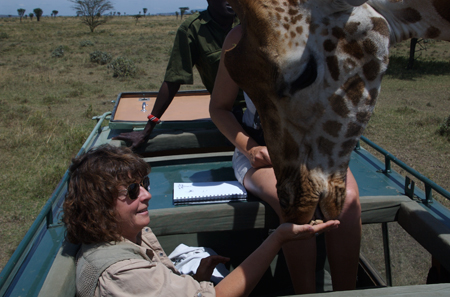
(Endangered Rothschild’s Giraffe and I at the Kigio Nature Conservancy, Kenya or Why I Like Fieldwork.)

There is no substitute for seeing an animal in its own habitat. This was brought home to me when I went to Kenya and saw lions, elephants and warthogs “in context” for the first time. The warthogs in the Masai Mara were the same color as a lot of the rocks. Thirty elephants emerged from trees lining a river bank. They had been invisible. The only evidence of their presence was that the tops of the trees were moving. We were at most 50′ away. The lions are very similar in color to the dried grass.

The prey species like wildebeest and zebra had a vibe that is totally lacking in the ones I’ve seen in zoos. In the wild they have to Pay Attention and work to survive. The zoo animals don’t have to do either and it shows in their body language.

You need:

A good digital SLR: Point and shoot won’t do it. Too slow to catch movement and you can’t change out lenses if necessary

The sketchbook of your choice: you may have to try some different ones to find a combination of paper and pen/pencil that works for you

Pens/pencils: So many possibilities. I use fine point gel pens for the most part because they don’t smear and I can’t fuzt around and erase.

Patience: In ten years, I have found that, on average, a given animal will do something at least mildly interesting or worth recording within about twenty minutes, but you have to be willing to sit and watch and watch and watch and……., even in zoos

Curiosity: Which translates into a willingness to learn about your subjects, not just settle for superficial appearance

Imagination: I’ve been in the field with other artists who seemed to be trying to capture “The Pose” that they would then faithfully reproduce on canvas. I often seemed to be the only one whose shutter was firing. Why? Because I’ve learned that you can never know in advance what you will find useful and when you’ve spent hundreds or thousands of dollars to get to a place, it’s crazy to stint on reference collection, especially with digital cameras and the ever dropping price of memory cards.

The Payoff? Great, unique reference (how many cougar paintings have you seen recently that were obviously from the same captive animal shot in the same locations? Yawn.), your memories of what it was like to be there which will somehow seep into your work, stories to accompany the paintings that will interest collectors and the possibility of seeing things very few people are privileged to.

Here’s a few examples of shots taken on the off-chance they might come in handy sometime. Not necessarily interesting to anyone but me.
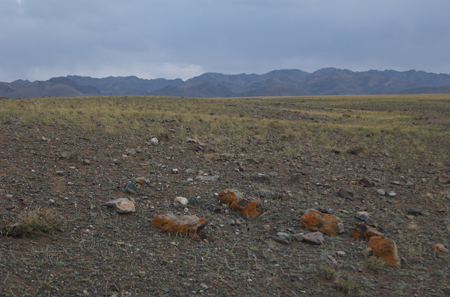
The Gobi Desert near my ger camp. Useful elements: cloudy sky, distant mountains, September grass, lay of the land, gravely surface, rocks with red lichen.

Grab shot from Lewa Downs Conservancy, Kenya. It’s a little blurry, but turns out to be the only tree that I’ve seen with that trunk color. It will be the perfect element for something, sometime.
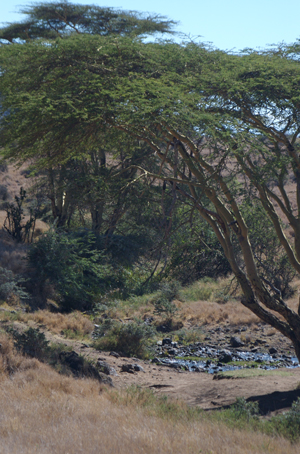
Photographing the animals is a no-brainer, but don’t forget their habitat. I know what animals live in the Conservancy where I took this picture, so I know who could be found in this neat waterhole setting.
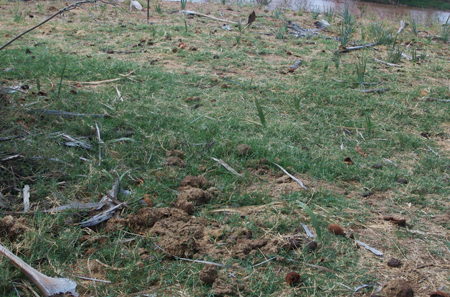
On the banks of the Ewaso Ngiro river in the Samburu, northern Kenya. We have: a little of the water for context (where did I take that picture?), grass, some kind of spiky leaved plant just coming up (needs to be identified), doum palm nuts and frond droppings and…..elephant dung. This was taken right in camp.
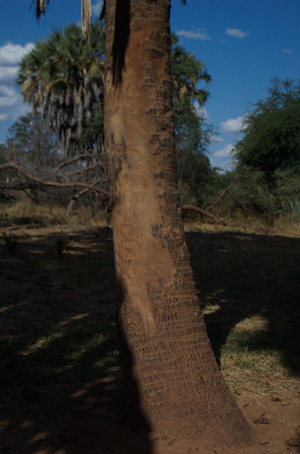
And, nearby, is a doum palm that has been partly rubbed smooth by elephants.

And here are some elephants. Nothing spectacular by itself (well, other than the fact that I’m seeing them in Kenya, of course!). But the preceeding photos provide context and additional elements that could be used with the photo below to create something more interesting and memorable.

I realize that these are exotic locations that many artists can’t get to or aren’t interested in, but the principle applies no matter where you are. Get out into the field and see as much as you can of everything around you. Filter that through your interests and passions as an artist and it will shine through in your work.

ART THOUGHT FOR THE DAY

“Now the light was fading fast. We had to hurry to reach the gate before 7 pm, but just as we were leaving the plains, Dave said urgently, ‘Stop! Stop!’ Thirty yards from the road, a lion and lioness stood silhouetted by the setting sun. She moved against him, rubbing her body on his great shaggy main, and twitched her tail high in the air. Then, blatantly sensual, she crouched on the ground and the big male mounted her. The coupling was brief and ended with a climax of impressive snarls before she rolled onto her back in evident satisfaction.”

Simon Combes, from Great Cats: Stories and Art from a World Traveler
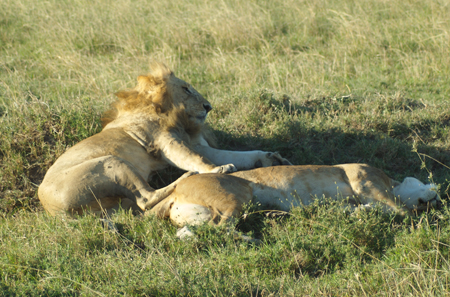
Thanks, Simon. (Photo from Oct. 2004 art workshop/safari led by Simon Combes two months before he was tragically killed by a cape buffalo. More images from the safari and a memorial page to Simon on my website)
Mongolia Monday: The Five Snouts, Part 3

I’ll have to be honest and say that currently I don’t know much about Mongolian sheep. I hope to learn more on the next trip.

I did find a United Nations FAO report that included the following information;
Sheep in Mongolia may be grouped into five types. The common native sheep are multipurpose and low in productivity. The other four are used more specifically for their meat (mutton), carpet wool, milk and good-quality lambskins. Grazing is on year-round pastures with no supplementary feeding, even under severe winter and spring conditions. The sheep are well adapted to the unfavourable ecological conditions of steep mountains and poor vegetation.

One distinctive feature of the native coarse wool fat-tailed sheep is noticeable when new grass grows on the pasture: at this time they grow rapidly, are easy to fatten and have a remarkable ability to store 4 to 6 kg of fat around the kidneys, mesentery and the tail bone. This fat is drawn on in winter and spring.

Sheep are reared according to the natural and economic conditions of the different regions in the country. Improvement achieved by crossing exotic, fine and semifine wool sheep breeds has been rapid in Mongolia and the results reasonably good. The average fleece weight of improved (cross-bred) fine and semi-fine wool sheep is two or three times higher than that of the native coarse wool of fat-tailed sheep. Wool quality has also improved.

There are five distinct sheep breeding zones:

· the northern mountain and grassland zone;
· the central steppe zone;
· the southern semi-arid zone;
· the southernmost, semi-desert zone of the Gobi;
· the Altay Mountains in the west.

The northern mountain grassland zone and the central steppe zone are given over to the breeding of fine and semi-fine wool sheep. In the southern semi-arid zone and the northern enclave, Mongolian fat-tailed sheep are purebred. Selection of breeding stock increases the quantity and improves the quality of the carpet wool.

In the extreme south, the semi-desert area of the Gobi has been allocated to Karakul breeding for lambskins. The production of mutton, fat and carpet wool takes place in the western part of the country and includes the Altay Mountains.

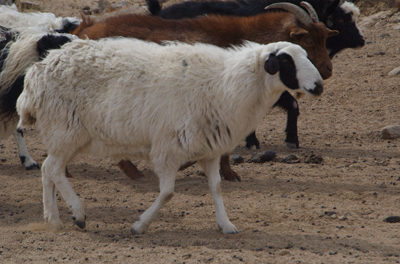
Here are some photos that I’ve taken of sheep.

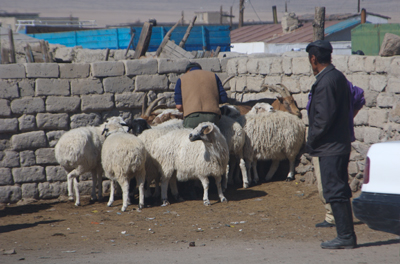
A small flock at the market in Hovd, western Mongolia

“King of the Mountain” at Khar Us Nuur, also western Mongolia. Goats in the foreground, but that’s for next week.

Part of a large group of domestic livestock coming down to the stream to drink at Ikh Nartiin Chuluu Nature Reserve, south of Ulaanbaatar

Finally, for comparison, a wild argali, the world’s largest mountain sheep. This old ram with the amazing horns let me follow him around for almost 20 minutes. As you can see, he is very thin. It was late April and a lot of the animals, wild and domestic were in rough shape from the winter.

One of the main uses of the wool is to make the big pieces of felt which cover the gers. Depending on the weather, there can be one to three layers. I’ve slept in a ger in cold weather with one layer and the next night, one with two layers and the difference was quite noticeable.

One of my most useful souvenirs from Mongolia are my felt slippers. I also got a pair of felt boots. Both are amazingly warm and comfy. I would recommend them to anyone who gets cold feet!

Mongolia Monday: The Five Snouts, Part 2

Most of us don’t think of Mongolia as cattle country, but I did see at least a few most places I went. Needless to say, they are as hardy as the other animals the herders keep. There are a number of breeds and they have also been crossed with yaks to create a hybrid the Mongolians call a Hainag. Here are some that I saw when I was at Ikh Nartiin Chuluu Nature Reserve in spring of 2005.

This cow and calf were part of a group that were coming down to the stream for water.

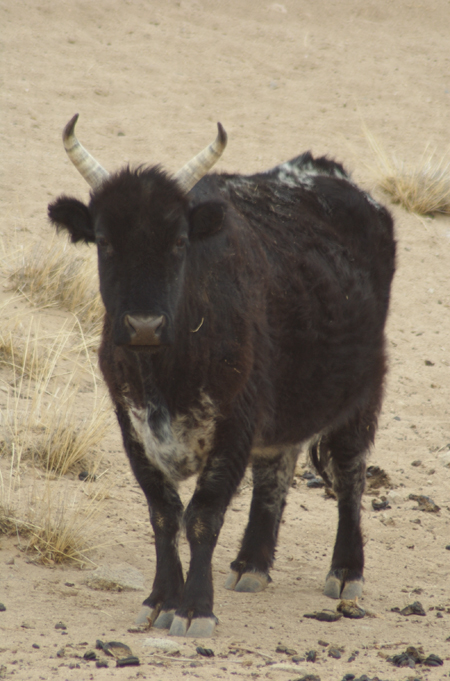
Here’s a black cow who looked me over for a minute.

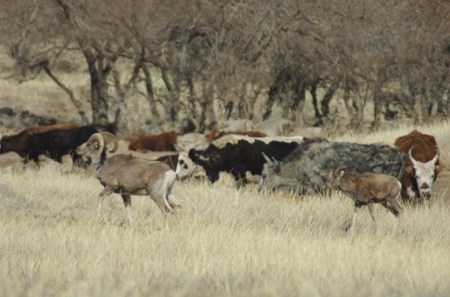
And, of the most interest to me, since it demonstrates the competition wildlife can face from domestic stock, are a couple of argali down at the same stream with the cattle.

When I was in western Mongolia in Sept./Oct. of 2006 we stopped at a ger and I took a number of pictures, including a few of this beautifully dressed woman and her cattle. The man was one of my guides. As it turned out, what I had photographed was him buying milk…for us! When we were back in the van and on our way, I was offered a swig of milk, warm and right out of the cow. It was the best milk I’d ever tasted! It was also the first time this town-raised girl had ever had milk that wasn’t out of a carton. And no, I didn’t “pay” for it later, fortunately.

Mongolia Monday: The Five Snouts, Part 1

My understanding is that, to this day, around half of Mongolian population of 2.9 million people still live as the Mongols always have, as herders. Their animals are, of course, central to their lives and provide income, food, clothing and shelter. There are five species: horses, goats, sheep, cattle and bactrian camels. Collectively the Mongolians refer to them as The Five Snouts or also Five Jewels.

I thought that I would post a few photos of each for the next five weeks, at which point I will be on my way to Mongolia (Aug. 24 departure).

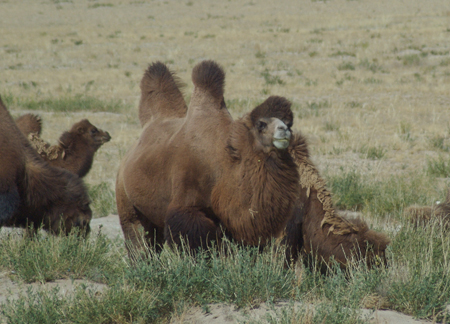
Let’s start with two-humped bactrian camels, made famous by the movie The Story of the Weeping Camel. They provide wool and milk. I don’t think they are used for food very often:

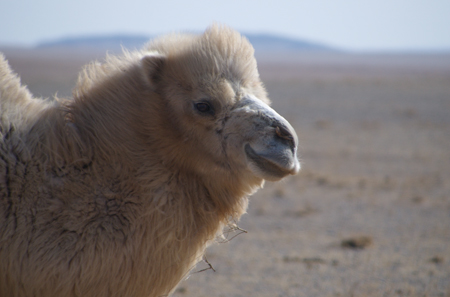
I saw this pretty white camel by the road on my first trip in 2005.

This string of camels was at a ger we visited near a salt deposit in western Mongolia.

On our way back from Khomiin Tal, there was a large herd of animals along the north shore of Khar Us Nuur, including lots of camels.

And finally, I photographed this big guy on our way back to Ulaanbaatar from the Ikh Nartiin Chuluu Nature Reserve.

Mongolia Monday

I was given a bag of aruul on my last trip to Mongolia in the fall of 2006. I’ve kept it in the freezer and have been eating a little at a time to make it last. I’m now down to the final three or so pieces, plus some bits of dried cream. So, I’ve kind of had Mongolian food on the brain, thinking about the upcoming trip.

One of my first goals upon arrival is to snag a bag of aruul for snacking on the road. Aruul is essentially dried skim milk. It’s really hard and is definitely an acquired taste. My first encounter with it was when I was out in the early morning viewing the takhi at Khomiin Tal and the ranger offered me a piece for breakfast. I hadn’t even had a cup of coffee yet, so I started to chew away at it and figured I’d better make it through most of it to be polite. By the time I was done, I liked it just fine. It has a yogurty tang.

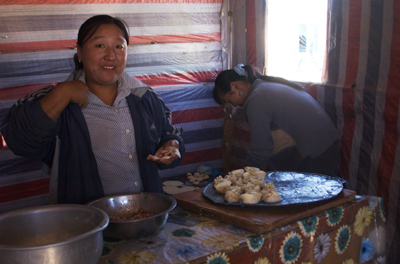
The humidity is so low in Mongolia that they can keep raw meat and dairy without refrigeration, although Westerns had better be careful what they try since we don’t have the resistance the Mongolians have built up. On the way back from Khomiin Tal, we stopped at a soum center (county seat) for lunch, which turned out to be what is almost the national dish, buuz, pronounced more like booooz, with a long “o”. Every culture, it seems, has some version of meat/veg in a dough pocket. Think Cornish pasties. So here’s the inside of the cookshop. I asked to take a picture and the reaction was along the lines of “Sure, if you want to photograph something so utterly ordinary and uninteresting it’s fine by us.”

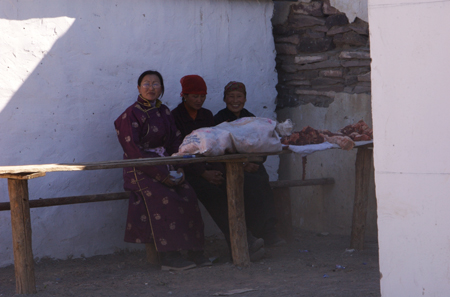
While waiting for our order to be prepared, we wandered around the busy central “plaza”. Over in the  shade were three women setting up a table with their wares, a dismembered carcass of some kind. They saw me taking the picture and we made eye contact. I went over, gestured with my camera and thanked them. Then I summoned up my very minimal Mongolian and told them that I was an artist from California. That elicited all kinds of smiles. This kind of experience is a big reason Why I Don’t Take Packaged Tours.

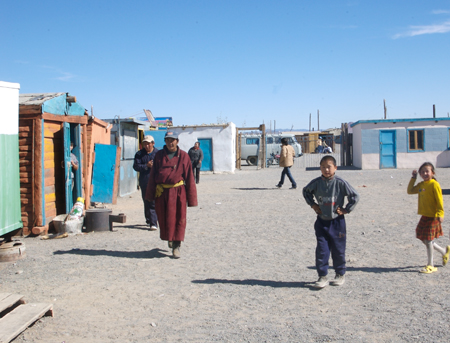
The soum center. I’m not sure of the name. It’s on the north shore of Khar Us Nur and I have maps with two different names. Someone help me out here.

Mongolia Monday

Particularly since Mongolia made one of its rare appearances in international news last week, I thought I would start to post a photo or two of my travels there on Monday mornings, along with new paintings and drawings with Mongolian subjects. My husband and I and another artist are currently set to go back ( my third trip, his first) on August 24. My hope is to blog while on the trip when I can.

In the meantime, I know that Mongolia is still a mysterious, exotic place to most Americans who only know the country from stories about Chinggis Khan (the more correct spelling of Genghis Khan). I think the riot caught everyone off-guard and, I would venture to guess, that most Mongolians did not approve of, and are quite possibly embarrassed by, what happened.

Alcohol abuse (coupled with poverty and hardship) has been a problem in the country for a long time, partly due to the introduction of vodka by the Russians many years ago when Mongolia was tied very closely to the Soviet Union. I have read that the younger generation is moving away from hard liquor and choosing beer instead, but, in any case, booze appears to be a factor in what happened, as at least one news report I read stated that 600 mostly young men had been taken away to the Mongolian equivalent of a “drunk tank”.

Mongolia is sitting on huge deposits of valuable mineral resources like copper and uranium. How the income is handled from the mining, which involves foreign companies, appears to be a point of serious internal political disagreement. This is a young democracy, less than twenty years old, but the citizens have expressed their views forcefully and in public many times before now. This time, for whatever reason, it got completely out of hand.

So, here are some photos of Ulaanbaatar that are typical of the city and the people, who go about their business day to day just like the rest of us. They catch the bus, talk on cell phones, go grocery shopping and vacation in the countryside. They can eat out in restaurants serving a variety of cuisines, including American, Korean, German, Japanese, Italian, Chinese and, of course, Mongolian (I adore buuz, the steamed meat turnovers), although many can’t afford that yet. And an increasing number speak at least a little English. I did love the fact that one often sees people dressed in “del”, the national garment.

(There are lots more photos from both my trips on my website)

Street Scene on Peace Avenue

The famous State Department Store, which has an entire floor dedicated to Mongolian crafts, music, art, books, etc. A must-go if you’re in Ulaanbaatar for the first time

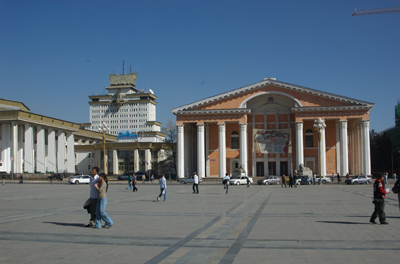
Sukhbaatar Square, with the Palace of Culture on the left, one of my all-time favorite buildings

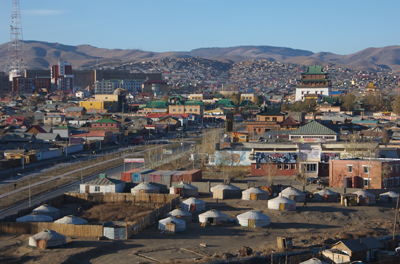
Gandan Monastery in the background with the Shaman Center and a small ger “district” in the foreground

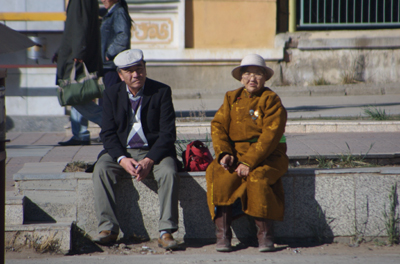
Couple at Gandan Monastery taking a break

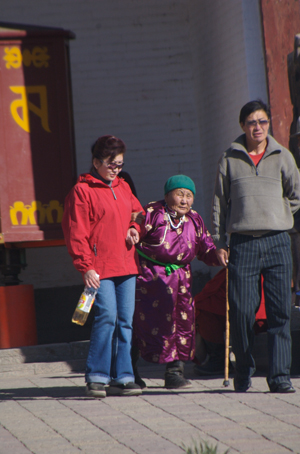
Another family at Gandan Monastery

Back from the Marin Art Festival

Although sales weren’t what I’d hoped for, things were about as I’d expected given gas prices, the real estate implosion and the upcoming election. Made back gas and food money. I sold a lot of cards and a small original. But I got a lot more out of this event than sales. My fellow neighbor artists were equally talented and welcoming. And I feel like I laid a good groundwork for next year.

The people who came by my booth in a steady stream both days were interested and interesting, as one might expect in Marin County. There was the petite older woman who, it turns out, is an doctor of internal medicine who got her medical degree from Stanford in the 1940’s. Her father supported her, but her mother didn’t, saying that she would never go to a female doctor. Oh, well, with luck we’ve largely moved on from that sort of thing.

As always, got some great stories about other people’s world travels to places like Botswana and inner travels by a woman who does shaman work. Did I say I was in Marin County?

Many people were interested in my paintings of the takhi and most of them have seen the movie “The Story of the Weeping Camel”.

Out of around 300 artists at the festival, I was just around the corner from Jeff Morales (www.jmceramics.com), a fantastic ceramic artist who lives less than 15 minutes from me on the south end of McKinleyville. Small world #253.

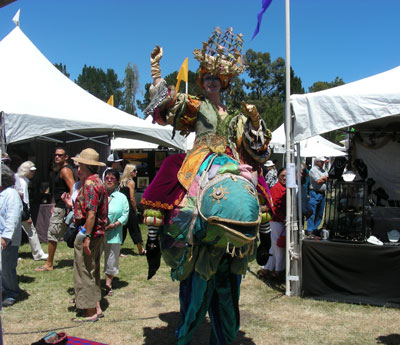
One of the great things about the festival were the stilt walkers in absolutely amazing costumes. They really took the event to another level and drew a crowd wherever they went. Here’s two of them:

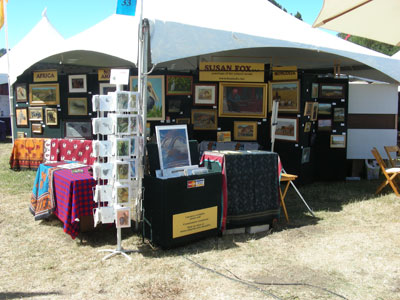
And, of course, being a wildlife artist, the universe conspired to allow me to do a little fieldwork in the comfort of my booth. Here’s the booth:

And here’s the little pocket gopher who came up for breakfast around 9am right next to the base of my easel in the middle of my space. Wildlife watching doesn’t get any easier.

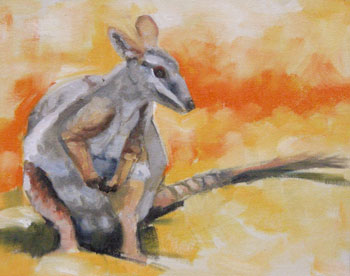
I had fun doing painting demos during the weekend. Here’s the one I did on Saturday in about two hours, counting interruptions. It’s a kangaroo I saw in a zoo. Don’t know the species:

And this is the one I did on Sunday, on and off for most of the day. Considering the working conditions, I’m pretty darned please. It’s the best cape buffalo I’ve done yet. And I’m keeping him.

Award at Palos Verdes Art Center Show!

I just found out that “Takhi Stallion and Mare” as seen at the top of my masthead, has been awarded third place in the show “The Spirit of the Horse”, which is currently on view at the Palos Verdes Art Center in southern California. My newest takhi painting “That’s The Spot!” was also accepted into the show. You can see it by scrolling down a few entries.

This is my second award. Last year, I won a Juror’s Choice Award from the California Art Club for “Made In The Shade”, soon (as of tomorrow) to be available as a limited edition giclee.

And here’s a favorite takhi photo from Khomiin Tal. Plans are starting to gel for the September trip. David and I leave on August 24. I’ll start a countdown on August 1st. I’m hoping to blog from Mongolia.

What a trip….

Finally got a chance to sift through my images from my trip to Missoula and Denver. Here’s what it was like at Denver International Airport on May 1, which was my outbound leg. The airport was closed down for almost an hour due to heavy, blowing snow. Then we were number six in line for de-icing at twenty minutes per plane. Had never seen de-icing before, won’t mind if I never do again- Happy May Day?

My camera luck ran out in Missoula. Digital SLRs and lenses don’t go well with pavement, so one of the Nikon D70s and the 28-300mm go in for repairs today. In the meantime, I couldn’t stand the thought of going to the Denver Zoo sans camera, so I went to a nifty camera store in Missoula and bought a Nikon Coolpix S10. Same file size as the D70, 6mg, 10x super zoom, decent “shutter” speed, supposedly. Well, we’d see about that. Fifty bucks for a 2gb card and I was set, I hoped.

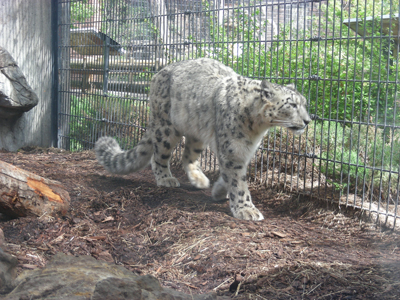
I really put it through its paces and I’m very impressed. It wouldn’t do the job out in the field, too slow, but for anything that isn’t moving too fast, it did great! Here’s two images that will show what it can do. The first was through plate glass with no polarizing filter. And yes, those are piranha. The second is a snow leopard who was pacing back and forth waiting for mealtime. I couldn’t get quite what I wanted in terms of variety of leg position, but the focus was decently sharp. The image is more than good enough to use for reference.

And finally, A RECENT VISITOR, at 7:30 in the morning a couple of weeks ago out by the pond. Niki and two of the cats came out with me to see what was going on. We all went our various ways without incident or excitement.