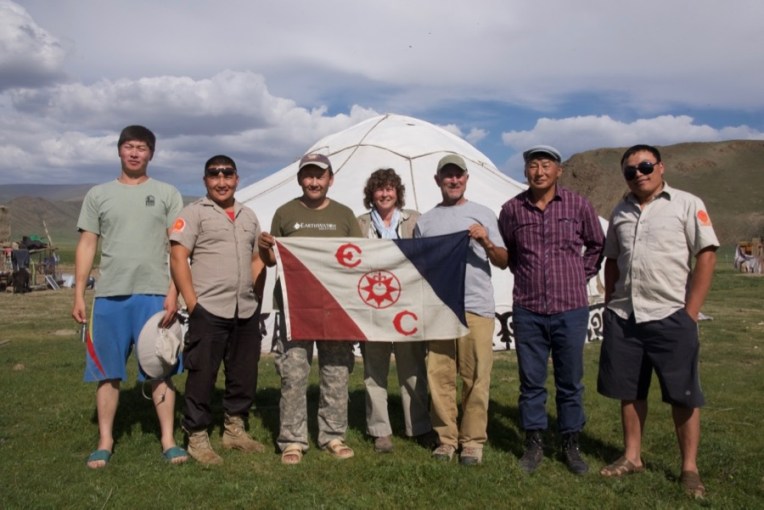
I contributed to an Altai argali capture project in Bayan-Olgii Aimag, western Mongolia in the summer of 2015 by acting as the “officlal” photographer. It was one part of my 4th WildArt Mongolia Expedition during which, as a Fellow of the Explorers Club I had the honor of carrying Flag 179. Here I am with Dr. Sukh Amgalanbaatar and Dr. Barry Rosenbaum, both wildlife biologists, flanked by our excellent drivers and assistants. One does not have be a scientist to contribute to science.
An artist marching for “Science”? Why would do I that? Well, I’m as dependent on science as almost everyone else on the planet. None of us can live what we would call a civilized life without it. For me as an artist, chemistry created the paints, mediums and solvents I use. A researcher invented the glue that holds my canvas-covered hardboard painting panels together. A number of different sciences create the materials and technology for the cameras I use when gathering my reference images. I store my 149,000 images on a hard drive connected to my iMac, neither of which would exist without research and development done by scientists and engineers.
To put it in simple terms “science” is how we humans discover verifiable facts. It has nothing to do with opinions, feelings or politics. or how one would like things to be. As Dr. Neil deGrasse Tyson says, “”The good thing about science is that it’s true whether or not you believe in it.” The fact that science, i,e. knowledge, is under attack these days is appalling, particularly when the people doing so benefit from it every day.
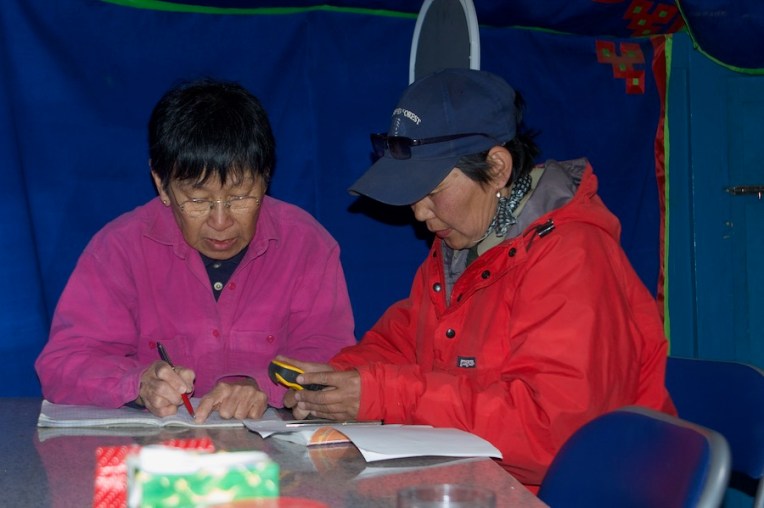
Two Mongolian scientists entering and checking GPS data for botany transects in which every species is identified and location recorded. Then the biomass of the entire transect is calculated. Done over time it creates a picture of the ebb and flow of the plants and their ecosystem, which helps the local herder community make grazing and land use decistions. Photo taken at the Ikh Denver Zoo research camp, Ikh Nartiin Chuluu Nature Reserve, Dornogobi Aimag, Mongolia, April 2005 during my participation in an Earthwatch project there. This work is a good example of where “facts” come from.
So I will be marching tomorrow here in Humboldt County, California, where the organizers have planned a whole day of events, starting with a science expo, activities for kids, then a rally which will be followed by the march. It being Humboldt County, home to Humboldt State University in Arcata, I expect it to be quite a show of enthusiasm and creativity. http://www.madriverunion.com/april-22-is-march-for-science-day-in-arcata/
With fellow artist and Explorers Club member Alan Campbell at the Harris Neck National Wildlife Refuge visitor’s center. After the field work is done, results analysed and made available through scientific publications, what is learned can be interpreted for the public through displays like this one. Years of research went into the content of that one board.
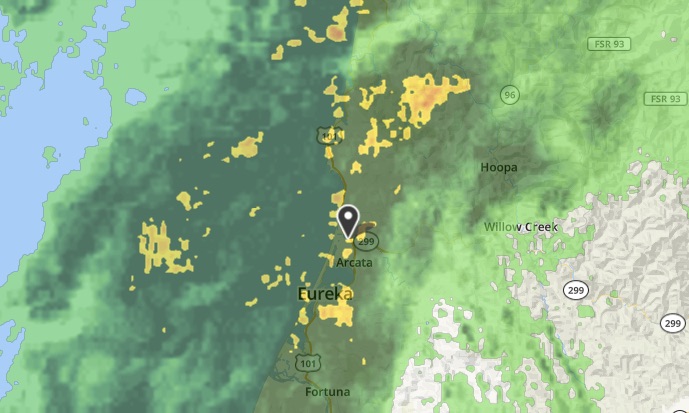
I’ve been down for two weeks with a really nasty chest cold. Finally over the symptoms, but still need to take it easy, which is why there was no Friday post. Much better today. Now we have a heck of a rain storm rolling into northern California, so working in the garden is out.Internet to the rescue!
Here’s some sites to check out if you’re sick or weather-bound:
Looking at art: The Metropolitan Museum of Art in New York has recently created what it calls Open Access, through which images of 375,000 (yes, that’s right) works in their collections are available for use without restriction. More information on that here.
Learning to draw: If you’re interested in drawing and want to learn the basics or pick up new skills, Pencil Kings may be what you’re looking for. They have pro instructors from a variety of backgrounds. Access to everything is $29.95/month or $299.95 a year. If you sign on and take any courses, please let me know what you think. Painting instruction is easy to find, drawing not so much.
Competitions, courses, community and more: The Artist’s Network site has plenty to poke around on. It’s run by the company that publishes The Artist’s Magazine, Watercolor Artist, Pastel Journal, Drawing Magazine, Acrylic Artist and also runs North Light Books. They’re also the home of the well-known art forum Wet Canvas.
Learning about art: Underpaintings is an online art magazine which publishes articles on contemporary and past artists, art materials and overviews of upcoming art auctions, which is my favorite feature since it’s a chance to see a wide range of work from working artists, some famous, some not so much, that is good but not museum or art book quality. One can take comfort in realizing that even the best didn’t hit a grand slam every time or even a triple, but mostly it’s a fun way to see a lot of art which has been gathered together for auction from private collections that would otherwise not be seen by the public. He includes illustration also, which, since my formal training is in illustration, is a bonus. There is free content but full access is worth the $24 a year. The “proprietor” Mathew Innis, is himself an accomplished artist.
Finally, there’s a ton of art groups to check out on Facebook, of course. I created one last week “The Art of Animal Fieldwork” which is for artists who draw and paint from live animals, surprisingly a quite specialized part of the animal art genre. There’s already been some extraordinary work posted by some of the over 50 members from the USA, UK, Germany, Switzerland, Spain, Greece, Israel, France, India and Denmark, including field studies done in Ladakh of a wild snow leopard.
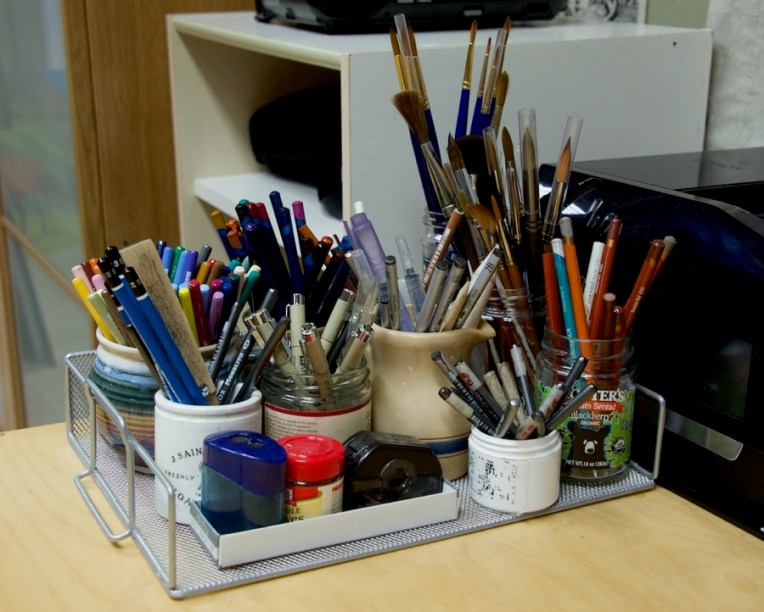
Drawing media and watercolor brushes stored in a variety of containers and organized in one unit of a stackable inbox
I don’t necessarily consider myself a neat and tidy person. But when it comes to my work, I’ve gotten borderline fanatical about having everything sorted and organized. I don’t want an idea to strike or find I need to have “x” right now for whatever I’m working on and have to break concentration and hunt around for it.
I’ve been in my current studio space at our home for over ten years now, using a couple of IKEA cupboards for supplies and some thin plywood boxes with dowel dividers my husband made for me years before that for canvas and painting storage. The IKEA units are doing great, the old canvas “racks” were well past their sell-by date. So a few years ago we were able to hire a contractor who was also a cabinet maker to build new storage units from birch plywood to my specifications. What a luxury! But also practical and financially sensible because properly stored paintings and canvases (I use RayMar geesoed cotton canvas boards almost exclusively) are less likely to get damaged. Plus we live in earthquake country. Every cupboard, cabinet and bookcase is attached to studs in the walls.
Come take a tour of how I store my art supplies and equipment…
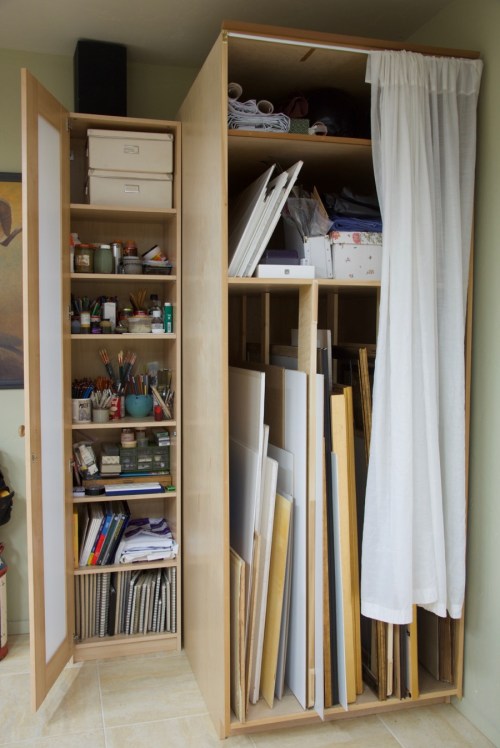
These units are in the northwest corner of the studio. On the left is an IKEA cupboard which contains all my supplies that aren’t in use. The top shelf holds greeting and notecard inventory in, yes, IKEA boxes. Next is a variety of containers. The next three shelves are drawing media, brushes, varnishes, odds and ends. Second from the bottom is paper for printing. And at the bottom are old sketchbooks. All the way on top is a speaker.
On the right is one of the custom storage units, designed to hold paintings up to 5×5′. The top two shelves have miscellaneous things that don’t fit anywhere else. The bottom holds all my oversize paintings and canvasboards. The curtain, just an old one I had around, is to minimize dust.
On the south wall of my studio are four units ranged next to each other:
These are two side-by-side IKEA cupboards. The one on the right, starting at the top, is blank sketchbooks, then small canvasboards and some stretched canvases with a gallery wrap so I don’t have to frame them. Second from the bottom are canvas pads and oil paper pads, a few small toned canvases and my watercolor papers. On the bottom is my plein air carry-all, a plein air panel box and some large size drawing pads.
The left cabinet holds my old paintbox I’ve had since I was a kid, a pochade box from the Sennilier art supply shop in Paris, more plein air carriers, then various paper towels and brush holders, finished small works (see detail below). Next, drawings to be framed or referred to, below them a black plastic file organizer and binders for location watercolors and at the bottom old work framed and unframed. The two stacked boxes hold plein air oils.
This is the middle shelf of the cabinet on the left. I’ve used cardboard drawing pad backing for dividers, labeling them with a Sharpie, to separate and organize old paintings from workshops, projects, preliminary studies, in-progress repaints, available for sale, etc.
And here are the closed cupboards above on the left, next to my frame and painting storage units on the right. Of those, the one on the left mostly has the frames. It was designed to fit over my steel flat files. The one to the right of it is pretty much all paintings except for some big manila folders at the top right which hold working and finished drawings and next to them about a half dozen framed giclees. All the shelves are adjustable.
Finally, here’s my painting table set up and ready to go. I clean the palette off on Friday afternoons and put the paint into one of those paper-lined round storage containers. My current palette is a leftover piece of Swanstone countertop. I got the idea from the Underpaintings online magazine some years ago. I like it because it’s a neutral color, it’s not reflective and once a film builds up on to a certain point, my husband is kind enough to sand it off for me. It’s the same color all the way through. As you can see I have an eclectic collection of containers for brushes, pencils, etc. Some are souvenirs of our travels, like the fish pitcher, which I got at a Debenham’s department store in London, England. I also like interesting coffee mugs with or without broken handles.
So there you have it, how one artist organizes her work life. If you have any ideas or want to share what you do, please leave a comment!



 Susan Fox, American Artist