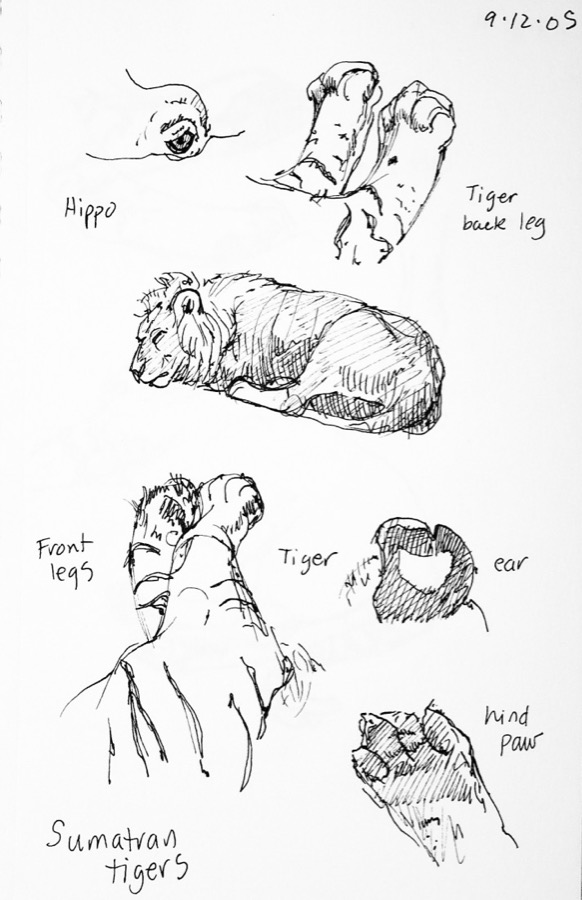
Once upon a time (back in the mid 1970s), when I first had professional art aspirations, my first media was pen and ink, heavily influenced by medieval illumination and Alphonse Mucha. I used them for many years when I was a freelance graphic designer. In the early 1990s, after getting a BFA Illustration from the Academy of Art (then) College, I was able to realize a childhood dream and spent two years in private study with a local artist learning to paint in oil. And since 1997, that’s what I’ve pursued professionally. But I never quite let go of pen and ink, using it for sketching on my travels. Everything from sketching animals…
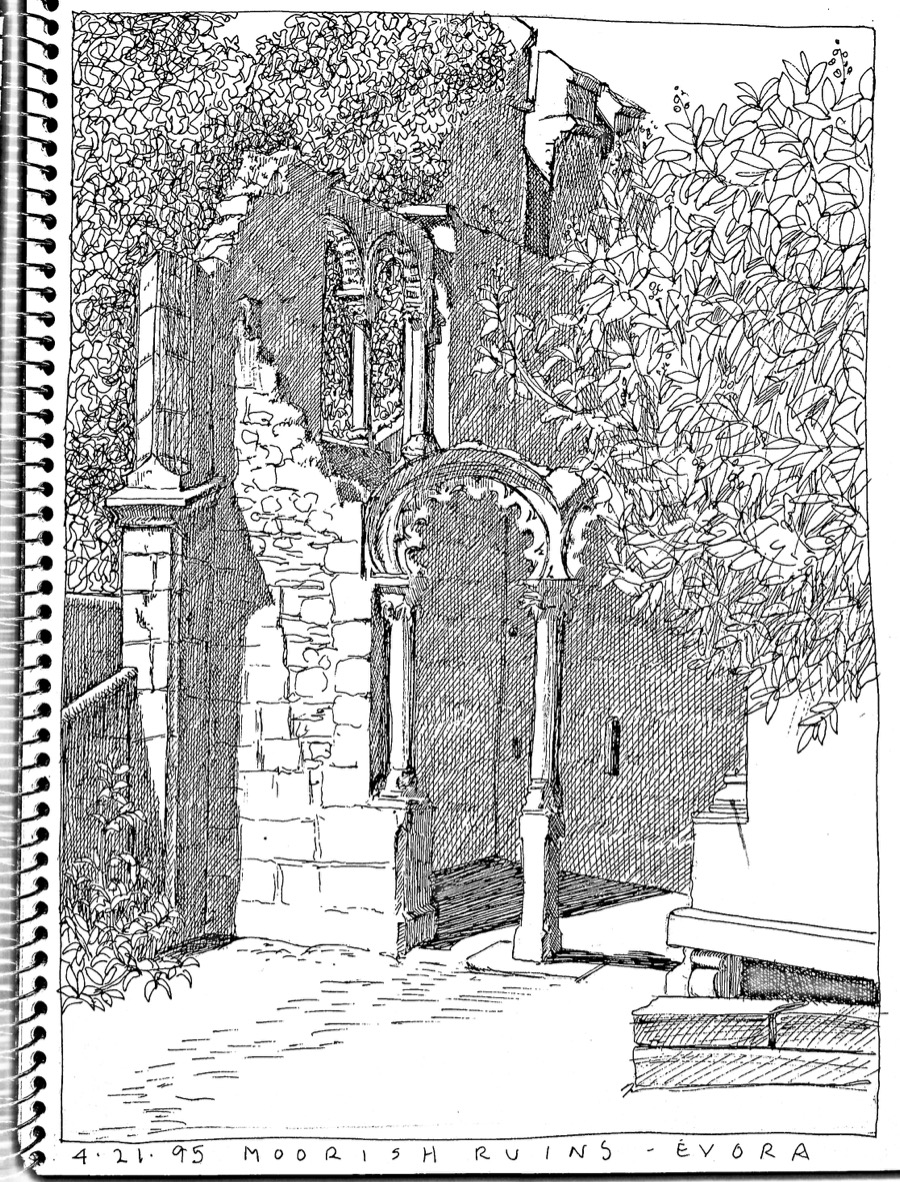
…to spending a morning drawing these ruins I saw in Evora, Portugal.
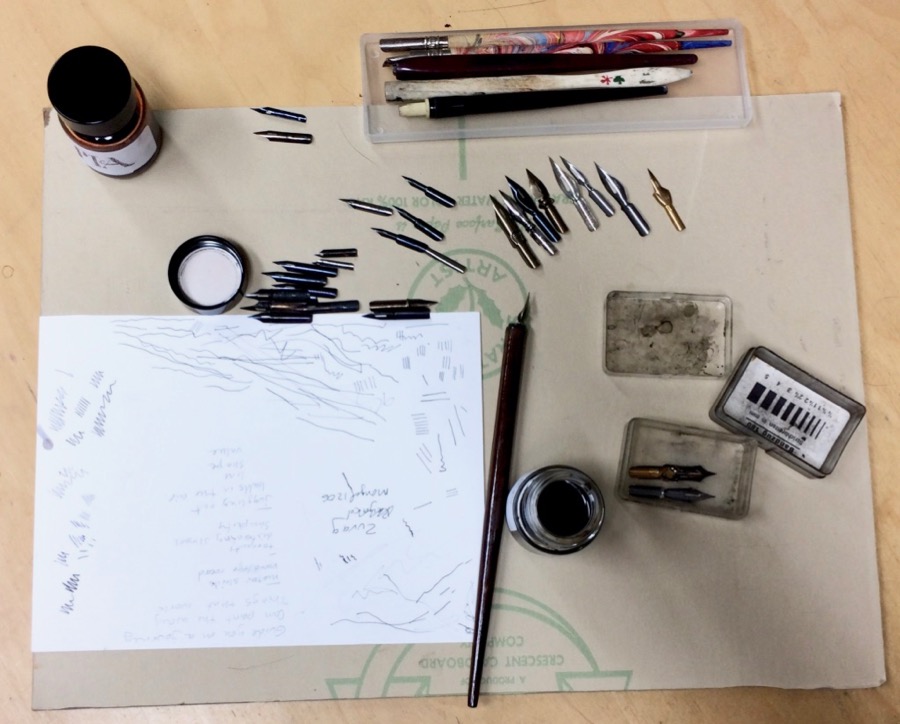
The revival of location sketching with the urban sketchers movement and more has inspired me to return to my roots. I’ve been using Sakura Micron pens for years for my Mongolia journals, both for writing and sketching, along with other trips, but had become increasingly irritated with them. They don’t seem to hold a consistent tip anymore, which means I can’t trust them. I did some research and finally settled on what now appears to the the high quality standard, Copic Multiliners, and bought a full set of them. But…dip pens still beckoned. They have a feel and make a line that can’t be created any other way. So for a year now I’ve been building a collection of nibs via Etsy and eBay and, using Jet Pens excellent reviews, buying a half dozen different bottles of ink, experimenting a bit between my painting work. But can I use them in the field without making an unholy mess? Well, late 19th and early 20th century artists like Joseph Pennell, Henry Pitz, Earnest Watson, Arthur Guptill and William Robinson Leigh did it. And that led me to the wonderful world of inkwells, including ones made specifically for traveling. I’ll be doing an inkwell post in the future, along with discussions of nibs, ink and paper. Once my SketchWild site launches I’ll be offering dip pen drawing instruction. If you think you’d be interested in that let me know in the comments. Over the past month or so I’ve been “test driving” nibs while also trying out possible painting subjects. Of of yesterday, here’s what I’ve done:
I was treated to an EXTREMELY rare sighting of wild bactrian camels, a herd of sixteen or so, heading south in the Gobi in 2016. They crossed the road in front us and were a long way off, but my photos were good enough to do these little movement studies, freehand with no pencil underdrawing. I used a Hunt 100 Artist nib and Platinum Carbon ink on Strathmore 300 vellum bristol, a 12×9″ pad. All of the drawings in this post were done on that paper.I was considering entering a juried show that required corvids as the subject. I ultimately decided not to enter but did have fun trying out possible subjects with my dip pens, once again directly with no pencil underdrawing. I’ve had fun getting nibs from a variety of countries including Italy, France and England. Even some from the era of the Soviet Union with a hammer and sickle on them, purchased through Etsy from someone who lives in Ukraine! And they’re a really nice nib! The subject here is takhi/Przewalski’s horse, all photographed in Mongolia. This sheet really shows how different the various nibs are. Hunt 100 Artist/Platinum Carbon ink; Gillott #290/Platinum Carbom ink; Gillott #170/Platinum Carbon ink; Gillott #303 EF/Noodler’s Black ink; Gillott #404/ Perle Noir ink; Esterbrook 356 Art & Drafting/Diamonte Jet Black ink
Contining on: All done with Higgins Fountain Pen India Ink. Hunt #102 crowquill; Hunt #108 crowquill; Gillott #659 crowquill; Esterbrook #48 Falcon; Hunt #100 Artist (new); Gillott #293 Public Pen; Hunt #103 Mapping; Hunt #100 Artist (new); Hunt #100 (vintage)
Over the last couple of days I’ve done a series of small drawings on the Strathmore 300 vellum bristol. This time, unlike the ones above, I did do a light preliminary pencil sketch. They took maybe an hour and change at most. The purpose was to explore how each nib feels when used for an actual drawing. All of them have things I like about them but I found I really did like the Gillott #303 Extra Fine quite a lot.
Race horse-Hunt #100 (new)Domestic bactrian camel-Gillott #303 Extra FineDomestic Mongol horse-Gillott #170
On the ones above I added the background shape both to pop out the white of the light sides of the animals and to see how filling in an area would work with that particular nib. All were ok, but want to experiment more.
Siberian ibex-Gillott #29Pika-Hunt #102 crowquill; not thrilled with how the fur came out but that’s why it’s good to experiment
And the Copic pens? Love, love, love them. I’ve joined artist Cathy Johnson’s “Sketch With Me!” Facebook group. She does virtual events one weekend a month. This is what I posted in October, an arrangement of squash from our garden. Copic pen and watercolor in a Stillman and Birn Zeta series wirebound sketchbook.
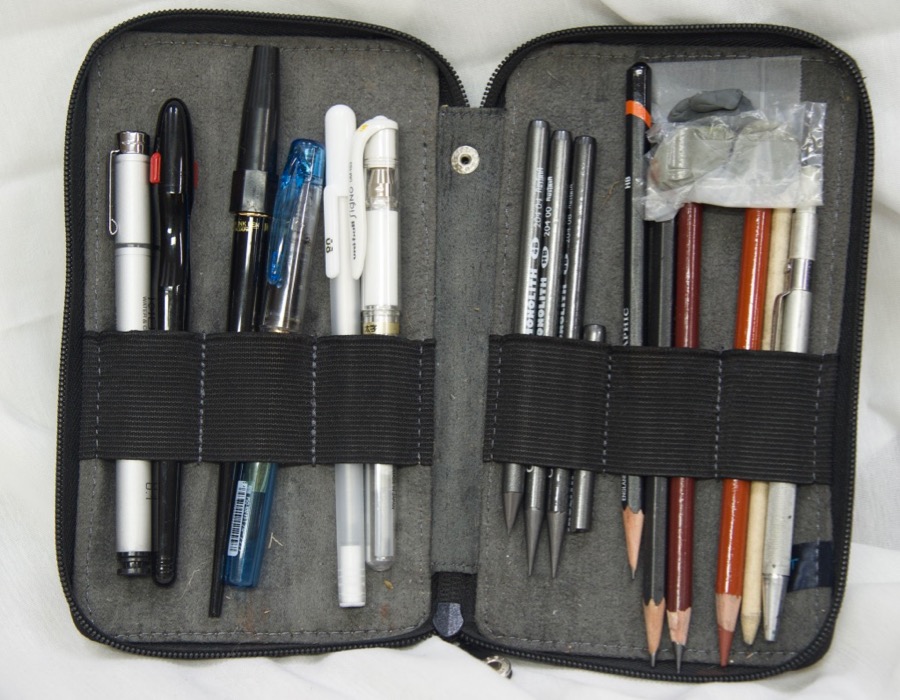
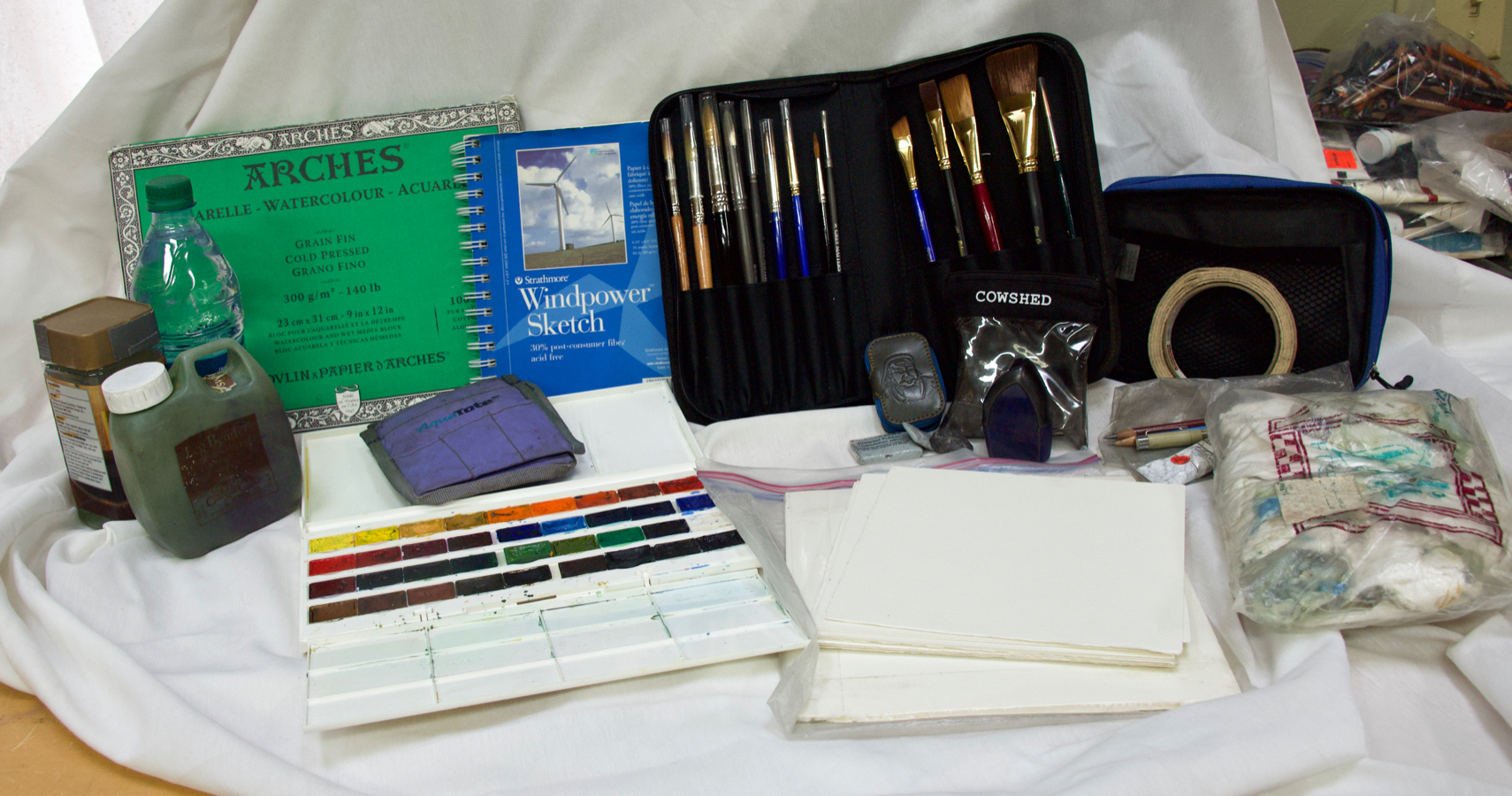
Most of you know me as an oil painter, but I’ve always loved to sketchand draw with pencils and pens and I also paint in watercolor on location. Dating back to 1989, I take at least a small sketchbook and kit like the one above with me when I travel.
I’ve enjoyed seeing sketching take-off as an international art phenomenon and I’ve decided to formally throw my well-loved field hat into the ring. Before the end of the month I’ll be debuting a new website dedicated to sketching called “SketchWild”. It will include not only my field and travel sketching and painting, but also art supply reviews, tutorials and online classes. Tell me in the comments what you’d like to learn!
My specialty and favorite subject has always been animals. I seem to be one of a surprisingly small number of artists who draw and paint from live animals and I’ll offering tutorials on how you can do that, too.
If you’ve never sketched before and want to try it but don’t know where to start or if you’re a landscape painter who occasionally wants to add animals like, say, a cow or horse, to your painting but don’t know how to draw them, I’ll be offering classes and/or sets of tutorials for both. I’ll also be offering instruction in pen and ink sketching/drawing with technical pens, fountain pens and dip pens regardless of subject and tutorials on sketching with an iPad, including a review of the variety of apps available. And there are a lot of them!
In the end it’s not about, or only about, making finished pretty pictures, but enjoying the process and seeing the world through art you’ve created yourself. Some of the best souvenirs you can take home are the sketches you did of what caught your eye.
To give you an idea of what I’ve done over the years, here’s a selection from my sketchbooks. Some, like the animals were done very quickly, in maybe one to three minutes, sometimes less. The landscapes hold still so I can spend more time on them. And if I can add an animal, so much the better!
Rolling Hills Wildlife Experience, 2010
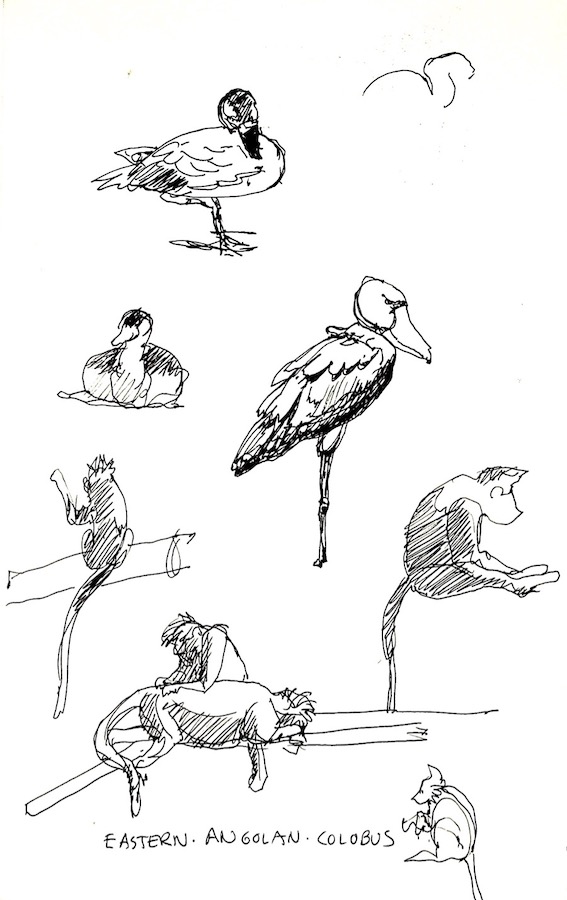
Monkeys don’t hold still for long so you have to work fast and see the basic shapes, in this case a quick indication of light and shadow to go with the drawing.
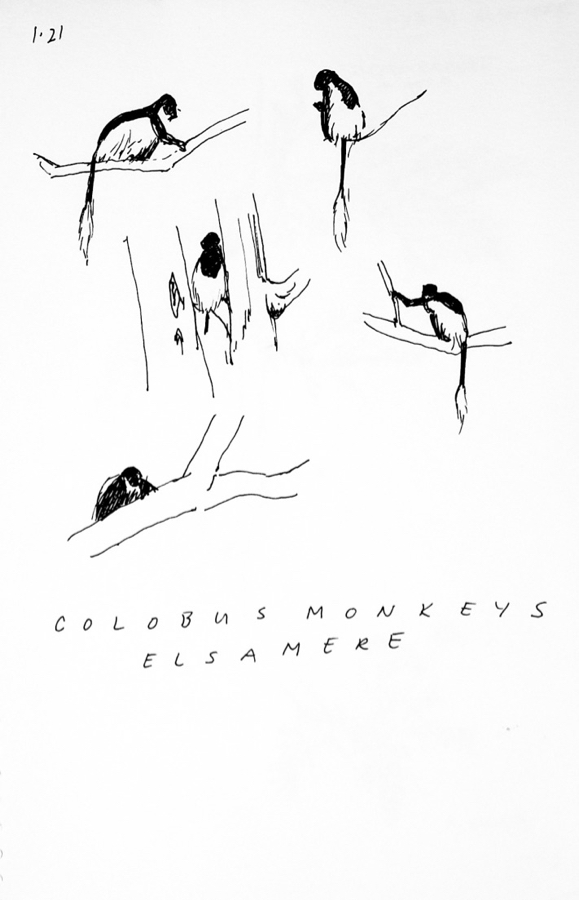
Colobus monkeys, Elsamere, Kenya, 1999
These colobus monkeys were fairly far up in the trees and jumping around so I simply and quickly sketched in the black bodies, leaving the white feathering the color of the paper.
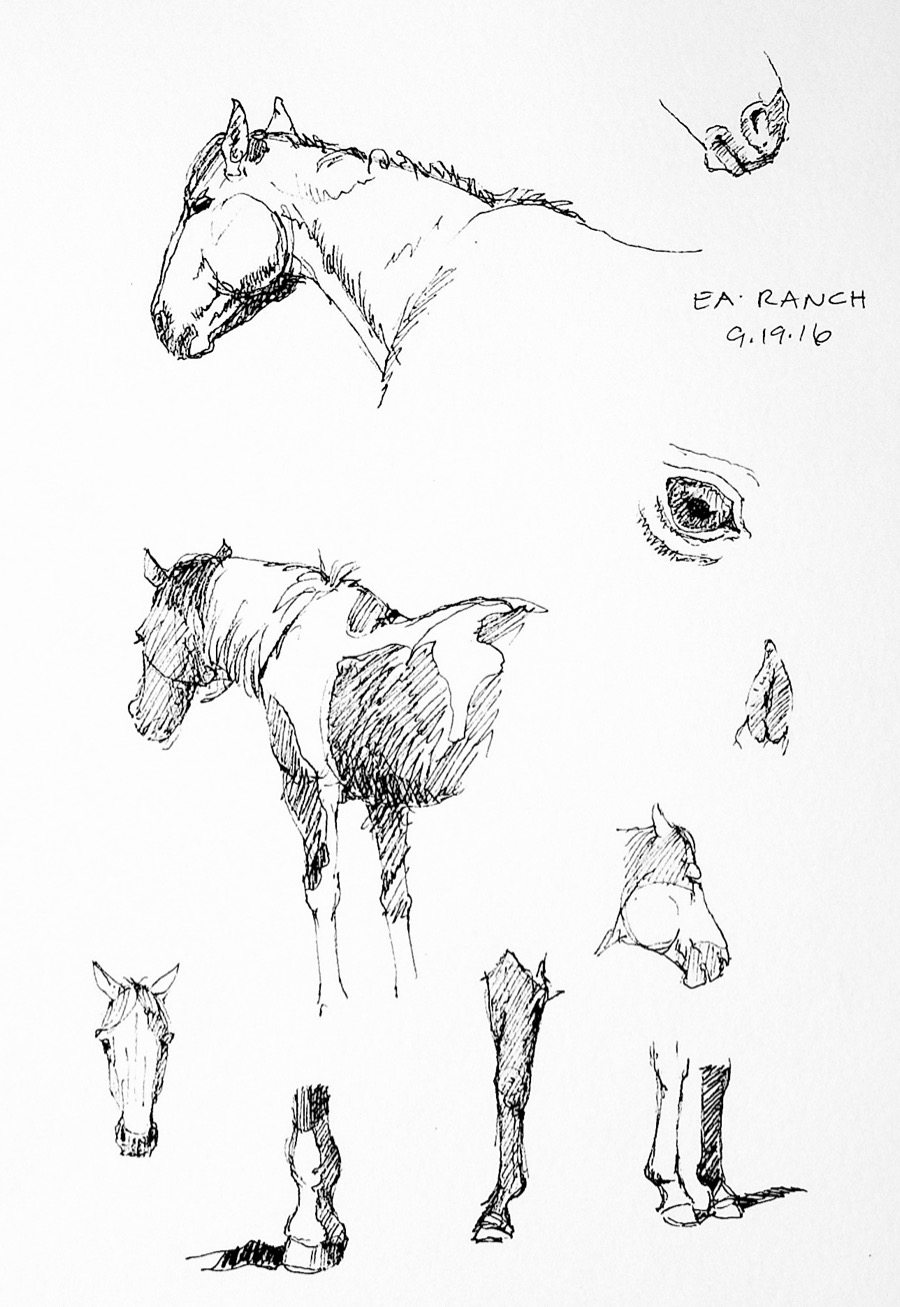
Horses, EA Ranch, Wyoming, 2014
The horses were in a corral standing around, so I had time to add things like the pinto markings and do eye, leg and hoof studies.
I was sitting up on the rocky hillside of a valley in the reserve when I did these quick sketches of the world’s largest mountain sheep. I’ve seen them many times and have painted them, so I “know what they look like”.
Berlin Zoo, 2004
These barbary sheep and tahr posed nicely for me so I was able to do much more finished sketches that I usually manage.
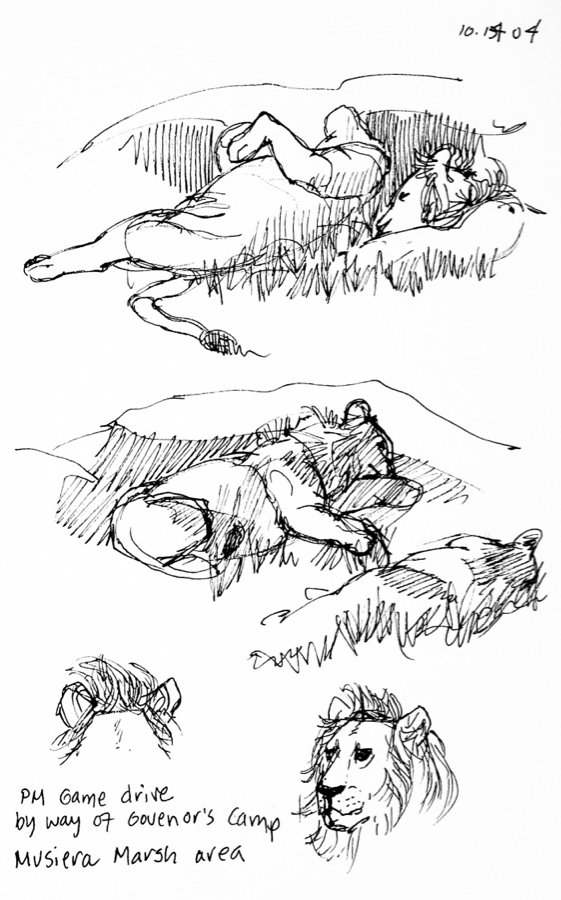
African Lions, Masai Mara, Kenya, 2004
I’ve had the good fortune to go to Kenya twice, once in 1999 and once in 2004 and would love to get back there sometime. We were driving to our campsite and came upon this lion and lioness in the throes of “temporary love”.
While animals are my favorites subject, I sketch pretty much anything interesting that crosses my path. I also like to record an animal’s habitat, which creates a specific kind memory that one doesn’t get from only taking photos.
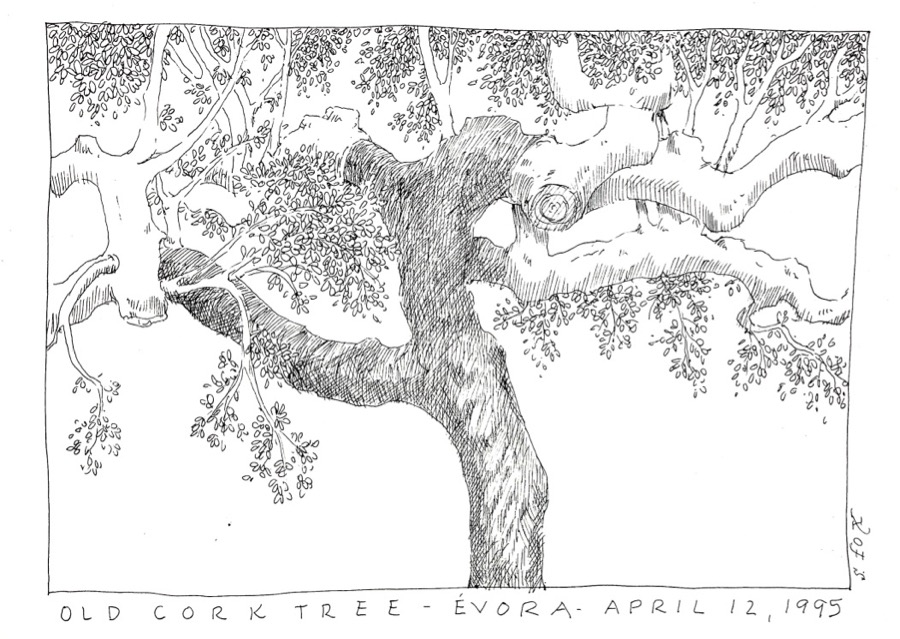
Cork tree, Portugal, 1995
On a trip to Portugal with a number of other artists we stayed at an old farmhouse that was surrounded by cork trees, the same ones that wine corks come from. They were full of character. I was interested in the twisting branches and trunk.
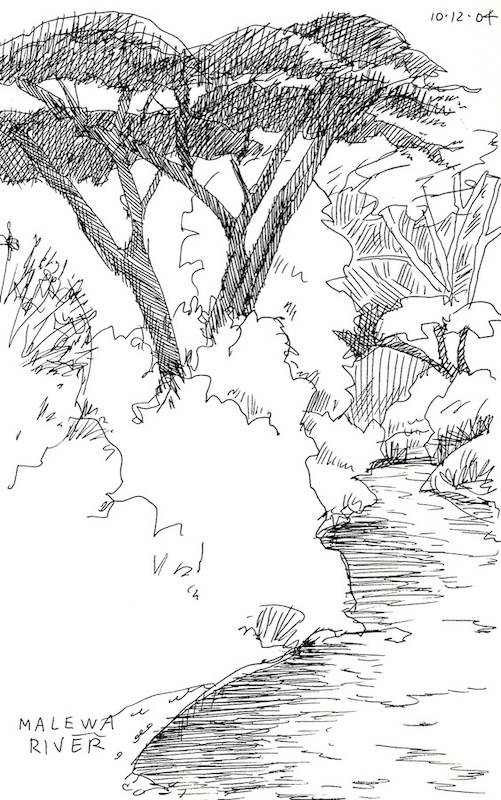
Malewa River, Kigio Wildlife Conservancy, Kenya, 2004
This scene was near the lodge we stayed at in the conservancy. I didn’t have a lot of time between breakfast and departure, so I focused on the river going back in space, the large, tree and left the rest of the vegetation as outlines.
I’ve had the good fortune to travel to England quite a bit over the years. I love drawing the wonderfully picturesque historic buildings.
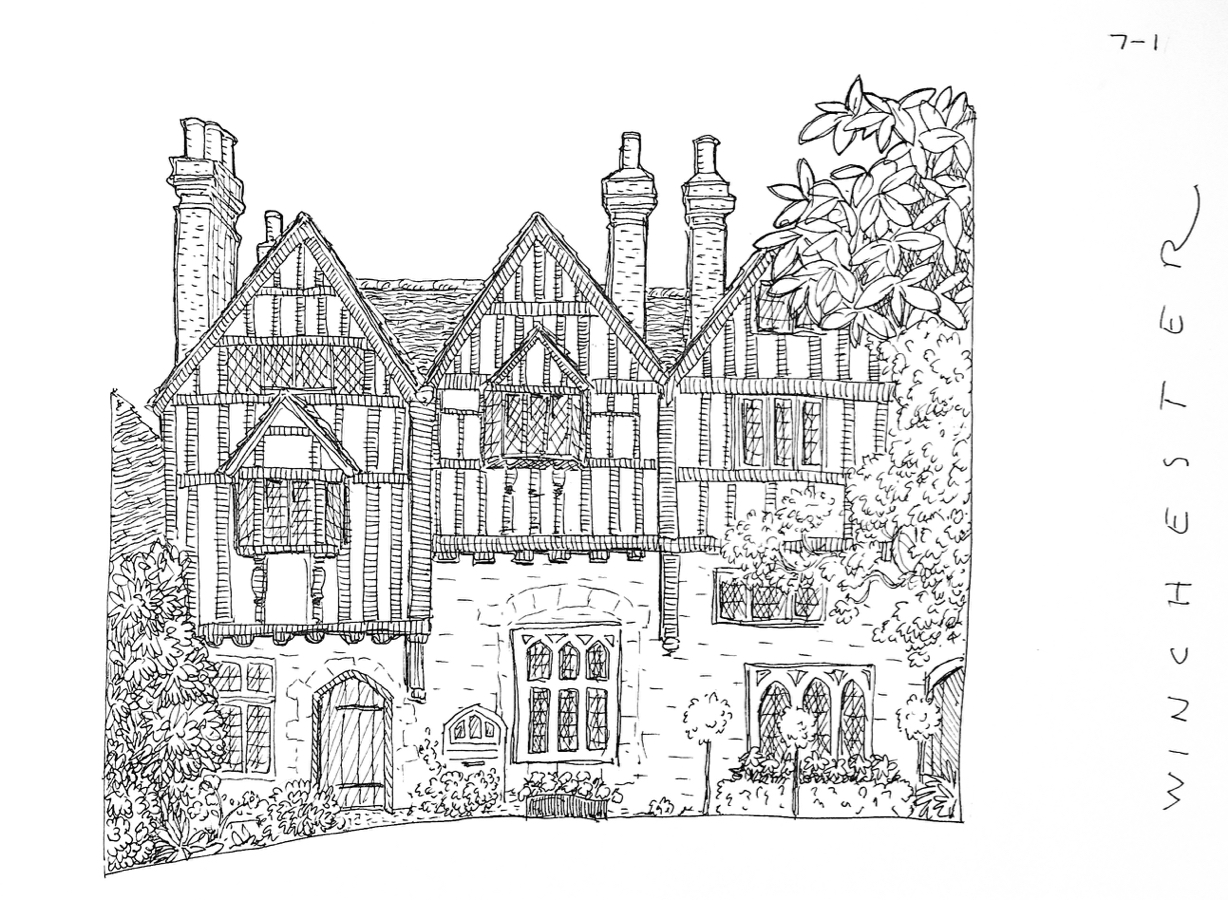
Winchester, England, 1995
I had plenty of time to lovingly sketch the half-timbering, windows and shrubs of this wonderful old building.
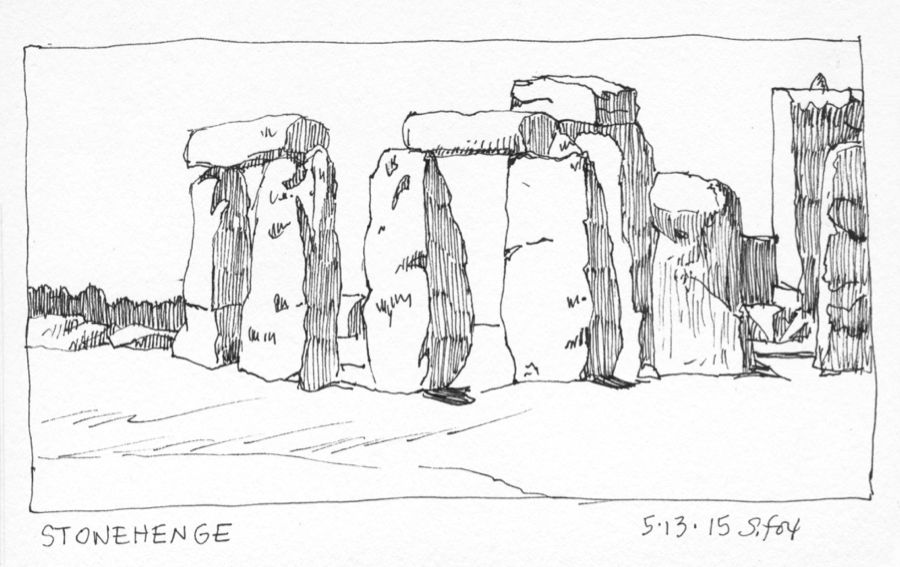
Stonehenge, England, 2015
Getting to sketch at Stonehenge a few years ago was a tremendous treat. In order to do a number of drawings from different angles I kept it really simple….the shapes of the stone themselves and then filling in the shadow sides.
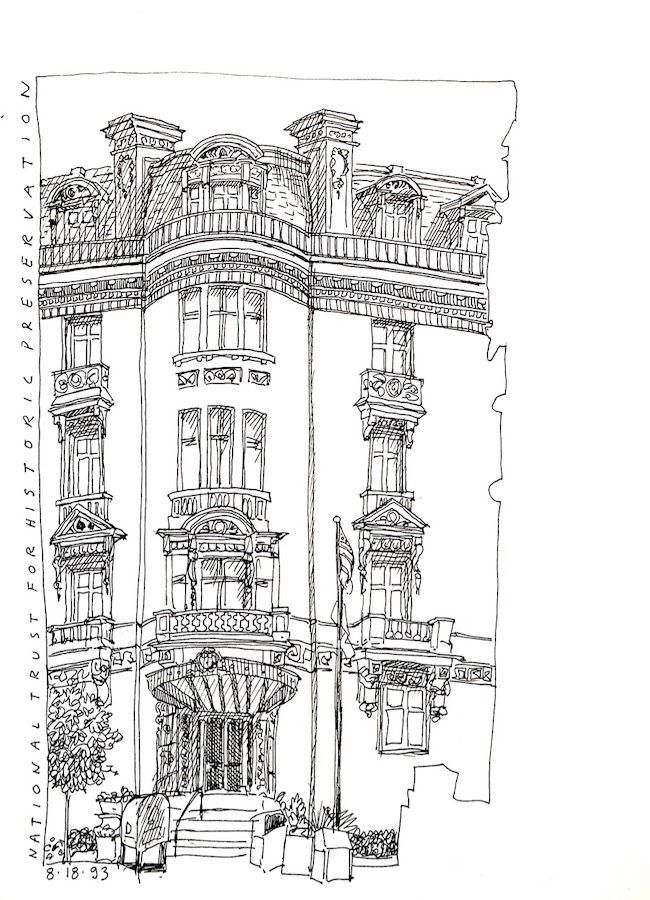
Washington D.C., 1993
I also sketch during trips around the USA. I enjoy playing around with edges, cropping in as needed. I didn’t want to bother with the building next to my subject, so I just left it as a silhouette in reverse.
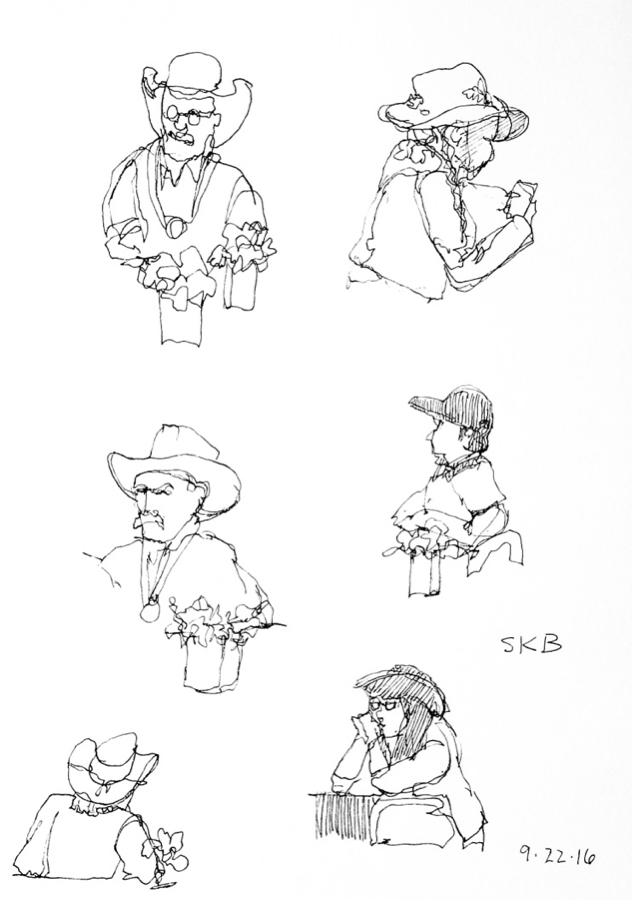
Susan K. Black Foundation workshop, Wyoming, 2016
When I did these super quick people sketches I was experimenting with contour drawing. None of them took more than a minute or so. I’ll be showing you how to do it.
The above sketches were done with pens, mostly Sakura Micron .01s. I also work in watercolor on location.
My current travel watercolor kit.
All of the above goes into an REI daypack.
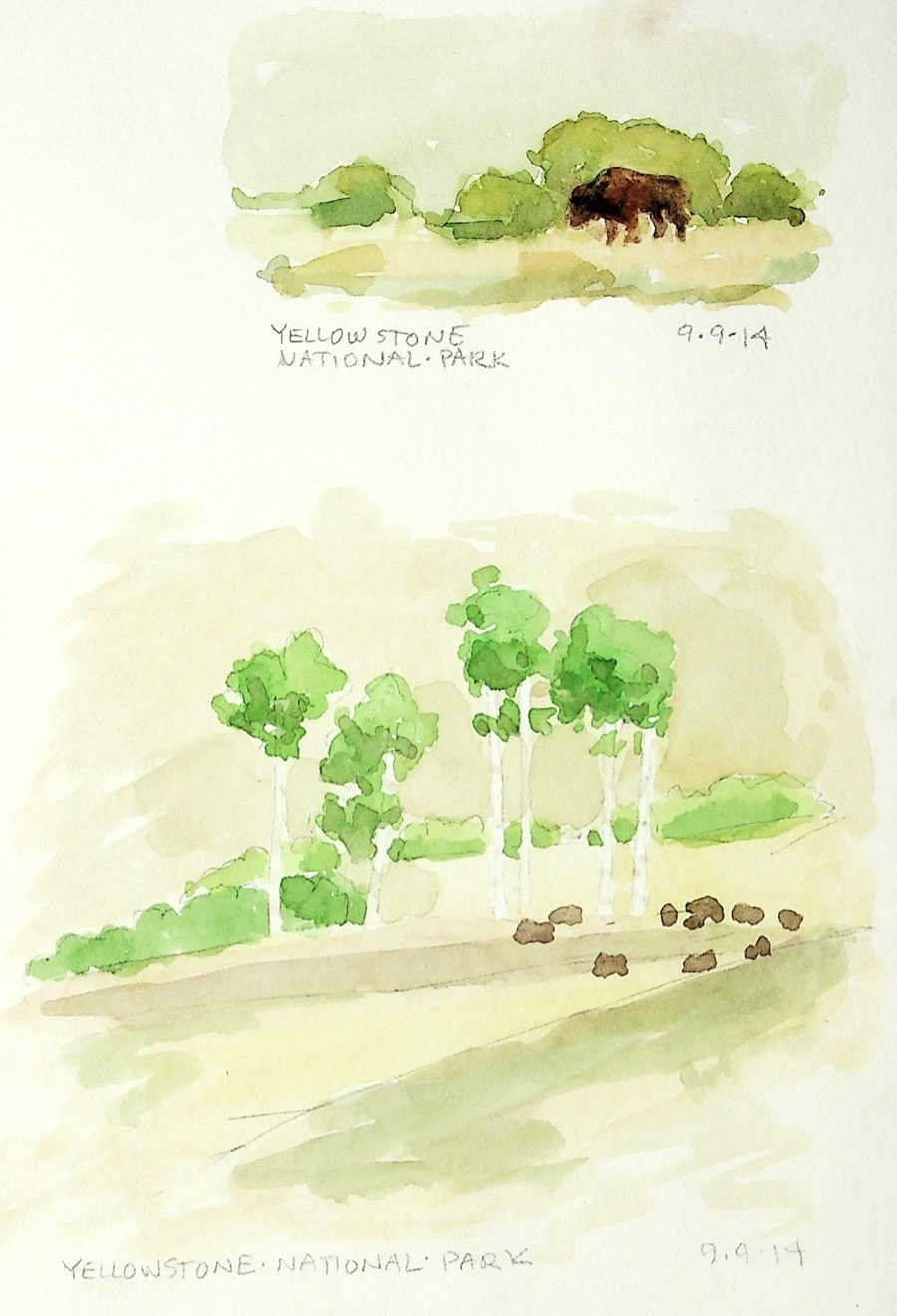
Bison, Yellowstone National Park, 2014
Quick watercolors just to capture the day and the bison.
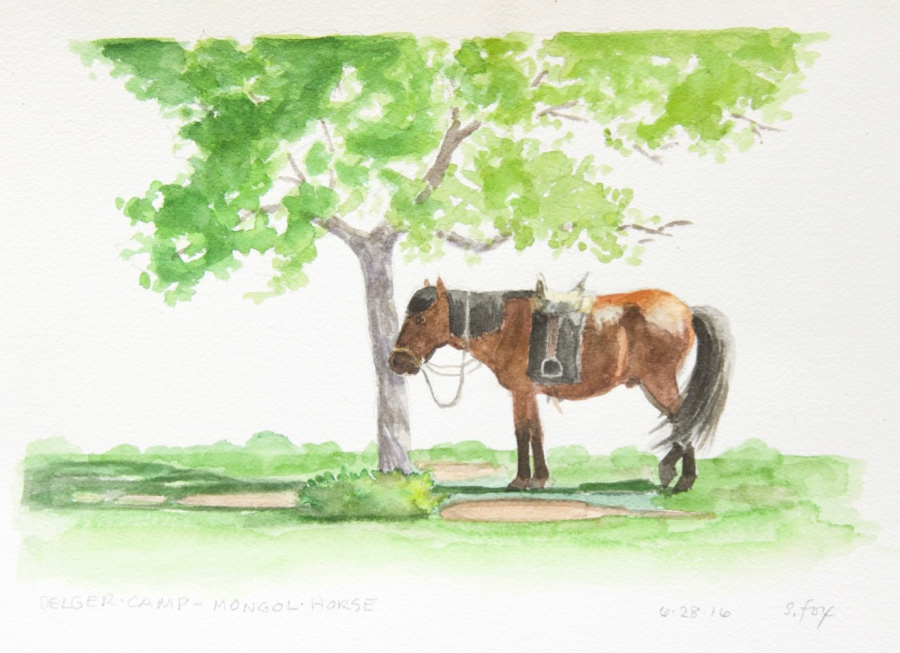
I spent a couple of hours on this painting, making sure that not only was the horse drawn correctly, but that the saddle and bridle were right. I went up close a number of times to check details. The horse would shift a bit, but then back into the position I’d drawn. Something to remember about sketching animals…they tend to move in a repeating pattern, so one can stop, wait, maybe start another sketch, then pick up the first one once your subject is back in place.
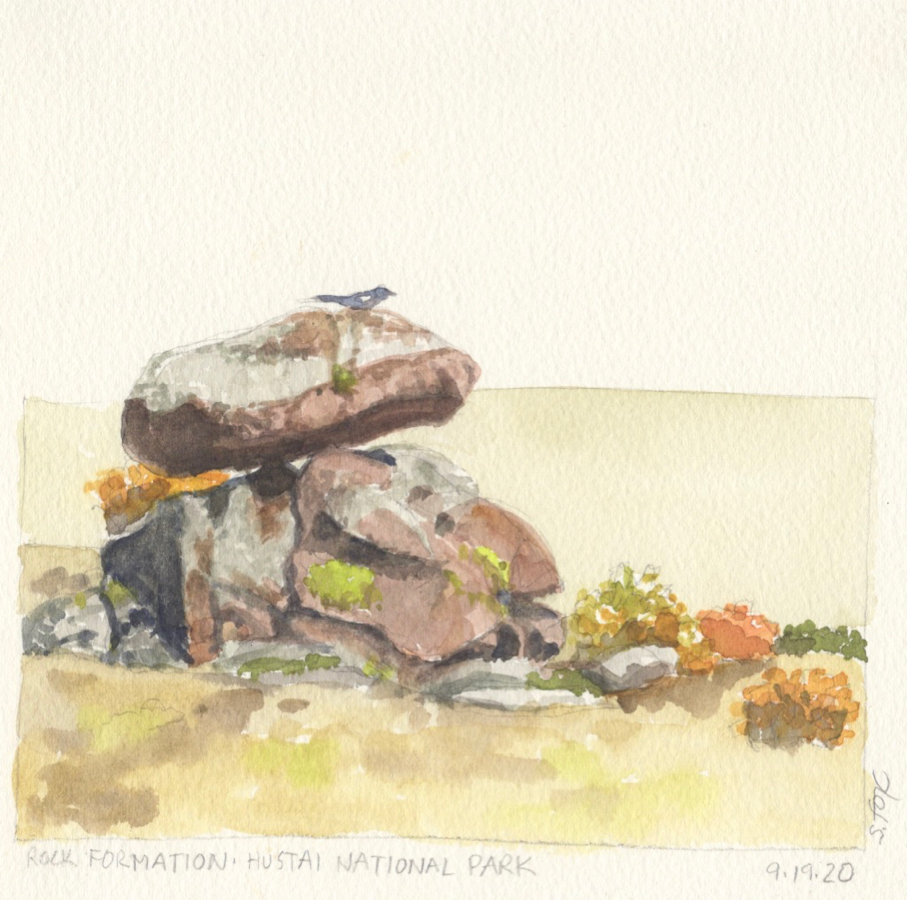
Bird on rock, Hustai National Park, 2012
I was sitting on a rock at Hustai, painting this interesting and colorful small rock formation and the surrounding fall foliage when the bird, I think it was a magpie, landed on the top one. I dropped my brush, grabbed a pencil and quickly sketched it in.
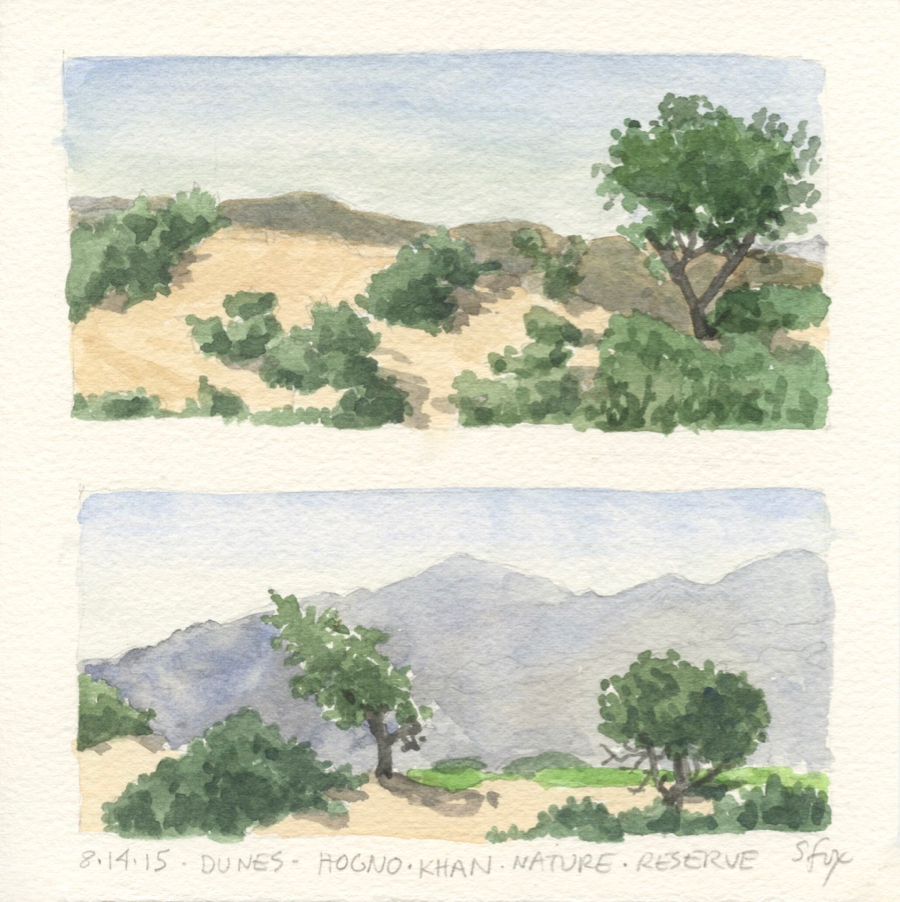
Dunes, Hogno Khan Nature Reserve, Mongolia, 2015
I carry a small stack of 8×8″ pieces of Sanders Waterford cold press watercolor paper with me in a gallon ziplock baggie, along with a small foamcore board with packing taped edges and a roll of drafting tape. I’ve found that I really like the small square size and can, as I did here, easily place two smaller horizontal format paintings on it.
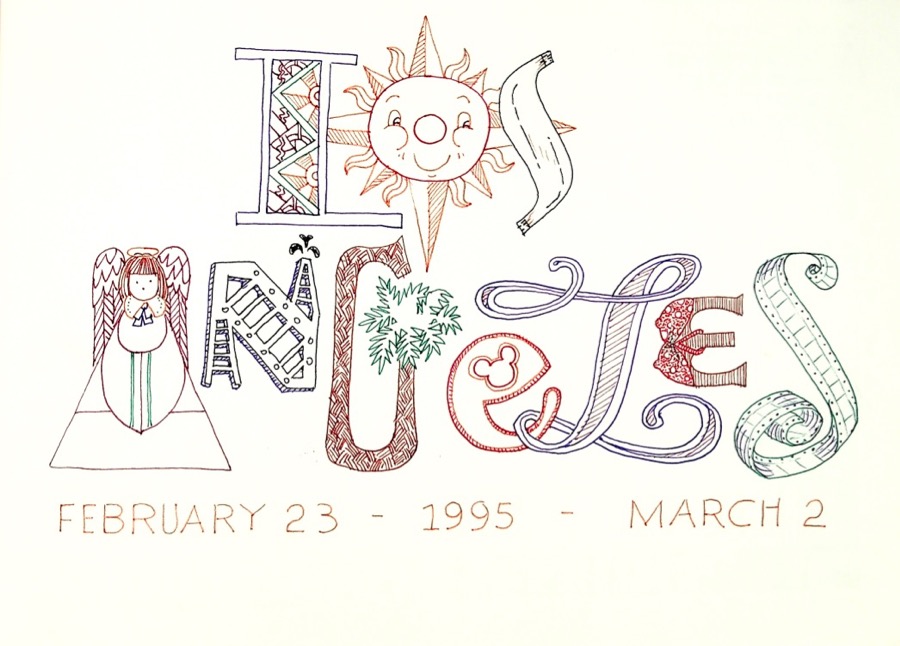
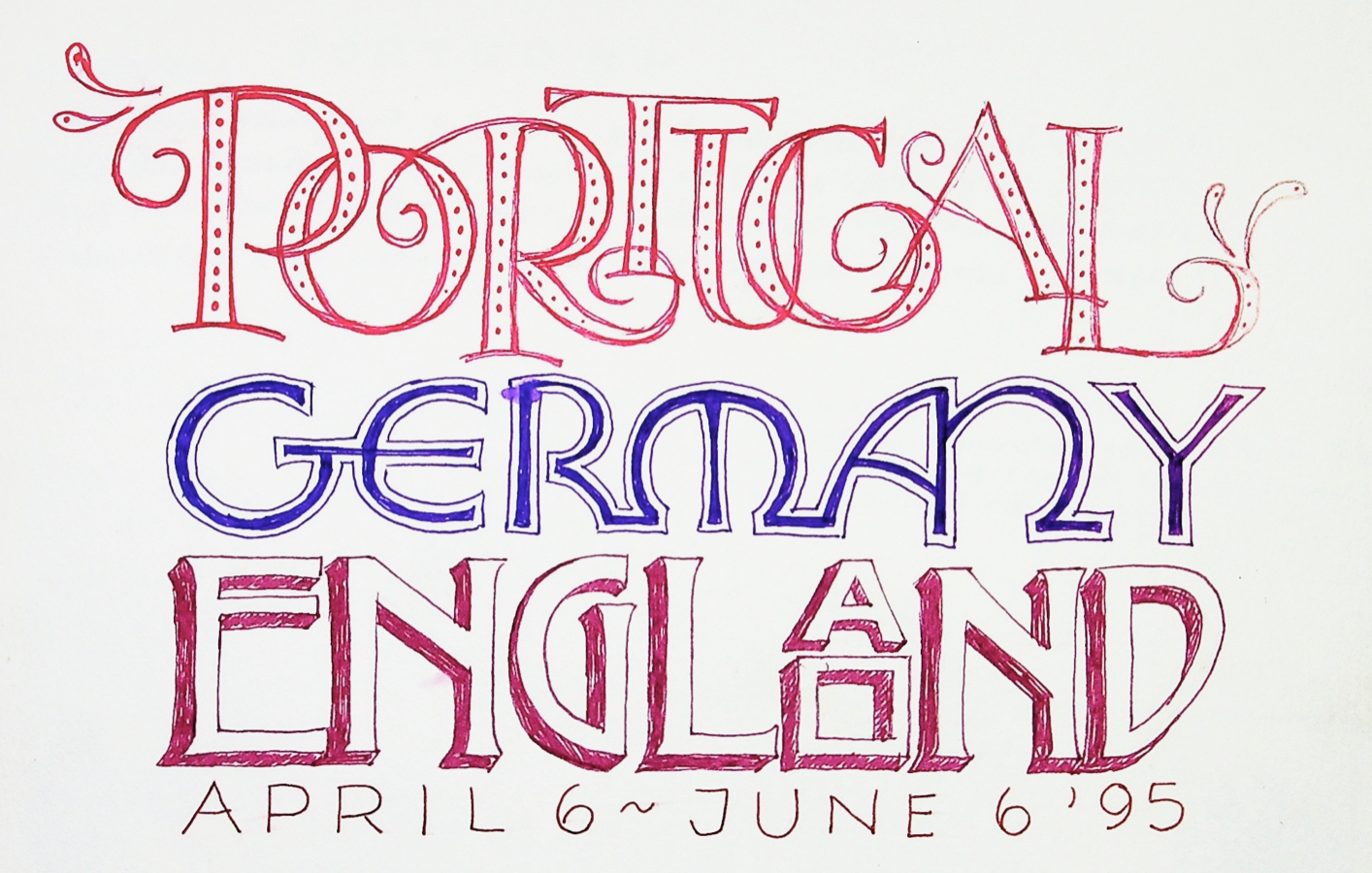
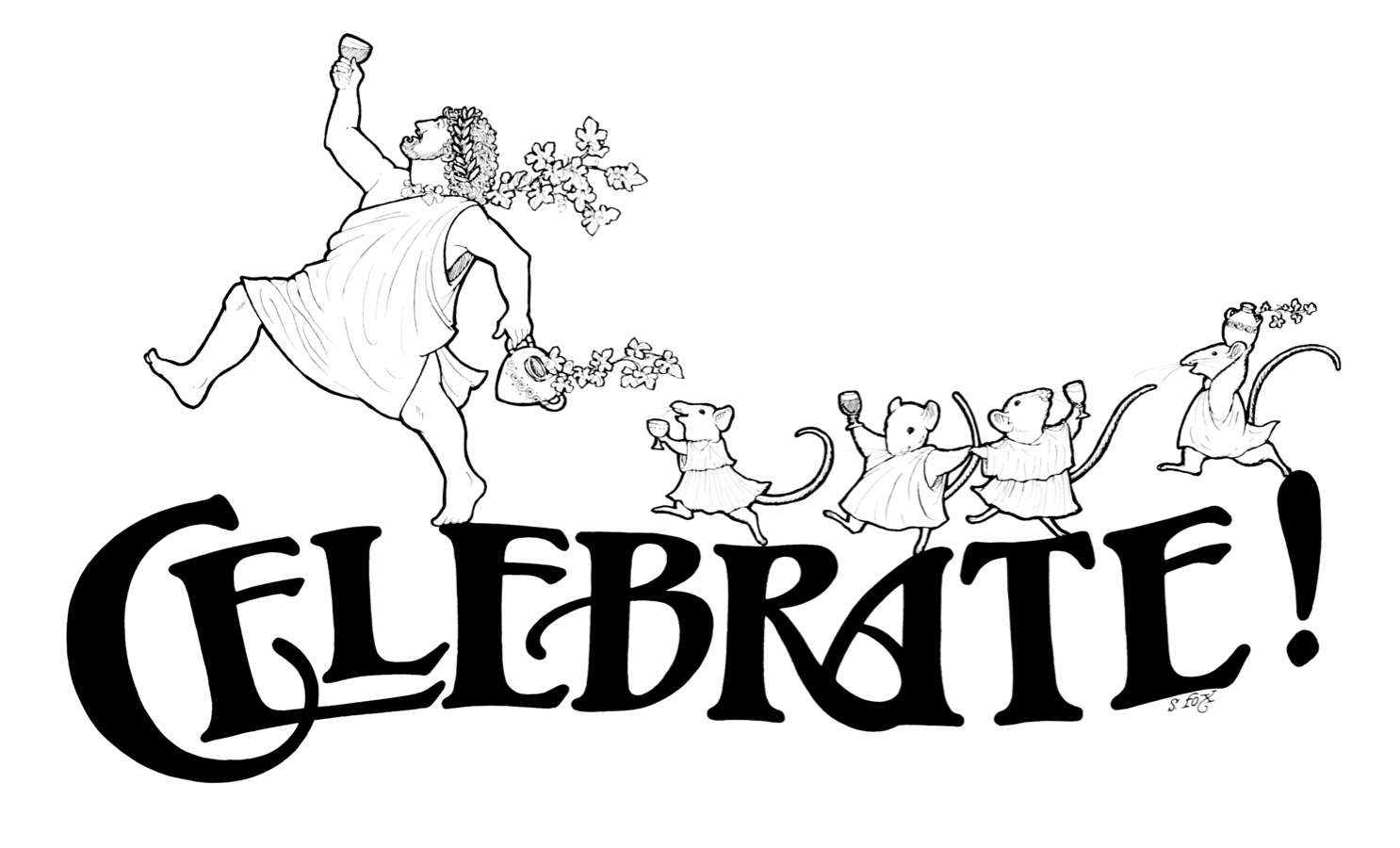
And, lastly, I’ve done calligraphy and handlettering for over forty years. Both are also undergoing a revival and I’m considering offering tutorials and maybe a online class or two for that. Here’s a few samples of my lettering…
Title page for 1995 trip to Los Angeles
Title page for 2016 sketchbook
Journal title page, Mongolia, 2016
From my illustration days, the heading for wine tasting calendar,
I’ll be posting the latest news about SketchWild here on my regular website and also in my Facebook group, FoxStudio. Let me know in the comments what you think and what you’re interested in learning!
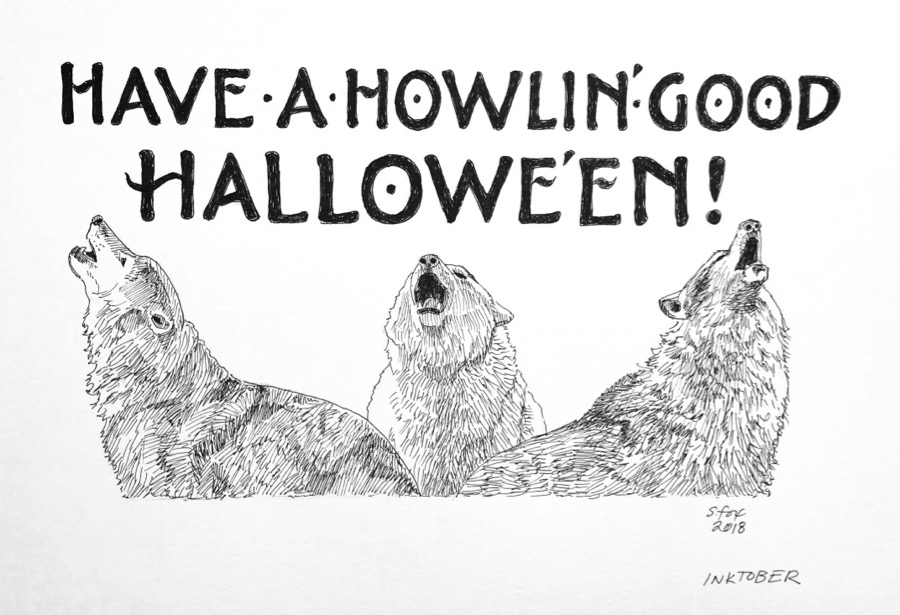
Inktober 22 “Howlin’ “– Well, this is it for 2018 Inktober. I hope you’ve enjoyed my contributions. For this one, I reached waaay back into my past as a calligrapher, lettering artist and sign painter, which was definitely fun. So it’s all hand drawn with a pen over a pencil layout. The wolves are from two locations. The ones on the right and left were at the Grizzly Discovery Center in West Yellowstone, Wyoming. The one in the middle was part of a pack of white wolves at the Tiergarten in Berlin, Germany. I’ve been wanting to use my howling wolf reference for quite awhile. Copic Multiliner SP .25 and .1 pens on Strathmore 300 vellum bristol.
Inktober 21 “Cape Buffalo” Love these guys. One of my favorites. I’ve seen them home on the range in Kenya and even from a safe distance these big bulls have tremendous presence. This one was at Lake Nakuru National Park. Gillott 170 nib, Diamine Jet Black ink, Strathmore 300 vellum bristol.
Inktober 20- “Khomyn Tal Takhi Mare” I’ve been to the Khomyn Tal takhi reintroduction location in northwestern Mongolia twice. Once in 2006, two years after it was established, and again in July 2015. Takhi/Przewalski’s horse (Equus ferus) are the world’s only surviving species of genetically wild horse. I first saw them at Hustai National Park on my first trip to Mongolia in 2005. They’ve been one of my favorite art subjects ever since. Pilot EF fountain pen, Prismacolor white pencil, Strathmore Toned Tan sketchbook.
Inktober 19- “Dragonfly” One of the first things we did when we bought our one acre property over ten years ago was to put in a big pond, almost 40×40’. Within a couple of months two species of frogs, Pacific tree frogs and endangered red-legged frogs, showed up. Since then we’ve had up to five species of dragonflies during the summer and fall. In fact, we saw a couple of the big green ones yesterday, late survivors. I did the drawing from a photograph of one of them from a couple of years ago. Wasn’t easy getting any in focus but I did succeed. I used a Corricolo Blanzy Poure nib, Diamine Jet Black Ink in a Stillman and Birn Zeta series sketchbook. The Zeta paper works really well with dip pens.
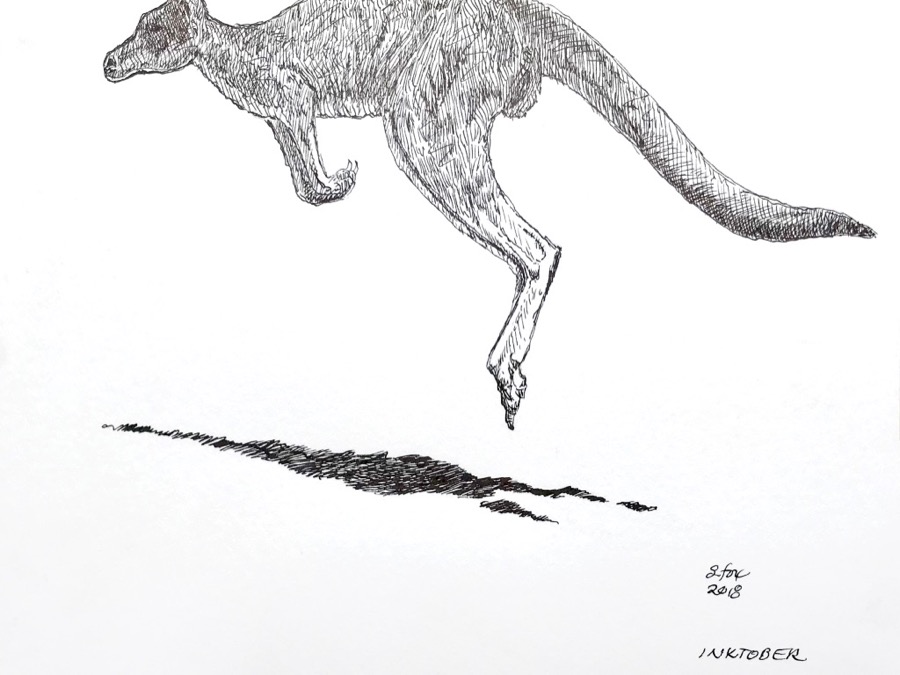
Inktober 18 “Kangaroo” Today’s piece is, like the gorilla, doubling as a study for a painting. Photographing the kangaroos at the San Francisco Zoo some years ago inadvertently ended up with this cropping, which I really, really liked. Tried out a looser outline and line work just for fun. Strathmore 400 vellum bristol, Esterbrook Radio 956 nib and Diamine Jet Black Ink.
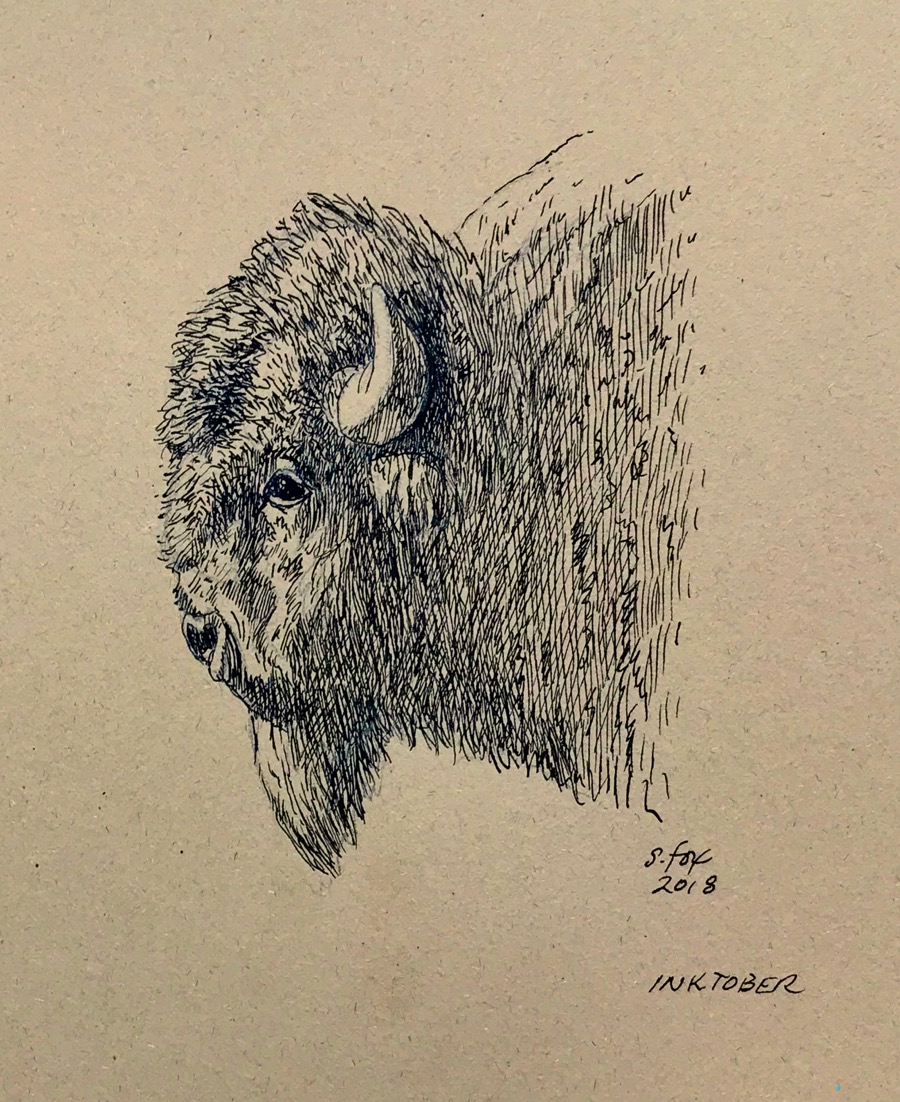
Inktober 16 “Bison”– I love drawing bison! Especially the big bulls who are attitude from one end to the other. I saw this one in Yellowstone National Park. Went international with the supplies this time…a Yaroslawl “Orgtechnika” nib from a Ukrainian seller on Etsy. The nib has a hammer and sickle stamped on it so maybe they bought or acquired the inventory of an old Soviet era pen nib factory since they offer lots of different types. In any case it’s a great nib for drawing even though I’m sure in was intended for writing only. Perle Noire ink from Herbin in France. And a Global Arts “hand-book” Kona Classic sketchbook.
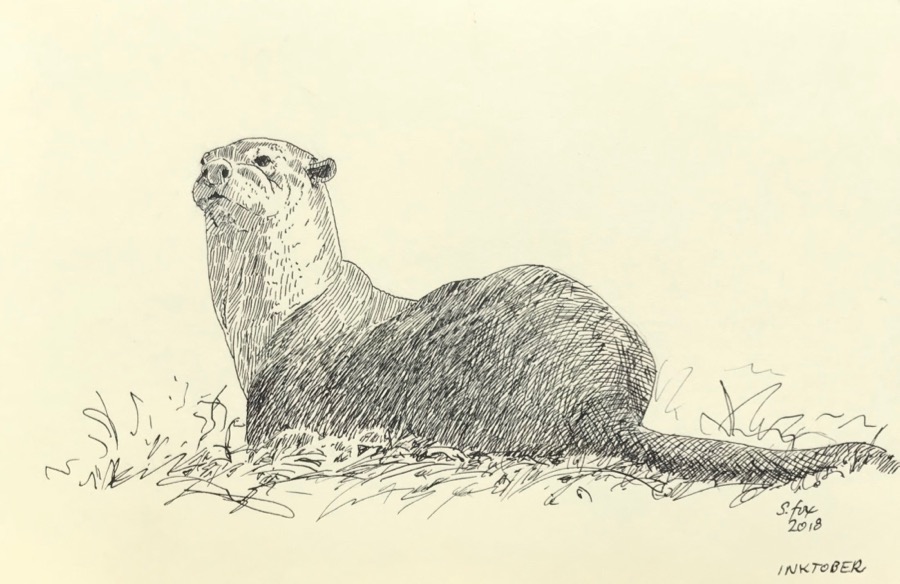
Inktober 15- “River Otter” Spent quite awhile watching this river otter on the bank of Big Lagoon, not far from where we live. I used a Gillott 404 dip pen nib, Higgins Eternal ink in a Stillman & Birn Delta series sketchbook.







 Susan Fox, American Artist