Well, I’m finally doing it. After using IBM-based PCs for almost 15 years, I got a spiffy new iMac with the 24″ monitor a couple of weeks ago. It was a no-brainer once I decided that there was nothing to do but suck it up and re-catalog my 8,000+ images. All my music CDs are done- over 400 of those. Eight football games and a few week night hours of The Weather Channel and Animal Planet later.
I’d been toying with the thought of doing this for awhile, but the clincher was when my husband, who has over 40 years experience with computers, stated that he was “scared” of working with my PC-based image management software, IMatch. That got my attention. It turns out that while the program does what I need quite nicely, it’s a nightmare under the hood for a variety of reasons I won’t bore you with since I have a tenuous grasp on the technical problems myself.
First impressions? I feel like I just traded in a Model T Ford for a 2008 Ferrari. Microsoft should be afraid, very afraid.
I’ll be re-cataloging my images using the Apple product Aperture. I had it pre-installed and, after the machine had arrived, learned of the existence of Lightroom, the Adobe product. Aperture seems to put more emphasis on organizing images anyway, which is what I really need it for. I can use Photoshop (upgrade time) for tweaking.
Needless to say, I can hardly wait to start painting and drawing from the phenomenal glossy iMac monitor. It’s as much more luminous than the Planar flat screen I’ve been using as the Planar is from the prints I used to use.
In the interests of simplicity and consistency, I was planning to replace my beloved IBM X31 with a MacBook Pro. But wait, Steve Jobs just announced the Air ultra thin notebook. Whew, that was close. Glad I didn’t have the money right away. Clearly, in the Apple world, it’s crazy to buy anything significant after about October in any given year.
In other news, I got an email a few weeks ago from someone in Germany who had been on my website and saw the photos of Mongolian herder’s dogs I have there. Berit Kaier is a member of a non-profit dedicated to the preservation of these dogs, called Tibetan mastiffs, and is putting together a brochure about the dogs. She was hoping that I would give them permission to use some of my images. Of course I said “yes”. Here is what I sent her-

Photographed from train, spring 2005
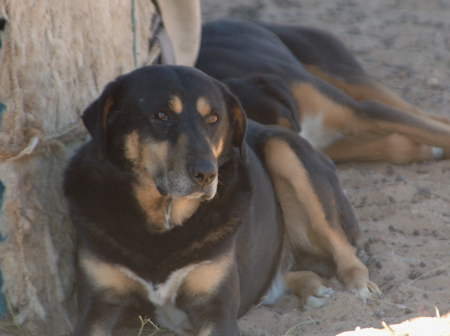
Western Mongolia, fall 2006
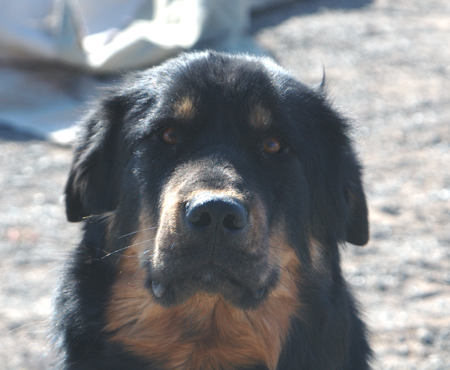
Gobi Desert, fall 2006

Near Hustai National Park, spring 2005; the basket is for gathering dung to use as fuel
The dogs have a reputation for being “protective”. In fact, the traditional greeting when approaching a ger (Mongolian for “yurt”) is “Hold the dogs!”. The only aggressive one I’ve encountered so far was the mother of the puppies, above, and the woman did have to hold her while we went into the ger. Otherwise, they’ve kept an eye on us or even seemed friendly. Since I hadn’t had a rabies vaccine, I had to resist any temptation to pet them, just in case.
The purebred version is threatened by inbreeding with other types of dogs that have been introduced into Mongolia, like the German Shepherds the Russians abandoned when they left Mongolia in 1991. I saw what looked like purebred shepherds living the feral life around Ulaanbaatar and I have seen quite a few dogs that obviously have shepherd in them- prick ears and the black saddle.
The herder’s dogs stay near the ger and, I have the impression, get scraps when an animal is slaughtered or they fend for themselves. In the reserve where I did the Mongolian Argali Earthwatch project, the researchers were surprised and somewhat dismayed to find that one of the major causes of argali mortality was predation by the mastiff dogs.The next trip to Mongolia is planned for September of this year. Along with everything else I want to see, I hope to find out more about the dogs and get a lot more photos of them. I think that they would make interesting subjects.


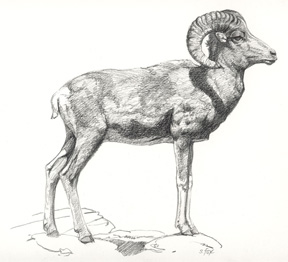


 Susan Fox, American Artist