Here’s the Gear; Reviews When I’m Back

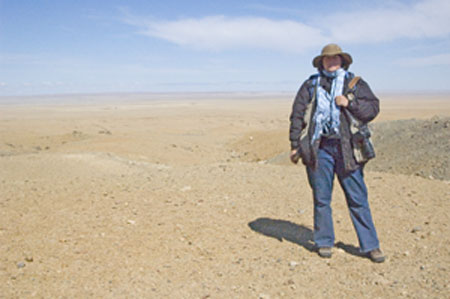
"Me in Mongolia", Ikh Nartiin Chuluu Nature Reserve

To conclude my postings about fieldwork, here’s a partial list of the gear that I’m taking to Mongolia next week. Everything has to meet certain requirements of function, weight and cost. This isn’t extreme travel (read anything by Tim Cahill for that), but we will need to be self-sufficient and ready for dramatic swings in weather since Mongolia is landlocked with no marine influence. Rain shouldn’t be an issue, but cold nights and wind are likely based on my limited past experience. Days should be nice, even hot, at least early on.

My fond hope is that this and the previous posts will de-mystify getting out into the field by providing specific information on one way to do it.

Most of the following has gone with me before, but there are a few new things, which I’ll start with:

Thermals- Icebreaker 260 100% merino wool long-sleeved top and leggings. Not cheap, but half the bulk of what I used to have.

Pants- LL Bean Pathfinder Ripstop Cotton; less bulky than jeans; my husband loves the pair we bought him so much, he’s getting two more, so I decided to try them, too.

Shoes- New Balance 644 “sneakers” (645 follow-on); for around camp and town

And, going with me again:

Boots- LL Bean Gortex Cresta Hikers; they say you can wear them out of the box and I found that to be absolutely true. These are great boots!

Socks- Thorlo Light Hikers, daytime warm; Smartwool for cold and at night as needed; they don’t itch, so I don’t have to take silk liner socks anymore

Layers- Patagonia fleece pullover, purchased used at Wilderness Experience consignment shop, Berkeley. Black, lined jacket (see photo at top) from TravelSmith; purchased for first trip to Kenya in 1999, so no longer available, but still going strong; have only had to mend torn corner of front patch pocket.

Purse-MetroSafe200; has a steel cable in the shoulder strap and all the zippers close forward so no one can slip it open; it goes into my daypack, which is one of my two carry-ons; Peace of mind in unfamiliar cities in any country.

Neck- a long blue kaffiyeh-print scarf that I picked up somewhere; more versatile than a bandana; muffler when cold; face or camera protection from dust; wet rag or washcloth; style points in photos, like above

Hat- canvas, foldable, 360 brim from The Australian Outback Collection; took a few tries to find the right one; also gets style points (see photo above); and a baseball hat to get my hair up and out of the way in camp when showers are unavailable

So, why care about “style points”? Because part of being a working artist who intends to make a living is marketing and one’s “story”. Part of mine is the trips I take, which my friends, fans and buyers get to share. Pictures of me are part of it and I don’t want to look like a dork.

the Sleeping Bag- I can’t begin to tell you how much I hate mummy bags. It affects my sleep and I never seem to really adjust since I’m a curl-up-on-my-side sleeper. Bless their hearts, LL Bean makes one of the very few rectangular down bags for my kind of field use. It’s rated to 20F.

I do have a couple of different Thermarest pads, but the tour company provides one, so mine stay home this time.

Luggage- I have a pair of LL Bean rolling duffles that have clamshell top openings. I love them, but they aren’t available anymore. My big bag, their Sportsman’s Extra-Large Drop Bottom Rolling Gear Bag, however, is. I got it because even the larger of the two clamshell duffles won’t hold the Thermarest pad. Not long enough. The smaller one is carry-on size. It gets the camera equipment and just-in-case basics. The daypack has the laptop, documents, book, food, etc. and my purse.

Last post until I manage to get on-line in Mongolia.

Cheers!

ART TIP OF THE DAY

“I don’t mind hard work. You’ve got to work hard to generate something. I don’t think there’s any secret to success if you show up in the right place, at the right time and you put in a lot of time and effort and energy – you’re going to get something out of it. It’s not brain surgery.”

Ryan Seacrest, ex-actor, now host of American Idol and Dick Clark’s heir apparent as “America’s Host”

Mongolia Monday: The Five Snouts, Part 5

At last we come to the most important “Snout” of all for Mongolians, the horse. I was told that Mongolians sing about three things: the land, their mothers and their horses. The classic Mongolian musical instrument is the “morin khuur” or horse-headed violin. Here are some that I saw at the Mongolian Artists’ Union gallery in Ulaan Baatar.
Morin Khuur
Morin Khuur

Horses have inspired Mongolian art for a very long time. I happened on this delightful modern “horse art” in the courtyard of the Museum of the Chojin Lama in Ulaanbaatar.

Rainbow Horses
Rainbow Horses

And here’s the explanation that was nearby. This was in September of 2006 and I have no idea if they are still there, but the museum is on the list for the upcoming trip, so perhaps we’ll be lucky and get to see them again.

Rainbow Horse project sign

I find that there is often confusion between the, more or less, domestic Mongolian horse and the takhi or Przewalski’s Horse, which is the only surviving species of true wild horse. They are different species. There are domestic horses who have physical traits that indicate a past cross with the takhi, which were extinct in the wild as of 1969. I’ve seen a number of Mongolian horses with some combination of upright, brushy mane, a reddish dorsal stripe, a light eye-ring or muzzle and maybe tarsal and/or carpal stripes on the legs.

As one travels about the countryside, the herder’s establishments are a blend of old and new. Motorbikes, solar panels and satellite dishes aren’t uncommon, but everywhere there was always at least one horse saddled, bridled, hobbled and ready to ride at a moment’s notice. Mongols are, after all, the original horse culture.

The Mongolian horses are beyond tough. They are left to roam at large most of the year and manage to survive weather, down to -40F in the winter, that would kill most other horses. I have read at least two accounts of western writers who traveled across Mongolia by horse and who described the morning saddle-up as “a rodeo”.

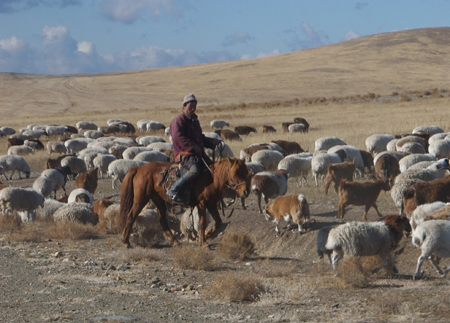
Herding sheep
Herding sheep and goats

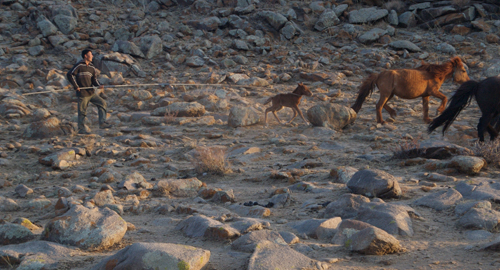
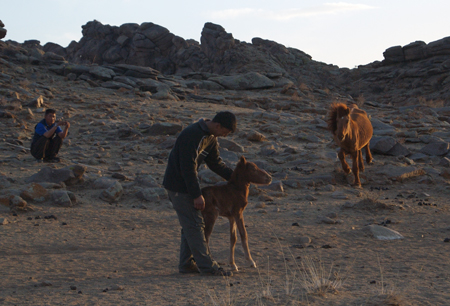
One evening at Ikh Nart, we watched a young Mongolian man capture a foal with an “urga”. Mom was not amused and kept a close eye on things.

Catching the foal
Catching the foal
Getting the foal used to human handling
Turning the foal loose and here comes the mare

One of the things that amazed me when I saw them for the first time at Ikh Nartiin Chuluu was that even though it was spring (and anyone who has been to Mongolia knows what that means weather-wise: cold, wind, dust storms) and most of the horses were terribly thin, many had long- flowing manes and tails that were gorgeous.

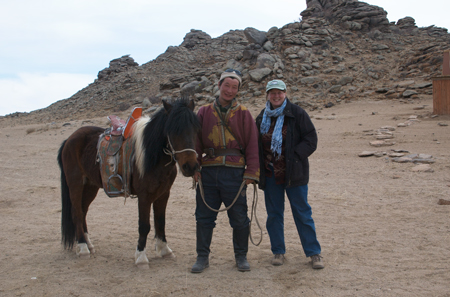
This was one of my favorite pictures from my first trip in the spring of 2005. The young herder was perfectly happy to have his picture taken with me as long as his horse was included. No problem.

Ikh Nart herder and I

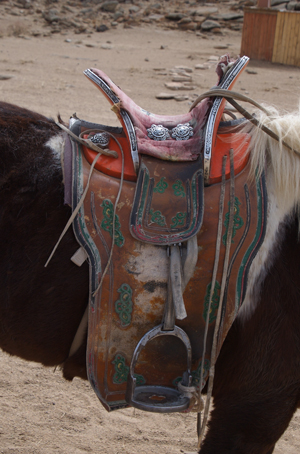
And here a close-up of the saddle. The silver bosses on the side are to “encourage” the rider to ride standing in the saddle.

Mongolian saddle
Mongolian saddle

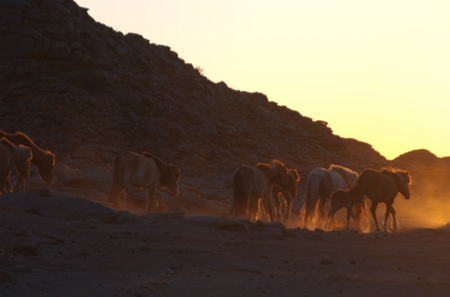
Finally, another one of my favorites; a herd of horses coming down to the stream to drink at Ikh Nartiin Chuluu.

Fieldwork for Wildlife Artists-What I Use

I’m leaving for Mongolia on August 24, coming home on September 21st. As is the case with fieldwork in any really “interesting” place, self-sufficiency is critical. As is the ability to “get the shot”, which means the camera equipment has to be reliable and ready to go at all times.

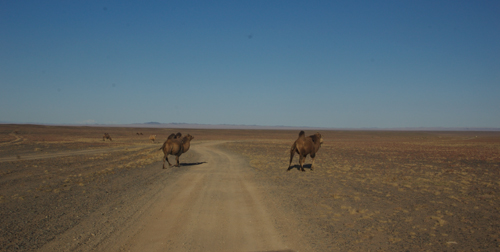
On the road in western Mongolia, Sept. 2006; some of the “endless steppe” of Central Asia

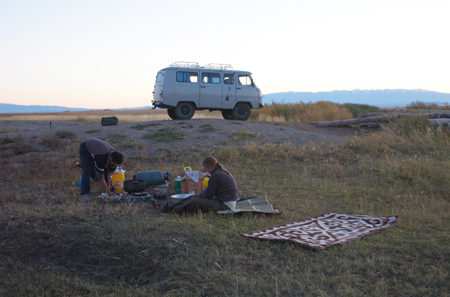
Camp kitchen at Khar Us Nuur, last night out. Trusty Russian Furgon van in the background.

Here’s a list of the gear and art stuff that I need to do my job in the field and bring home the reference that is a large part of why I’m spending the money to go to countries like Mongolia in the first place.

PHOTOGRAPHY

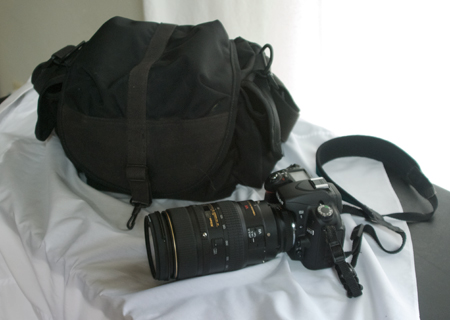
Bag and The Big Lens

2 Nikon D80 camera bodies

1 AF-VR Nikkor 80-400mm lens (effective 600mm on a digital body)

1 Promaster (made by Tamron) 28-300mm lens

Two bodies, two lenses because, with wildlife, there’s never time to swap them, plus risk of dust, dirt, drops

4 2GB memory cards; two Promasters, purchased when I got the camera bodies from my local photography store and two SanDisk Extreme III’s, which are designed to perform in cold, heat, wind, etc.

1 40GB Firelight external hard drive

For the first time- my MacBook Pro. I’ve used Flashtrax and Wolverine external hard drives for storage and back-up till now. This time I’m going to download onto my MacBook and back-up to the Firelight. The MacBook has Photoshop Elements on it, so my hope and plan is to be able to view and create jpgs of some of my images during the trip and post them to my blog when I have internet access. I’ve been interested for awhile now in location-independent functioning for artists and this will be my first experiment in staying connected and sharing the trip in almost “real time”. My husband, an IT professional, will be along for most of the trip, so he’ll be my tech support.

Extra batteries; for a total of four

Battery charger

Inverter for recharging batteries using a vehicle cigarette lighter, critical on the road when there is no reliable access to electricity

I-Sun solar charger; Mongolia does have sun over 300 days a year, so having one of those available was a no-brainer

Probably the Nikon Coolpix for ultimate back-up or for around town

ART STUFF

Fieldwork supplies plus piece done at Hustai National Park ger camp, Sept. 2006

Plastic box with gel pens, carbon pencils, kneaded eraser, sharpener, travel watercolor brush

Some additional brushes

Pelikan gouache 24 pan kit; I like the gouache because it can be used opaquely or transparently

Aqua Tote water holder; folds flat

Aquabee Superdeluxe Sketch Book, 8″x9″- heavy paper that can take any media; I’ll use it for my journal, too.

Annigoni 100% cotton paper, acid free; a natural beige color which provides the same medium value as putting a toned wash on a canvas for oil painting; The inspiration here was Thomas Moran’s fabulous “sketches” from his travels to Yellowstone, done on toned paper, using white “body color”, i.e. gouache, for the lightest areas.

Rags from old clothes, napkins from various restaurants

TO HAUL IT ALL AROUND

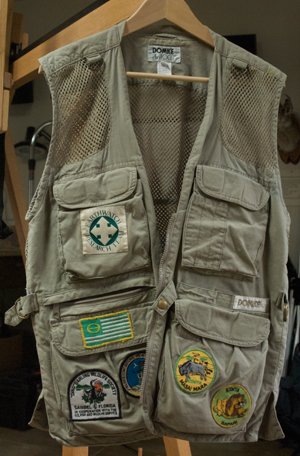
My faithful photo vest; why should photographers have all the good stuff?

1 Domke Super Compact camera bag

1 Domke PhotTogs vest, which I’ve had since 1999; two trips to Kenya, two to Mongolia, plus Yellowstone five or six times and wherever else and it still looks embarassingly new. It’s more or less a substitute for a day pack and has the advantage that everything is more quickly available than if it was in the pack and  it also leaves the hands free. I don’t take a sketchbook bigger than will fit in one of the lower front pockets. The patches are just for fun, but have been good conversation starters over the years. I’ve heard some great stories and gotten useful tips on where to see various species.

1 REI daypack; which gets carried on the plane and holds my laptop, book, plane tickets, hotel/rental car confirmations; folder of other trip info., steel water bottle (which is refilled once I’m through security), protein bars (because I never, ever travel without some food, just in case), and my TravelSmith purse, which has a steel cable inserted into the shoulder strap and zippers which all zip forward under my arm (and that foiled a pickpocket once, as it was designed to).

PLUS, I ALWAYS HAVE

1 Platypus water system for hiking hands-free and still being able to drink water regularly without messing with the daypack. Mongolia has VERY low humidity, so staying hydrated is important. Essentially it’s a water bag that goes in the pack and has a tube that I clip to my vest, so it’s easy to take a sip as wanted.

2-3 Protein bars

1 Pair sturdy hiking boots, ankle high for support on rough ground; a twisted ankle can be serious business in a country with not much in the way of western standard medical facilities (medical air evacuation insurance is a must, also)

1 hat with a full 360 brim and a chin cord

1 Magellen GPS, so I can go off on my own and find my way back. Very liberating!

A handful of bandaids and a compact first aid kit, a bandana, Swiss Army knife, kleenex, sunglasses, lip balm, sunscreen, passport, phrasebook

Maybe most important of all, an open mind, patience, a willingness to go with the flow and find the humor in the ridiculous things that happen when one travels.

FINALLY

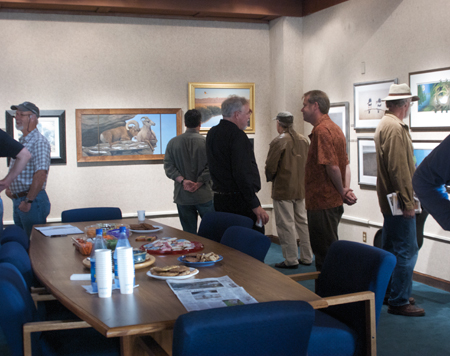
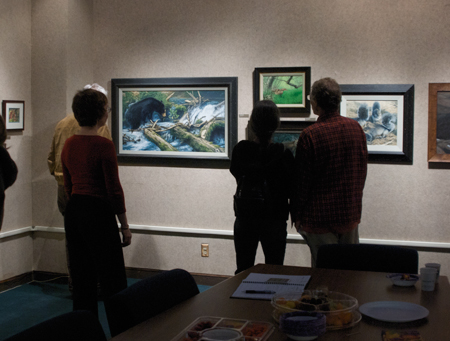
Had a great turnout for the Wild Visions 2 show reception last Friday night! Pretty much non-stop. The show was very well-received. Lots of compliments. Here’s a couple of photos:

The bighorns are my newest major work “Heavy Lies the Head”. Terrific custom frame by Mark at Southstream Art Services.

A few of Shawn Gould’s paintings

Mongolia Monday: The Five Snouts, Part 4

Almost everyone has heard of cashmere. It’s traditionally been associated with other high end luxury goods, like silk and gold jewelry. What isn’t widely known, and I’m hoping this will change, is that the best cashmere in the world comes from Mongolia. Cashmere is superfine angora goat wool. But the goats are pretty special, given that they can tolerate winter temperatures down to -40F.

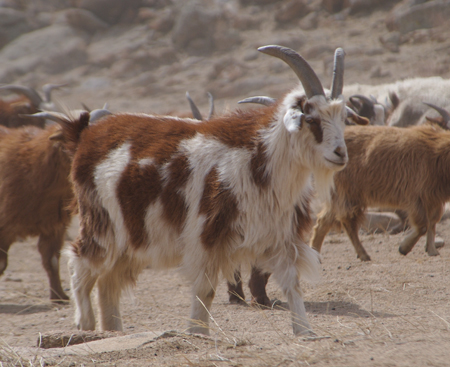
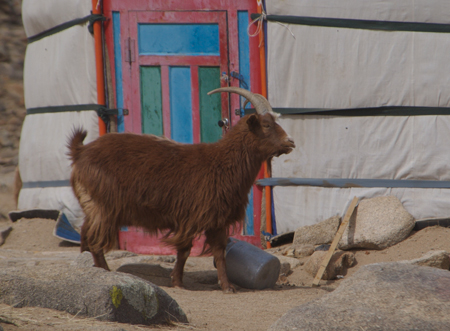
I’ve seen the goats mostly at Ikh Nartiin Chuluu Nature Reserve and found them quirky and fun to watch. As you will see, they come in all shapes, sizes, colors and horn “designs”. But the undercoat is the same on all of them, so the rest doesn’t matter.

While there are businesses in Mongolia that take the raw cashmere and turn it into a finished product, most of the wool is purchased by the Chinese and taken back to China. Our Earthwatch group got to visit Gobi Cashmere in Ulaanbaatar. I brought home a wonderful natural color cashmere neck scarf that is as soft as can be.

But here’s where it starts, with each goat being hand-combed in the spring. Other than the 30 minutes or so they are constrained for combing, they wander free in the countryside, adding a little character and humor to the landscape.

I took this photo on my first visit to a herder’s ger just outside Hustai National Park.

A “pinto” goat at Ikh Nart.

Goats and other livestock being herded through the research camp at Ikh Nart where they had been brought for watering.

There’s one in every crowd. This one just…had…to…see what was in the can.

These goats are part of a large two ger establishment near the Tuul Gol (river) just outside of Hustai National Park.

Answer to Friday’s question: Roses. Vintage Gardens in Sebastopol, California was having an end of season sale of roses that they might be discontinuing, so I’ve ordered a bunch that looked interesting to help preserve them. Most I’ve never heard of before.

Mongolia Monday: The Five Snouts, Part 3

I’ll have to be honest and say that currently I don’t know much about Mongolian sheep. I hope to learn more on the next trip.

I did find a United Nations FAO report that included the following information;
Sheep in Mongolia may be grouped into five types. The common native sheep are multipurpose and low in productivity. The other four are used more specifically for their meat (mutton), carpet wool, milk and good-quality lambskins. Grazing is on year-round pastures with no supplementary feeding, even under severe winter and spring conditions. The sheep are well adapted to the unfavourable ecological conditions of steep mountains and poor vegetation.

One distinctive feature of the native coarse wool fat-tailed sheep is noticeable when new grass grows on the pasture: at this time they grow rapidly, are easy to fatten and have a remarkable ability to store 4 to 6 kg of fat around the kidneys, mesentery and the tail bone. This fat is drawn on in winter and spring.

Sheep are reared according to the natural and economic conditions of the different regions in the country. Improvement achieved by crossing exotic, fine and semifine wool sheep breeds has been rapid in Mongolia and the results reasonably good. The average fleece weight of improved (cross-bred) fine and semi-fine wool sheep is two or three times higher than that of the native coarse wool of fat-tailed sheep. Wool quality has also improved.

There are five distinct sheep breeding zones:

· the northern mountain and grassland zone;
· the central steppe zone;
· the southern semi-arid zone;
· the southernmost, semi-desert zone of the Gobi;
· the Altay Mountains in the west.

The northern mountain grassland zone and the central steppe zone are given over to the breeding of fine and semi-fine wool sheep. In the southern semi-arid zone and the northern enclave, Mongolian fat-tailed sheep are purebred. Selection of breeding stock increases the quantity and improves the quality of the carpet wool.

In the extreme south, the semi-desert area of the Gobi has been allocated to Karakul breeding for lambskins. The production of mutton, fat and carpet wool takes place in the western part of the country and includes the Altay Mountains.

Here are some photos that I’ve taken of sheep.

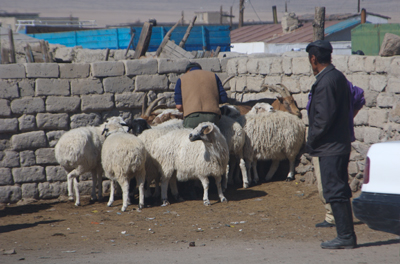
A small flock at the market in Hovd, western Mongolia

“King of the Mountain” at Khar Us Nuur, also western Mongolia. Goats in the foreground, but that’s for next week.

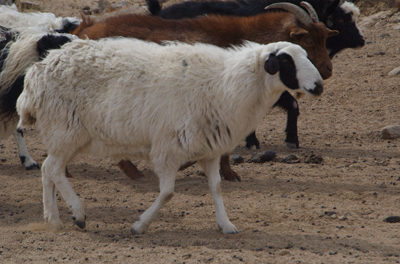
Part of a large group of domestic livestock coming down to the stream to drink at Ikh Nartiin Chuluu Nature Reserve, south of Ulaanbaatar

Finally, for comparison, a wild argali, the world’s largest mountain sheep. This old ram with the amazing horns let me follow him around for almost 20 minutes. As you can see, he is very thin. It was late April and a lot of the animals, wild and domestic were in rough shape from the winter.

One of the main uses of the wool is to make the big pieces of felt which cover the gers. Depending on the weather, there can be one to three layers. I’ve slept in a ger in cold weather with one layer and the next night, one with two layers and the difference was quite noticeable.

One of my most useful souvenirs from Mongolia are my felt slippers. I also got a pair of felt boots. Both are amazingly warm and comfy. I would recommend them to anyone who gets cold feet!

Mongolia Monday: The Five Snouts, Part 2

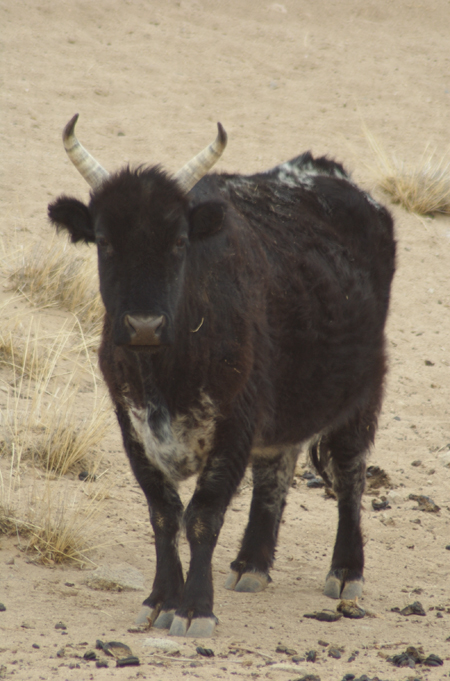
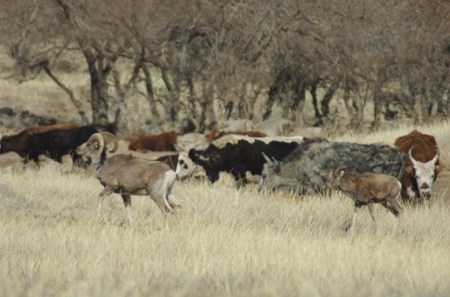
Most of us don’t think of Mongolia as cattle country, but I did see at least a few most places I went. Needless to say, they are as hardy as the other animals the herders keep. There are a number of breeds and they have also been crossed with yaks to create a hybrid the Mongolians call a Hainag. Here are some that I saw when I was at Ikh Nartiin Chuluu Nature Reserve in spring of 2005.

This cow and calf were part of a group that were coming down to the stream for water.

Here’s a black cow who looked me over for a minute.

And, of the most interest to me, since it demonstrates the competition wildlife can face from domestic stock, are a couple of argali down at the same stream with the cattle.

When I was in western Mongolia in Sept./Oct. of 2006 we stopped at a ger and I took a number of pictures, including a few of this beautifully dressed woman and her cattle. The man was one of my guides. As it turned out, what I had photographed was him buying milk…for us! When we were back in the van and on our way, I was offered a swig of milk, warm and right out of the cow. It was the best milk I’d ever tasted! It was also the first time this town-raised girl had ever had milk that wasn’t out of a carton. And no, I didn’t “pay” for it later, fortunately.

Mongolia Monday: The Five Snouts, Part 1

My understanding is that, to this day, around half of Mongolian population of 2.9 million people still live as the Mongols always have, as herders. Their animals are, of course, central to their lives and provide income, food, clothing and shelter. There are five species: horses, goats, sheep, cattle and bactrian camels. Collectively the Mongolians refer to them as The Five Snouts or also Five Jewels.

I thought that I would post a few photos of each for the next five weeks, at which point I will be on my way to Mongolia (Aug. 24 departure).

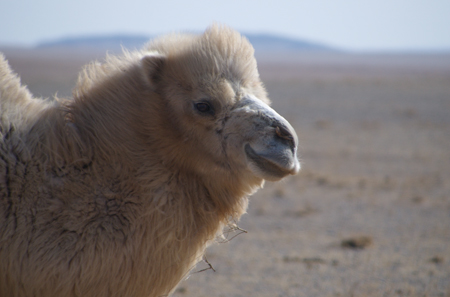
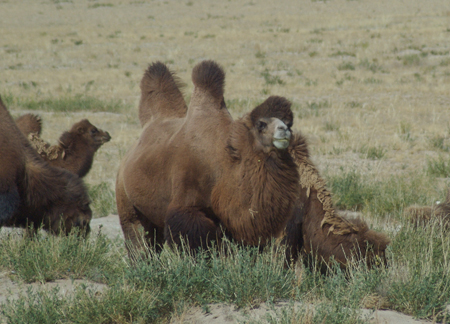
Let’s start with two-humped bactrian camels, made famous by the movie The Story of the Weeping Camel. They provide wool and milk. I don’t think they are used for food very often:

I saw this pretty white camel by the road on my first trip in 2005.

This string of camels was at a ger we visited near a salt deposit in western Mongolia.

On our way back from Khomiin Tal, there was a large herd of animals along the north shore of Khar Us Nuur, including lots of camels.

And finally, I photographed this big guy on our way back to Ulaanbaatar from the Ikh Nartiin Chuluu Nature Reserve.

Mongolia Monday

I was given a bag of aruul on my last trip to Mongolia in the fall of 2006. I’ve kept it in the freezer and have been eating a little at a time to make it last. I’m now down to the final three or so pieces, plus some bits of dried cream. So, I’ve kind of had Mongolian food on the brain, thinking about the upcoming trip.

One of my first goals upon arrival is to snag a bag of aruul for snacking on the road. Aruul is essentially dried skim milk. It’s really hard and is definitely an acquired taste. My first encounter with it was when I was out in the early morning viewing the takhi at Khomiin Tal and the ranger offered me a piece for breakfast. I hadn’t even had a cup of coffee yet, so I started to chew away at it and figured I’d better make it through most of it to be polite. By the time I was done, I liked it just fine. It has a yogurty tang.

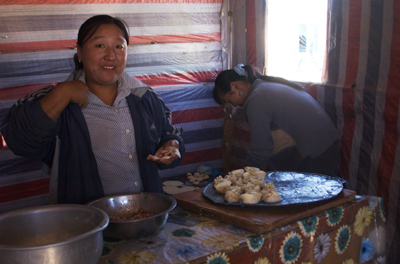
The humidity is so low in Mongolia that they can keep raw meat and dairy without refrigeration, although Westerns had better be careful what they try since we don’t have the resistance the Mongolians have built up. On the way back from Khomiin Tal, we stopped at a soum center (county seat) for lunch, which turned out to be what is almost the national dish, buuz, pronounced more like booooz, with a long “o”. Every culture, it seems, has some version of meat/veg in a dough pocket. Think Cornish pasties. So here’s the inside of the cookshop. I asked to take a picture and the reaction was along the lines of “Sure, if you want to photograph something so utterly ordinary and uninteresting it’s fine by us.”

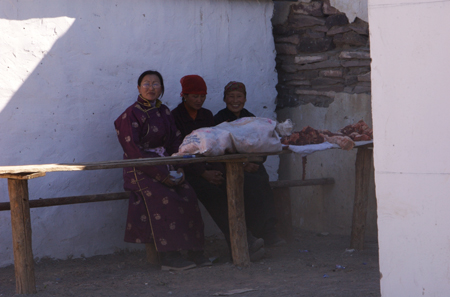
While waiting for our order to be prepared, we wandered around the busy central “plaza”. Over in the  shade were three women setting up a table with their wares, a dismembered carcass of some kind. They saw me taking the picture and we made eye contact. I went over, gestured with my camera and thanked them. Then I summoned up my very minimal Mongolian and told them that I was an artist from California. That elicited all kinds of smiles. This kind of experience is a big reason Why I Don’t Take Packaged Tours.

The soum center. I’m not sure of the name. It’s on the north shore of Khar Us Nur and I have maps with two different names. Someone help me out here.

Mongolia Monday

Particularly since Mongolia made one of its rare appearances in international news last week, I thought I would start to post a photo or two of my travels there on Monday mornings, along with new paintings and drawings with Mongolian subjects. My husband and I and another artist are currently set to go back ( my third trip, his first) on August 24. My hope is to blog while on the trip when I can.

In the meantime, I know that Mongolia is still a mysterious, exotic place to most Americans who only know the country from stories about Chinggis Khan (the more correct spelling of Genghis Khan). I think the riot caught everyone off-guard and, I would venture to guess, that most Mongolians did not approve of, and are quite possibly embarrassed by, what happened.

Alcohol abuse (coupled with poverty and hardship) has been a problem in the country for a long time, partly due to the introduction of vodka by the Russians many years ago when Mongolia was tied very closely to the Soviet Union. I have read that the younger generation is moving away from hard liquor and choosing beer instead, but, in any case, booze appears to be a factor in what happened, as at least one news report I read stated that 600 mostly young men had been taken away to the Mongolian equivalent of a “drunk tank”.

Mongolia is sitting on huge deposits of valuable mineral resources like copper and uranium. How the income is handled from the mining, which involves foreign companies, appears to be a point of serious internal political disagreement. This is a young democracy, less than twenty years old, but the citizens have expressed their views forcefully and in public many times before now. This time, for whatever reason, it got completely out of hand.

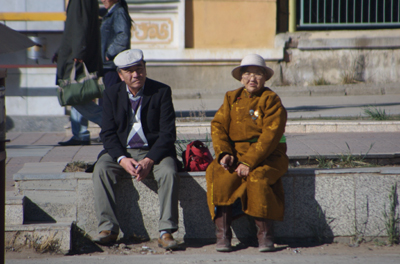
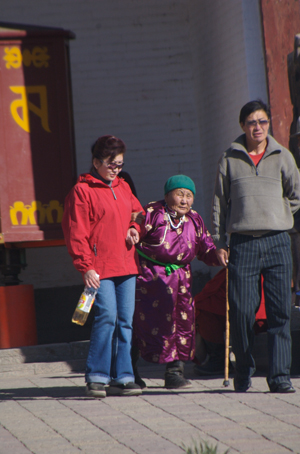
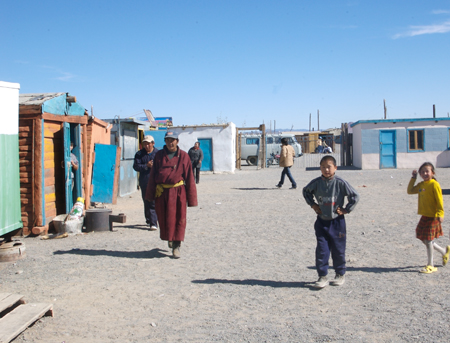
So, here are some photos of Ulaanbaatar that are typical of the city and the people, who go about their business day to day just like the rest of us. They catch the bus, talk on cell phones, go grocery shopping and vacation in the countryside. They can eat out in restaurants serving a variety of cuisines, including American, Korean, German, Japanese, Italian, Chinese and, of course, Mongolian (I adore buuz, the steamed meat turnovers), although many can’t afford that yet. And an increasing number speak at least a little English. I did love the fact that one often sees people dressed in “del”, the national garment.

(There are lots more photos from both my trips on my website)

Street Scene on Peace Avenue

The famous State Department Store, which has an entire floor dedicated to Mongolian crafts, music, art, books, etc. A must-go if you’re in Ulaanbaatar for the first time

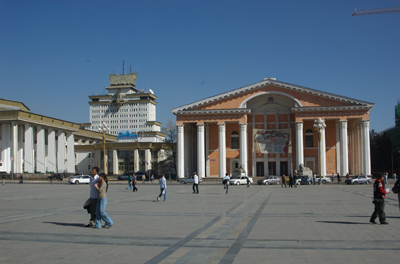
Sukhbaatar Square, with the Palace of Culture on the left, one of my all-time favorite buildings

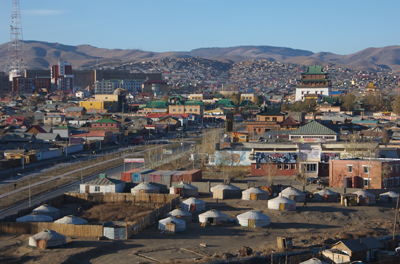
Gandan Monastery in the background with the Shaman Center and a small ger “district” in the foreground

Couple at Gandan Monastery taking a break

Another family at Gandan Monastery