Mongolia Monday:The Best Camping Trip Ever, Part 6 – A “Very Local Road” To The Shargaljuut Mineral Springs Resort

As I wrote last week, we had decided to leave the Ganchen Lama Monastery at Erdenesogt and go on to the Shargaljuut Mineral Springs Resort. Our route took us up a beautiful valley of green hills, gers and…yaks!

Domestic Mongolian yak

Mostly they were just wandering around grazing in small groups, but we also happened upon a young boy carrying out his herding duties.

Yak herding

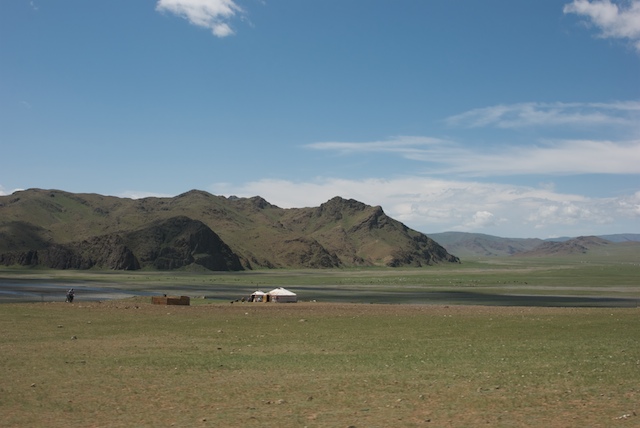
The herder’s gers were scattered along the river which wound through the valley. We were, by now, well off the usual tourist routes, traveling on what Khatnaa said were “local roads”. Indeed. We were almost the only moving vehicle I’d seen all day.

Setting up housekeeping, Mongol-style

Khatnaa stopped at a number of gers as we moved up the valley, including the one below, to ask directions. The situation we’d found ourselves in was that the recent storms, which caused the flooding of the rivers down south in the Gobi, had also washed out a number of bridges in the mountains and therefore, to get to our next destination, we would have to retrace a lot of our previous route back south down the valley, then do a 70km loop to the north where the resort was located. Since one can often only travel a distance of around 100km in a day, this was a long detour. He had been told at one point, however, that there was an alternate, more direct route. We pulled up to what turned out to be one last ger and Khatnaa got out and spoke with the herders.
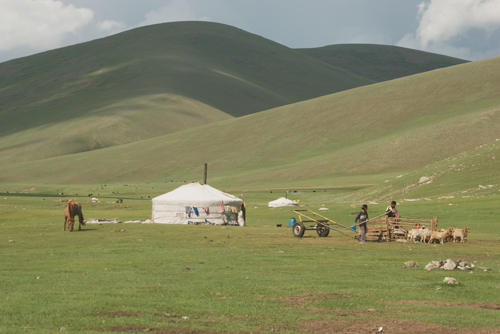
Ger we stopped at before the fun began

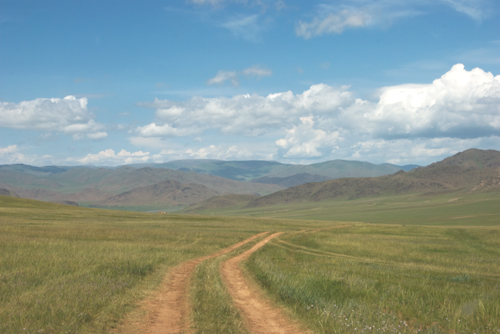
He got back in the car, turned to me, smiled and said something I’ll remember for as long as I have two brain cells to rub together, “Now we will go on very local roads”. He turned the car to the east and headed up a slope that looked no different than any of the others that we had passed.
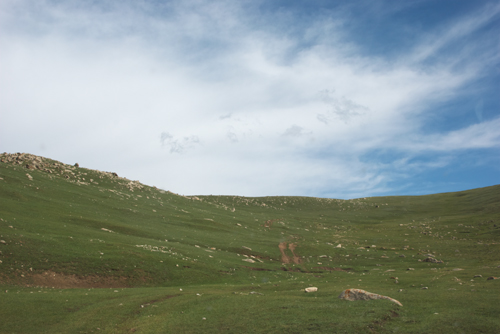
Looking up at the "very local road"

We went higher and higher, leaving the river valley far below. There was definitely an earth road, more like an earth trail actually, but it sure didn’t look like it got much use. Was I having fun yet? You bet!
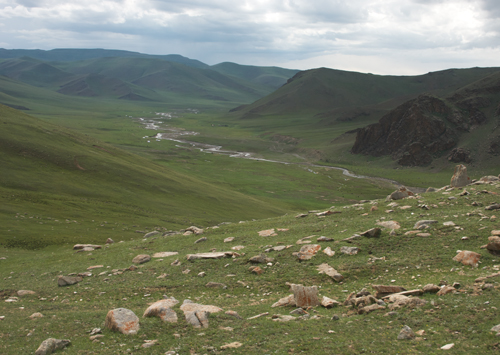
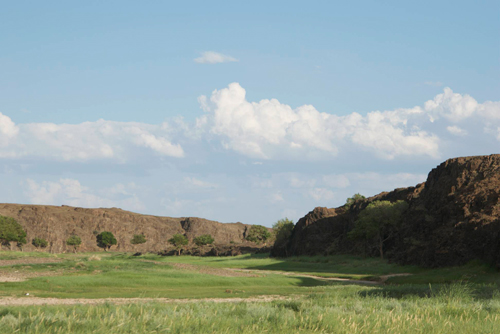
Tuy Gol valley, looking back toward the direction from which we came

Up and up we went, passing interesting rock formations, until we reached Hujirt Pass which, of course, had a ovoo.

Ovoo on Hujirt Pass

We now started going down, down, down, surrounded by wonderful scenery. There had been storm clouds to the west and north most of the day, but the weather was fine along our route. No problem, right? Well…..

Coming down out of the mountains, looking north

We reached the river valley and I could see the road we hadn’t taken on the other side. Then I spotted something I’d never seen in Mongolia…wild iris. I asked Khatnaa to stop and jumped out to take some photos.
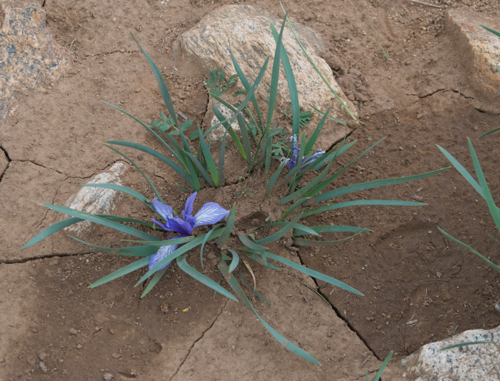
Wild iris

In less than a minute, he leaned out and told me that I must get back into the car and when I had, explained that the rain we saw in the distance could cause the river to rise very quickly and that we had to get across it. Now.
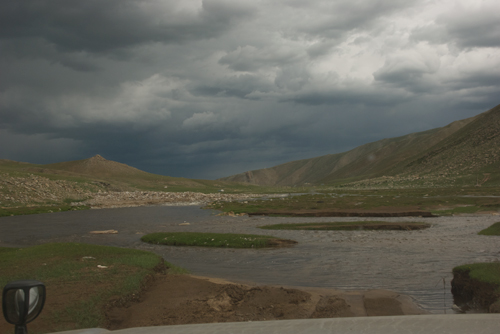
When there's no bridge available....

And, as it turned out, there wasn’t just one channel to cross, but three or four. I kind of lost count.

The final water crossing. Our destination is in the distance. Notice the grey Russian fergon van on the road, middle right

Picking his spot, Khatnaa got the Land Cruiser up onto the road and we continued on to the mineral resort as it got darker and the wind started to kick up.
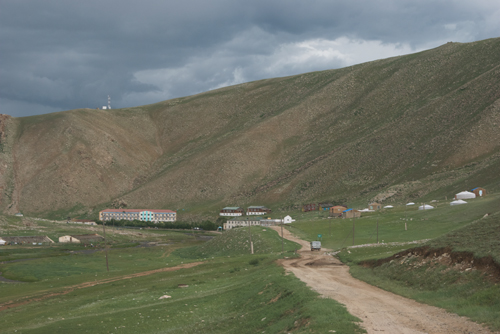
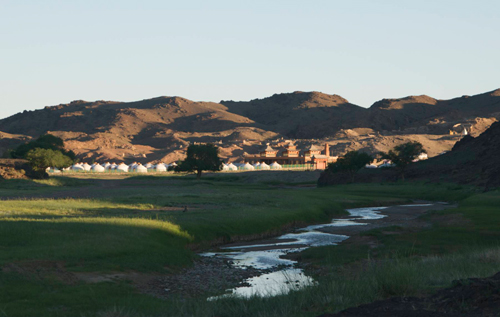
Shargaljuut Mineral Springs resort; well-known in Mongolia

Although this was a camping trip, Khatnaa decided that, for this night at least, we would see if we could stay in the ger camp. He was concerned about the storm and how high the water might get. No argument from me, that was for sure.

We were able to get two gers, one for me to stay in and one for Khatnaa and Soyoloo that also doubled as our “kitchen” and “dining room”. It was a pretty wild and rainy night, but the next morning was fine. And, to our amusement, we found that the Rimpoche we had decided not to worry about seeing at the Gachen Lama Museum was staying at the resort!

View from the ger camp, looking up the valley; thermal springs are on the left side of the river, reachable by a foot bridge

We still never got to see him since it turned out that he skipped breakfast and left early for the monastery, but I did end up having a nice chat with a Mongol man who had called out to me in perfect California English “Where are you from?” when I stepped out of my ger with a cup of coffee. It turned out that he was a famous wrestler who had retired with the rating of Garuda and was now a businessman living in the San Francisco Bay Area. Khatnaa knew who he was and, of course, we had to have our picture taken with him. He was on vacation, he said, and was volunteering as a driver for the Rimpoche and his entourage.

The next great thing that happened was that we got to take our first showers since we were at the Onglyn valley in the Gobi. We had to wait our turn in the very busy sanitarium, but it was worth it. If there were any other Westerners anywhere around, I never saw them. Just the way I like it.

Before we left, we walked across the bridge and explored the thermal area. The different springs have different mineral content and are used to treat specific ailments, some physical, some mental. One consults a doctor before beginning treatment.
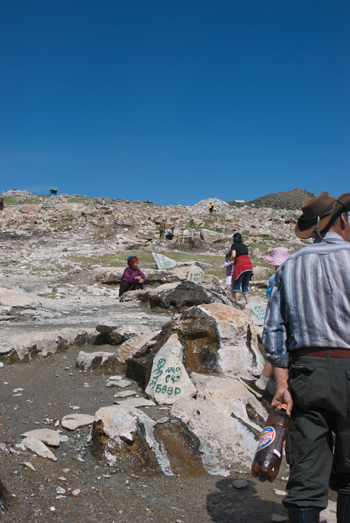
Thermal area

Our departure from Shargaljuut was much less eventful than our arrival. A short way down the road, though, we came across evidence of how powerful the storm run-off from the mountains can be. Just to the left is the “detour” across the now dry riverbed.

Badly damaged bridge; other pieces were strewn around nearby

Here is what it would have looked like before the flood. All but a couple of the bridges I’ve crossed in my travels have been built this way, out of logs and lumber.

Intact bridge

Where were we going next? I had no idea, but I knew it would be worth the trip, so I simply kicked back and enjoyed the scenery.
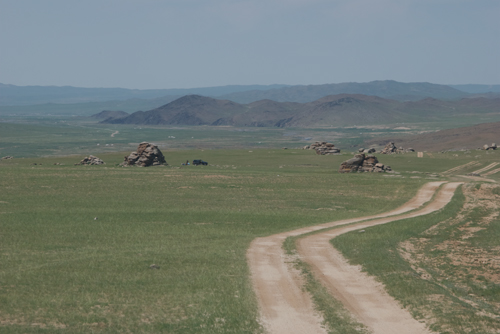
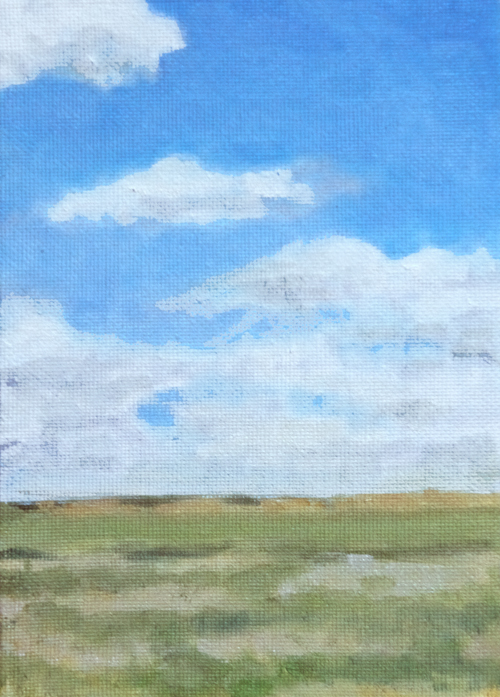
On the (Earth) Road Again

Getting Back In The Painting Groove

I last sat at my easel with a brush in my hand at the end of June. So, how to get rolling again?

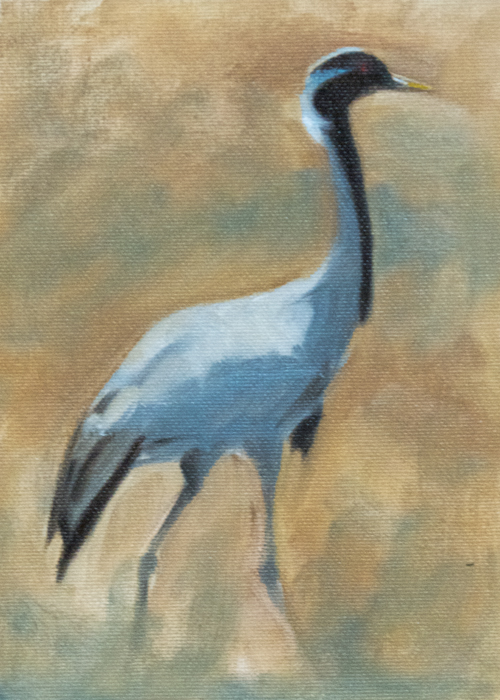
I decided to do some small studies, only 5″x7″, and only spend about an hour on each one. After four, I felt like starting a larger piece, which I’ll post once I’m sure it’ll be a keeper. Then I did a fifth study because I wanted to do a bird.

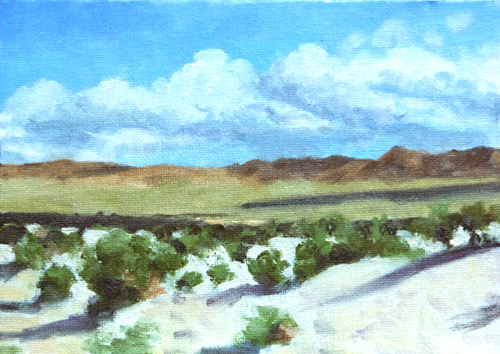
The purpose was to get my hand moving and my mind thinking about, well, what it needs to think about when I’m painting. I also solved a nagging problem – I have been struggling with the greens in my Mongolia subjects. I’ve had My Beloved Sap Green on the palette, along with Viridian. The first study was a struggle because I couldn’t get the green tones I wanted. So I dug into the paint drawer and pulled out tubes of Terre Verte and Chromium Green Oxide, both of which had been sitting for so long that I almost twisted a split in them opening the caps with pliers. But…Bingo!, those more muted colors were exactly what I needed. A quick repaint and Study #1, of the Gobi, worked much better.

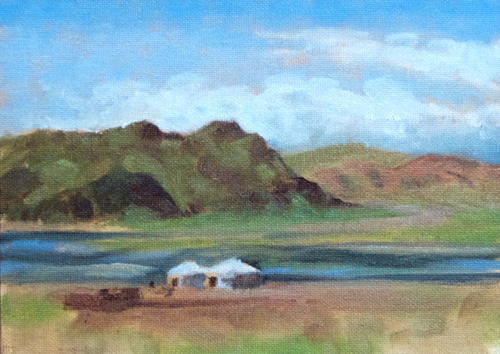
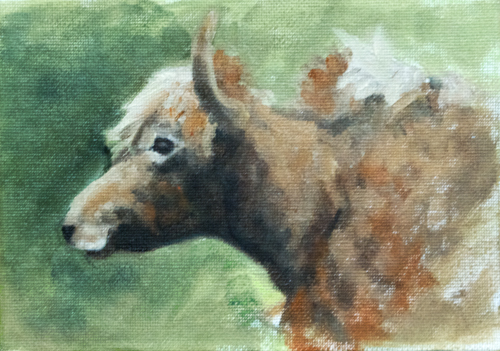
So, without further ado, here are the quick studies:

Gobi view
Saxaul forest, the Gobi, near Orog Nuur
Hangai Mountains, two gers
Yak head study
Demoiselle crane

With luck, you can see some improvement between the first one and the last in confidence and brushwork as I get warmed up.

Mongolia Monday: The Best Camping Trip Ever, Part 5 – North To The Hangai Mountains, Bayanhongor, Gachen Lama Monastery

While our original intent had been to spend two nights at Orog Nuur, the combination of heat, mosquitos and there being very few birds around in the morning caused us to decide that we would travel on north instead.

After having lunch on the north side of the lake, where we did see some shorebirds and demoiselle cranes, we worked our way through heavy vegetation on a really rough earth road to get to the main route to Bogd, a soum center, where we re-filled our water containers from the local well.

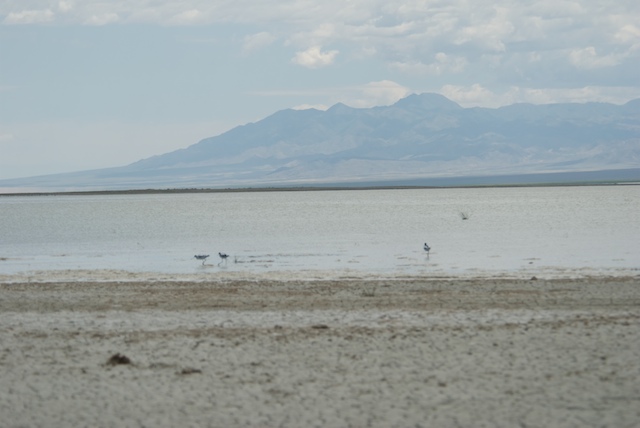
Shorebirds, Orog Nuur
Demoiselle cranes, Orog Nuur

Then it was up and away from the Gobi toward the Hangai Mountains, another part of Mongolia that I had never seen before.

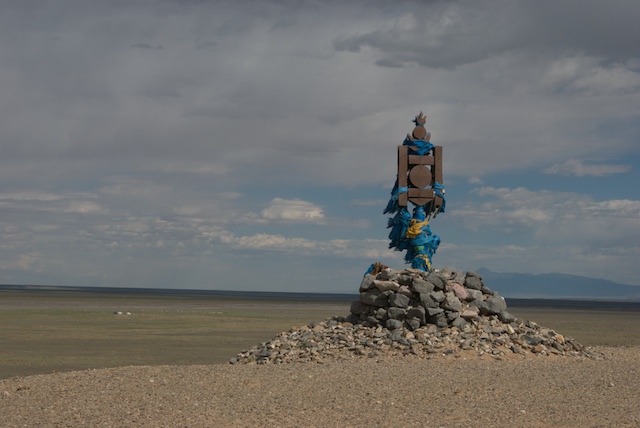
Ovoo with a Soyambu, the National Symbol of Mongolia; very unusual

We stopped for the night a short way off the road, after having passed through three changes in vegetation as we went up in elevation. It was cold and windy, quite a change from our previous campsite by the lake, but I slept well.

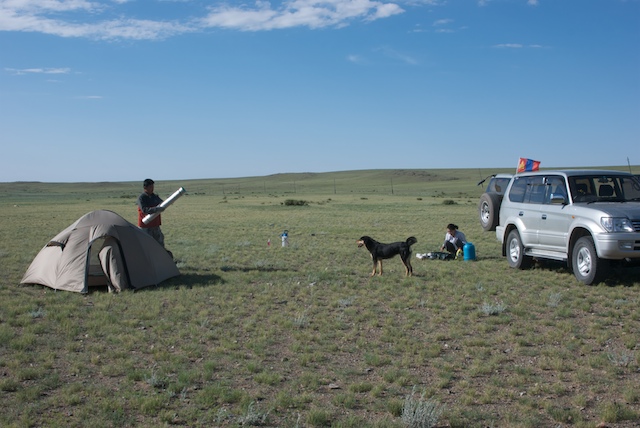
Upland campsite, with visitor

The next morning we drove into Bayanhongor, an aimag center which was quite a substantial town. We trekked around town buying petrol, eggs, bread and meat. It was an energetic, busy place which had nice tarmac paving in the central area.

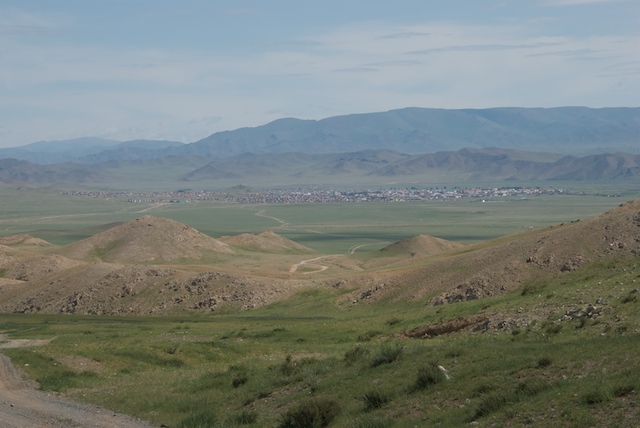
Bayanhongor comes into view, backed by the Hangai Mountains
Horse-drawn water delivery service, Bayanhongor

On the way out of town we found that the road Khatnaa wanted to take was washed out by the recent flooding. Consultations with a number of locals ensued and an alternate route was found. And what a route it was!

Perfect scene- an earth road leading deep into the Mongolian countryside
Tuy Gol valley
Tuy Gol valley
Yaks, horses and gers; it must be Mongolia!

Our destination was the soum center of Erdenetsogt, home to the Gachen Lama Monastery, neither of which I had ever heard of, much less knew anything about.  The soum center was typical, except for the lovely setting above the Tuy Gol. The monastery was anything but, as you will see below.

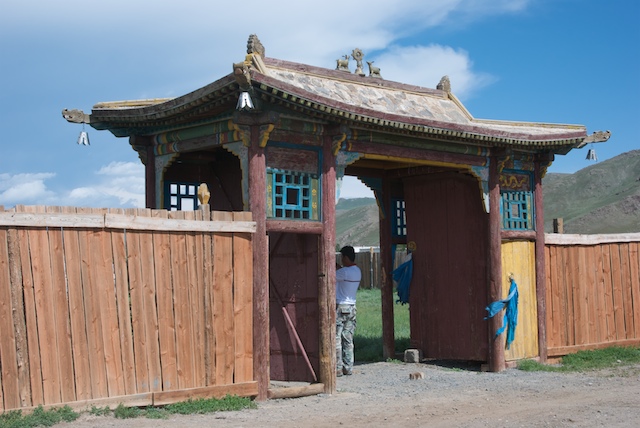
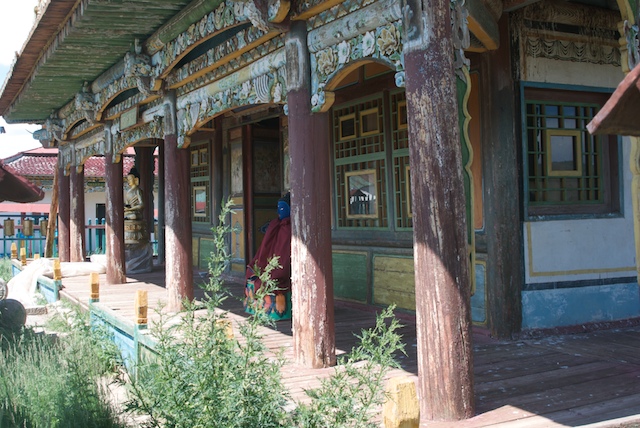
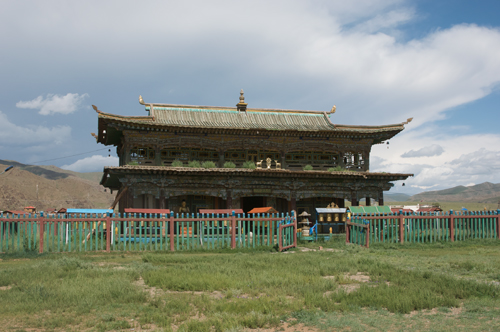
This is one of the most jaw-droppingly beautiful buildings I have ever seen. And what makes it almost unbearably poignant is that it is the sole surviving structure, other than the entry gate, that is left on the site from the destruction of the monasteries that took place in the late 1930s. There were originally ten temples.

The entry gate
Gachen Lama Monastery, old temple

But today the monastery is alive again and it was bustling with activity when we were there in anticipation of a visit the next day by a prominent Tibetan Rimpoche (teacher), who was going to preside over the dedication of two new statues that were to be installed in the new temple next door, which was built in 1990, making it the 20th anniversary celebration.

Temple porch with the two new statues

The old temple was filled with people, many of them elderly women wearing beautiful brocade del. Upon entering, we found that they were preparing hundreds and hundreds of printed Buddhist sutras which were to be placed in the statues. There was a real assembly line going. Some monks were rolling the small strips of paper up very tightly. These were handed to the women who then wrapped them in sewing thread. After a few minutes of watching, Soyoloo reached down, picked up three of the rolled sutras and handed one each to Khatnaa and I, keeping one for herself. Then she got us each of spool of thread. Suddenly we weren’t on-lookers anymore, but participants, truly a gift. We each conscientiously wrapped our sutra and added it to the growing stack. Amazing to think that I’ve left a little bit of me in such a special place.

Preparing for the Rimpoche
One of the two statues
The new temple, just past the row of prayer wheels

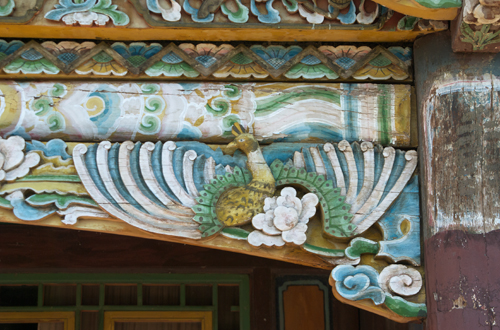
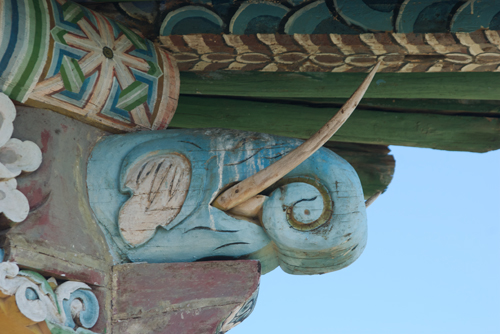
As an artist, the temple was pure eye-candy, being covered with a riot of decorative carvings and paintings on almost every surface. Stylistically it is probably mostly Tibetan, with some Nepalese influence. I’m posting most of the best images I took because when I googled the monastery, I got no hits at all and this place is too special to not share.

Peacock detail,, old temple
Unknown deity or creature, old temple
Elephant at corner; for strength- old temple
One corner of old temple; the fretwork gives this large building a delicate, airy feeling
Gachen Lama Monastery; the old temple

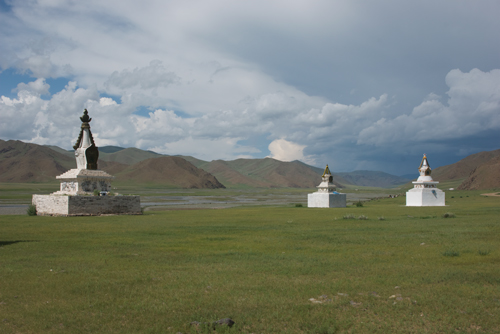
After we left the monastery grounds, we walked toward the river to see the seven stupas which overlook the river valley.

Three of the stupas; cue Jantsannarov’s “White Stupa No. 1”

This seems to be one of the most beloved pieces of music in Mongolia. I love it, too.

We debated whether to stop here for the night in the hope of seeing the Rimpoche the next day. But we really had no idea when he would arrive and were a little uncomfortable being conspicuous as the only non-locals around, so chose to travel on. And that resulted in one of my favorite parts of the entire trip.

Mongolia Monday: The Best Camping Trip Ever, Part 4 – Crossing A Flooded River, Visiting A Camel Herder’s Ger, Arriving At A Remote Lake In The Gobi

I think that in order to communicate with some immediacy one single day that had enough incident for three, I’m going to simply quote my journal entry for July 15, adding images as needed.

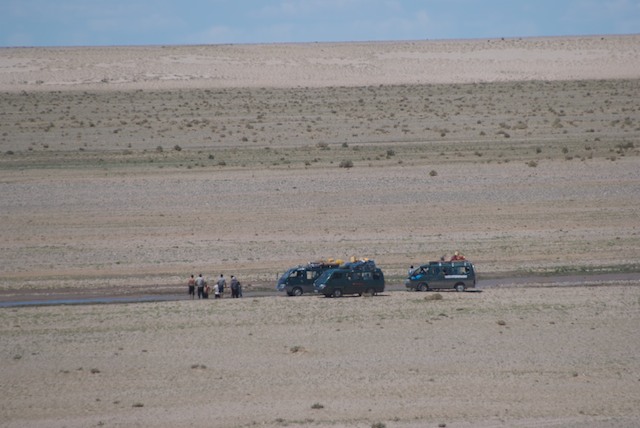
“What an amazing day. Went south-west with Orog Nuur as our goal. Khatnaa knew there was the Taatsin Gol to cross, so stopped at a petrol station to ask about it. Also there were two van loads of Mongols from Togrog who were heading west to mine for gold. Usual Mongol socializing and information exchange ensued.

A third van showed up and all headed towards the river, which was flooded due to rains in the Hangai Mountains.

Assessing the situation

We got across one stream, but were stopped by a broad ribbon of streams and mud. The main channel was moving fast and pulsing with even more water.

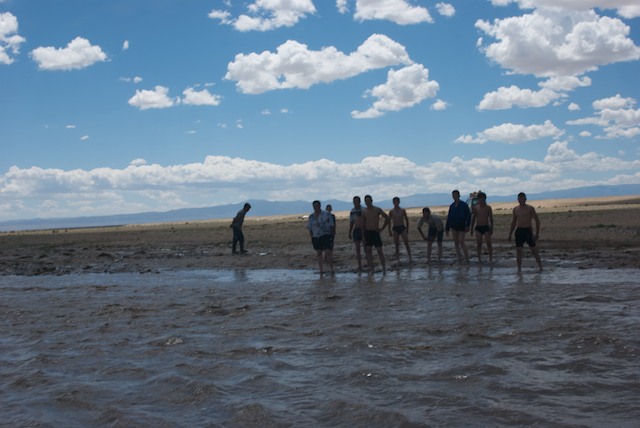
Went back up to the bluff overlooking the river and had lunch, watching the three van loads of Mongols look for a way across and mess around in the water.

Lunchtime for us

Went back down to the river. Khatnaa walked a long way to see if he could find a crossing point, but came back and told us that the last stream of water was the worst of all. So we were faced with going north 100 km to the closest bridge. Such is travel in Mongolia.

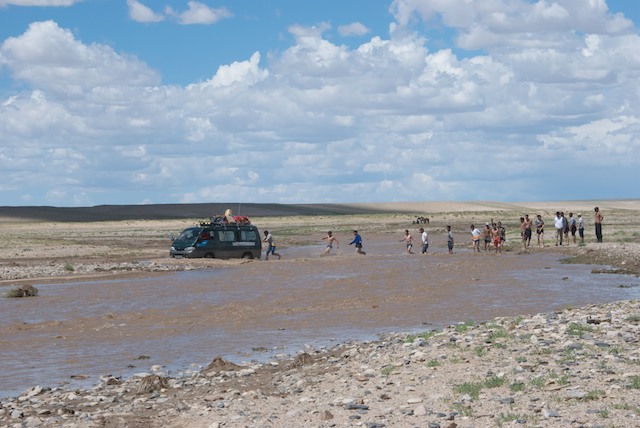
Suddenly, there was action with one of the vans. A bunch of guys had formed a line across one point of the main channel and the van charged into the water, started to stall, but the guys all got behind it and pushed it on through!

First van crosses the river

Well, if a van could make it, our big Land Cruiser certainly could and did, without even needing a push. We did end up with an extra passenger, a little eej (mother) who wasn’t about to miss her chance to ride in our big car.

Our turn. Halfway across.

We got out on the other side and I photographed the other two vans making the crossing. Then said our good-byes.

Third van goes into the river.

We followed one van up a soft sand slope. It promptly got stuck so we rolled back down and went around it and on up the hill.

The entire “adventure” of the river crossing was a perfect example of Mongol practicality, improvisational skills and good humor. No one at any point got angry, showed frustration or swore. When it looked like things had stalled out, the guys took a break and goofed around in the water. Or so it seemed. They were clearly having fun but they were, in retrospect, also searching for a crossing point.

The spot they found was one where the channel wasn’t too wide or deep and where they felt the bottom was solid enough for a vehicle to get across with a minimal chance of getting stuck.

Without winches, cables or even rope, they simply used the same solution they always do – push.”

——

Once across, we were really able to roll for awhile on good earth roads.

At this point we knew that the lake, Orog Nuur, was 2/3 full and that the river flowing into it was impassible due to run-off from the mountains. But we had also been told that there was a road on the opposite side of the lake.

Khatnaa spotted a ger and drove over to it. I usually just stay in the car while he asks directions, but his time he gestured me to get out and said “Let’s visit.”

We ended up spending around two hours with Batsuuri and his family.

When we entered their large, comfortable ger, the first thing I noticed was two boys sitting on the floor watching Star Wars:The Phantom Menace on a small flat screen tv. Batsuuri was sitting on the floor, a couple of older girls were going in and out and Javhlan, his wife, was just starting, I found out later, to make suutai tsai (milk tea). I’ve drunk a fair amount of it by this time, but had never seen it made before.

A bowl of small squares of fried bread and sugar cubes was placed in front of us. The movie ended and the two boys, both Mongol but one had blond hair, started playing with a bunch of nails they had pulled out of a bag. I watched them happily amuse themselves for over half an hour, arranging the nails in various patterns and finally using a closely lined up row of them as a little hammered dulcimer.

At one point a wrestling competition came on the tv and I knew that we were going to be staying for awhile because Khatnaa is a BIG wrestling fan.

Javhlan asked if we would like to try camel milk airag. We all said yes. It was delicious, of course.

As we sat, and Khatnaa and Soyoloo chatted with our hosts (Besides camels, they have about 300 other animals. They lost 10-15 in the zud, nothing, really.), Javhlan made a meal of rice with meat in it and we ended up having dinner with the family.

Then it was time for her to milk the camels. They have 40 camels, seven of which had babies. So I found myself with another amazing photo opportunity.

Javhlan milking one of the camels

I was wearing one of (local Humboldt County artist) Bekki Scotto’s hand-dyed rayon t-shirts and had Khatnaa take some pictures of me standing in front of the camels. I think Bekki will like that.

Soyoloo, our great cook, and I

Once the milking was over it was time to leave, but it turned out that there is more than one road around the lake. Batsuuri offered to take us part of the way on his motorbike. Khatnaa provided petrol from a jerry can he had in the car. They had almost finished syphoning when who should pull up but one of the three vans! They had taken the main road to the river, found it flooded and had come back to the only ger for miles to find out if there was an alternate route, so Batsuuri showed them the way also. Once he’d gotten us to the correct road, we waved goodbye and drove on into a large saxaul forest, much of which was in light, almost white, sand. Many stops for pictures. And berries!

Batsuuri shows us the way around the lake
The saxaul forest
Edible berries in the Gobi

Finally we could see the lake, Orog Nuur, in the distance. The passing clouds were creating gorgeous spotlite areas on the mountain range to our left.

Ikh Bogd Uul
Ruddy shelducks, Orog Nuur

We made one more quick stop at a herder’s ger and then found a track down to the lake. We parked, got out, walked down to the shore and Khatnaa announced that we had arrived at “bird heaven”. Indeed.  The shoreline had birds from one end to the other. The lake edge had even more mosquitos. I observed that it looked like we had also arrived at “mosquito heaven”, which Khatnaa thought was pretty funny.

But we sure weren’t going to be able to camp there. So we moved away far enough to be out of the worst of it, put on insect repellent that Soyoloo had handy and set up camp.

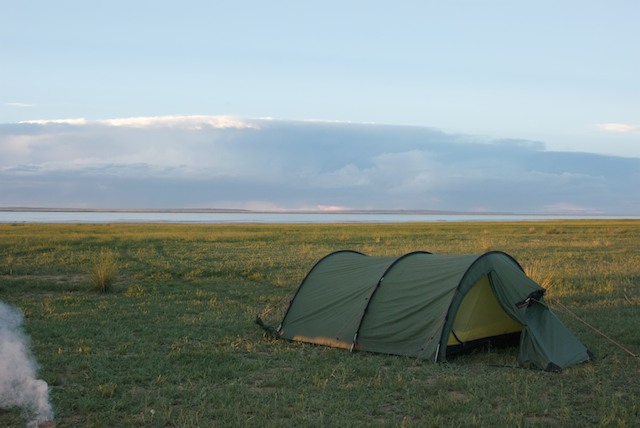
My tent with Orog Nuur in the background

It ended up being cook’s night off since we were all pretty full from the meal at Batsuuri’s. Lunch had been a delicious white fish from Khovsgol Nuur. We all had some leftover fish with rice and a few cookies and we were fine.

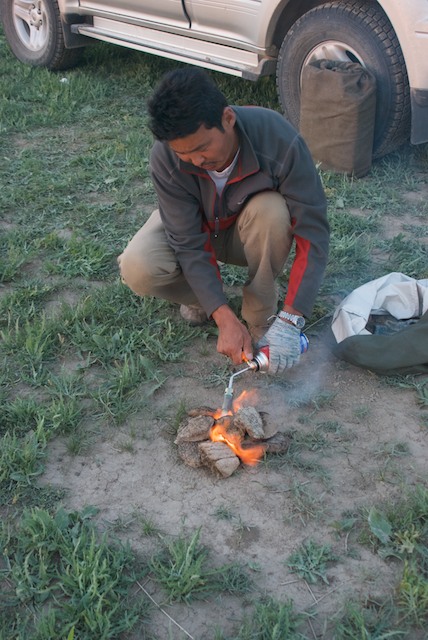
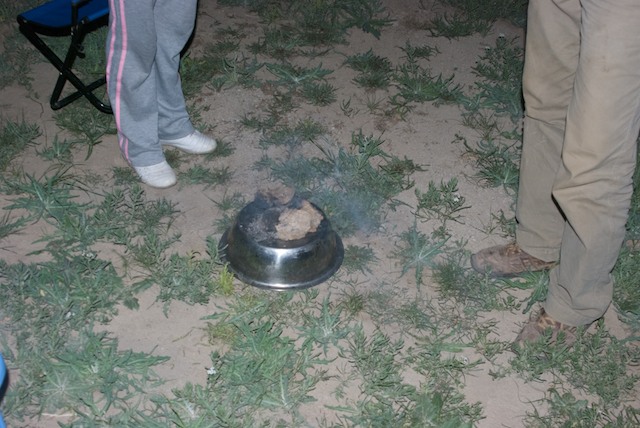
In the meantime, the mosquitos were getting pretty annoying. We had no netting, so , once again, Mongol ingenuity rode to the rescue. Khatnaa went out and gathered a small bag of animal dung which he piled up and set smoking with a small blowtorch. We put our chairs in its path. Problem solved. Until the breeze kept changing direction. Soyoloo came up with a brilliant solution. She turned a metal flat-bottomed bowl upside down and had Khatnaa got a small dung fire burning on it, which meant that instead of moving our chairs to stay in the smoke, we simply moved the smoke. We dubbed it our “nomadic dung fire”.

Setting the dung smoking
The Nomadic Dung Fire

We sat until dark, watching a lightning storm across the lake from us, a spectacular sunset to the north and listening to the Javhlan CD I’d brought from UB, finishing off the last of the bottle of Chinggis Gold vodka and chatting about all kinds of things. A perfect ending to a perfect day.”

Sunset at Orog Nuur, the Gobi

Mongolia Monday: The Best Camping Trip Ever, Part 3- The Gobi, Gempilarjaalin and Onglyn Monasteries

Leaving Baga Gazriin Chuluu meant that I was now traveling south into a part of Mongolia that I had never been to and really knew very little about. Perfect.

Our first stop was in the soum center of Erdenedalay, home of the Gempildarjaalin Monastery, which was built in 1910. The main temple survived the destruction of the late 1930s and there are now ten monks in residence.

Gempildarjaalin Monastery
Gempildarjaalin Monastery interior

Our road then continued out across the Gobi. The landscape was rolling and surprisingly green. We could see a storm front with rain off to our right.

Earth road in the Gobi

Our final destination for the day was the river valley of the Onglyn Nuur (River), which is also home to the ruins of Onglyn Monastery.
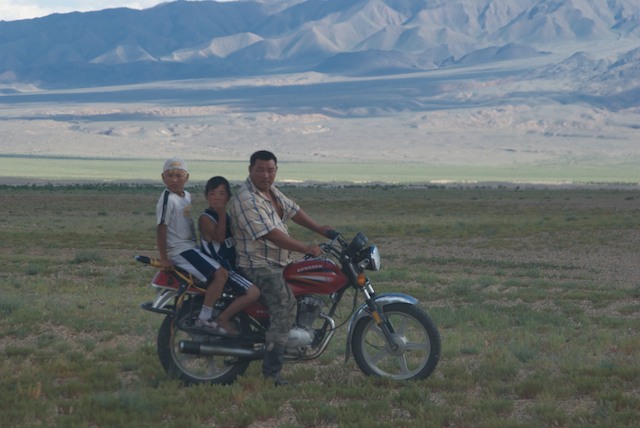
Onglyn Nuur valley

Khatnaa and I went for a birding walk in the early evening and saw some hoopoes, one of the most elusive birds to get close-up photos of.

Hoopoe

The next morning we walked the short distance to the monastery ruins, which were actually two separate establishments, one founded by a prominent lama in the 1760 and the other by one of his students in 1800.

Tourist ger camp with ruins behind it on the hillside

They were two of the largest monasteries in Mongolia, capable of housing up to 1000 monks. All the buildings were destroyed in 1937. Two hundred monks were killed. Many were put to work for the communist government. Some escaped by becoming farmers.

Ruins with sacred spring

A new, small temple has been built and there are now some monks in residence at the site again. There are also ambitious plans to re-build a major temple.

Small temple interior
The main altar

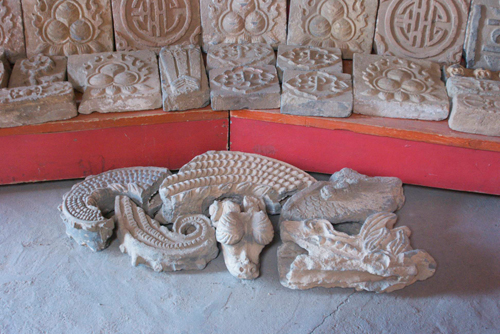
Not far from the temple is a ger which houses a small museum of artifacts that have been recovered from the ruins. I found it very poignant. So much beauty, wantonly destroyed.

Decorative stone work recovered from ruins
Wood beam with raised decoration
Khatnaa speaking with the museum host

On a happier note, we stopped in at the Secret of Onglyn ger camp and Khatnaa arranged for us to take real showers! It being the morning and the water being heated via a solar system, they were going to be cool, not hot, but it really felt good to remove a few layers and get my hair washed.

Back on the road, the green had disappeared and become the almost bare, gravelly ground that the Gobi is known for. We also drove up and over rock formations that reminded me a little of those at Ikh Nartiin Chuluu.

Rocky upland area

In the late afternoon, we stopped at a town called Guichin Us to re-fill our water containers from the well. This became a regular feature of the trip, stopping at a local well for water, which Soyoloo then boiled so that we could use it for drinking.

Water refill from a town well

We drove a few kilometers out of town, onto the open plain and stopped for the night. One of the remarkable things to me was the spots that Khatnaa often chose for campsites. He almost never sought out a sheltered spot of any kind. What seemed to matter was having a slight slope so that if it rained, the water wouldn’t gather under the tents. So here’s my tent out in the “middle of the Gobi”, complete with my drying laundry. It was really, really quiet and we sat after dinner watching a distant thunderstorm, hoping that it was dropping badly needed rain on the land beneath.

My tent (with clean socks)

Next up:  crossing a flooded Gobi river, bactrian camels and “mosquito heaven”.


Mongolia, Uh, Wednesday: The Best Camping Trip Ever, Part 1- Baga Gazriin Chuluu Nature Reserve

I got back from the Mongolian countryside around 5pm this last Sunday. It’s taken a few days to catch up on things and to let the trip settle in my mind and think about how to describe one of the best experiences of my life.

This will obviously take more than one post. Probably a dozen or more. I shot over 3000 images in 14 days. Fortunately, I also kept a journal. I’ll post some of the sketches from it after I get home and can scan them.

Where to begin? First, this was to be my very own “Nomadic Journey”. Instead of my previous trips where I was really focussed on seeing wildlife and had set itineraries, this time I wanted to get out into the deep countryside and see what Mongolia had to show me. My particular interest this trip was, as mentioned in previous posts, to learn more about the Mongol horses and the herders who breed, ride and race them. I also hoped to find a couple of local naadams to attend.

I had the same excellent guide/driver, Khatnaa, who I traveled with for the first nine days of my AFC Flag Expedition last year. But nstead of the Mitsubishi SUV that survived the hail storm we’d gotten caught in, he had acquired a new Toyota Land Cruiser Prado just a month ago, so we’d really be traveling in style.

In addition, since this was a tent camping trip, Soyoloo joined us as the cook. She proved to be a superb professional and a lot of fun as well. Watching her taught me quite a bit about what it takes to keep people well and safely fed in remote locations. Not to mention keeping track of the water supply.

What all this means is that we had the freedom to travel where we wished and camp where we wanted. I’m totally spoiled now. Mongolia really is the greatest camping destination.

The ger camps require advance reservations since they only keep food on hand for the guests they expect to have and it’s not possible for anyone to “run to the store” to get more food for unexpected guests since the closest shop could be over 40km away.

I spent some time chatting with Jan Wigsten from Nomadic Journeys the day before departure. He observed that people come to Mongolia with a list of places they want to see, often based on a guidebook driving tour, and that by doing so completely miss the point of one of the things that makes traveling in Mongolia so special. This country isn’t really about places, as spectacular as the landscapes are, it’s about people and their connections. The places end up being kind of a bonus.

I mentally filed that away and ended up with a number of compelling reasons to recall it over the next two weeks.

We left Ulaanbaatar around 10am the morning of July 10, the first day of the national Naadam holiday, heading south towards Baga Gazriin Chuluu Nature Reserve. We spent our first night camped near a bend in the Tuul Gol, a little southwest of Hustai National Park.

Pick a spot, any spot

The next day, we stopped for lunch at Zorgol Uul, a sacred mountain. On the backside, away from the road, was a sheltered area with trees festooned with khadags, the blue ceremonial scarves. A pretty special place for a meal, to be sure.

Zorgol Uul

While we were eating, two steppe squirrels suddenly appeared, rearing up on their hind legs and pushing at each other with their front paws and then tumbling around on the ground. Naadam squirrel wrestling!

A short time later I spotted two chasing each other. Naadam squirrel racing! We didn’t miss Naadam after all.

Steppe squirrel

Arriving at Baga Gazriin Chuluu, Khatnaa drove up and back down a small canyon looking for a camping spot. Here’s what he found…

It'll do, I think

We spent three nights in the reserve.

Next post: Where’d the argali and ibex go? Could we find Yanjmaa again, who made the wonderful boortz soup for us last year? And an amazing encounter with the world’s largest vulture.

In the meantime, I’m off to Hustai National Park the day after tomorrow for two nights to see the takhi in the summertime.

Personal and Professional Essentials For Traveling In Mongolia

But first, to help everyone get in the mood for Naadam, which begins a week from tomorrow, here’s a terrific music video from Nomin Talst called “Minii Mongol Naadam” or “My Mongol Naadam”. This is a great example of why I love Mongolia:


On Monday, I’ll do my last post before I leave. It will include one video for each of the Three Manly Sports that are held during Naadam: Horse racing, wrestling and archery.

I leave next Wednesday, so the organizing and packing has begun. Over on Facebook, a friend asked what I consider essential, both personally and professionally. FWIW, here it is:

Personal Essentials:
I don’t go there anymore without a Thermarest pad, even for hotel stays. The beds, everywhere, are HARD, seriously hard. My hips don’t do “hard” anymore. I also take my 20F rated down sleeping bag. It’s a rectangle, not a mummy bag, so I can use it as a comforter on a ger bed if it gets nippy.

Drugs for all the basics: cold, flu, sinus plus bandaids, antibiotic cream, sunscreen, Cipro, etc. and medical emergency air evacuation insurance, which I get from my tour company. There’s essentially no western standard medical care in the capital, Ulaanbaatar, except for an SOS International Clinic and something called the Russian Hospital. In the countryside, well, I don’t know much about traditional Mongolian medicine yet.

For anything serious, like a sprained ankle (yes, that can be serious) or a dog bite, you’ve gotta get to Hong Kong, Beijing, Bangkok, Seoul, you get the idea. And that can run, so I’ve heard, around $10,000 to get flown out, so $40 a month for the insurance is a pretty reasonable deal, I think.

My one major preference that I indulge is the ability to have a cup of coffee when I get up in the morning. This has proved iffy at times at the ger camps when I’ve gotten up early and haven’t been able to score a thermos of hot water the night before. I now take an Esbit stove, which is basically a small metal stand that one can put a small stainless steel camping pot on and that uses solid fuel cubes, which travel in my checked luggage. Heats enough water for two large cups of coffee in about 8 minutes. I buy packets of three-in-one coffee and milk tea at a grocery store in UB before I head out to the countryside. I take a coffee mug, too. Oh, and matches.

A Fozzil bowl that stores flat and snaps together and will hold water. I use it mostly as a place to put my watch and rings and stuff at night, but I can use it to wash underwear and socks in a pinch in warm or hot water that I heated up with the…Esbit stove. The stoves in the gers aren’t really used in the summertime, so I can’t count on access to one of those and wouldn’t want to use fuel for that kind of thing anyway.

Two Travel Towels, each of which fits into its own little bag. I never have to worry about having a towel and I like to have one for my hair. It’s small stuff like this, which is different for everyone, that seems to make travel go more smoothly.

As is true for many places, I always plan to dress in layers. Sturdy pants, light hiking boots or walking shoes, fleece jacket, t-shirts, turtleneck, thermals just in case. Teva flip-flops for going to the shower ger or if it’s hot.

I also always take a couple of del, the long, traditional Mongolian garment. Perfect for a robe in the morning, to wear to the toilet or shower, sit around in in the evening or, and this is really traditional, portable privacy on the road in a country where there are mostly no trees. And it can be really, really flat.

One change from previous trips is that I have lots to do in UB this time with various people. I’ve only had “field clothes” before and always felt like I’d just crawled in out of the Gobi. I really needed a nice warm weather outfit. So, our very own local Bohemian Mermaid, Bekki Scotto, carved out an hour a few days ago before she hit the art festival road and met me behind the Safeway store in Arcata with a rack of tempting goodies to choose from. I bought a couple of her hand-dyed rayon t-shirts, and a matching skirt and scarf to wear in town. She made me promise to get my picture taken wearing her finery in Mongolia.

My iPhone with excellent earbuds. I don’t care about airport delays anymore since I can always zone out to music, play solitaire or Paper Toss if I don’t feel like reading. Or watch my virtual koi pond.

I take a small stack of books, paperbacks that I will mostly leave behind as I go.

A Timbuk2 messenger bag for my non-roll-on piece of luggage, which my purse fits into, so I still only have two items. Clever me. It also holds the laptop, my file folder of trip stuff, all the power and charger cords and USB cables, snacks, a water bottle, a book and…my First Class Sleeper, which is more or less a half-size air mattress that you put between you and your cattle car-class seat back. It provides lumbar support, cushioning and has “pillow flaps” on either side. It has made a huge difference in my inflight comfort and arrival fatigue level. For $29.95. I just wish they’d make it from something that didn’t outgas at first.

My Mongolian-English and English-Mongolian dictionaries, since I’m really trying to learn the language.

Professional Essentials:
All the camera equipment: two Nikon D-80 bodies, 28-300 lens, 80-400 lens, 8, 4 and 2GB memory cards, four batteries, and a charger.

New KATA daypack for carrying same.

MacBook Pro for primary image storage in iPhoto. New Toshiba 500GB portable hard drive for back-up.

Car lighter adapter for charging batteries since not only do the ger camps usually not have electricity, but I’ll mostly be either camping out or in a fairly remote research camp this time.

Sketchbooks, pencils, gel pens, pan gouache, more paper, pencil sharpener, brushes, water-soluble colored pencils, a collapsible water container.

Nikon Monarch 10×42 binoculars.

Final essentials: patience, flexibility, a sense of humor and a willingness to set a goal but let the Mongols figure out how to do it. And my sense of wonder always gets a thorough workout.

Mongolia Monday- Warming Up For Sketching In Mongolia

I’ve planned this next trip to leave time for more sketching and to do studies using watercolor pencils and gouache. Last year it was all I could do to keep up my Flag Expedition Journal. This time I’ll be writing my journal in a Moleskin sketch book, but it won’t be a big narrative production like before.

The current plan is to spend the first two weeks traveling in the countryside camping out with a guide/driver and a cook. This will provide maximum flexibility since one can camp pretty much anywhere it seems reasonable to put up a tent. It’s one of the great things about Mongolia and something I haven’t been able to take advantage of before. Then I’ll be in and out of UB for a couple of weeks, then going to Ikh Nartiin Chuluu Nature Reserve for about ten days.

I’ve been easel painting almost exclusively for most of the year and haven’t done much field sketching, so I felt I needed to spend some time getting back up to speed. I got a start late last week and spent the afternoon doing the kind of work I plan to do in Mongolia when I can sit for awhile drawing something that isn’t moving much, like buildings or rocks.

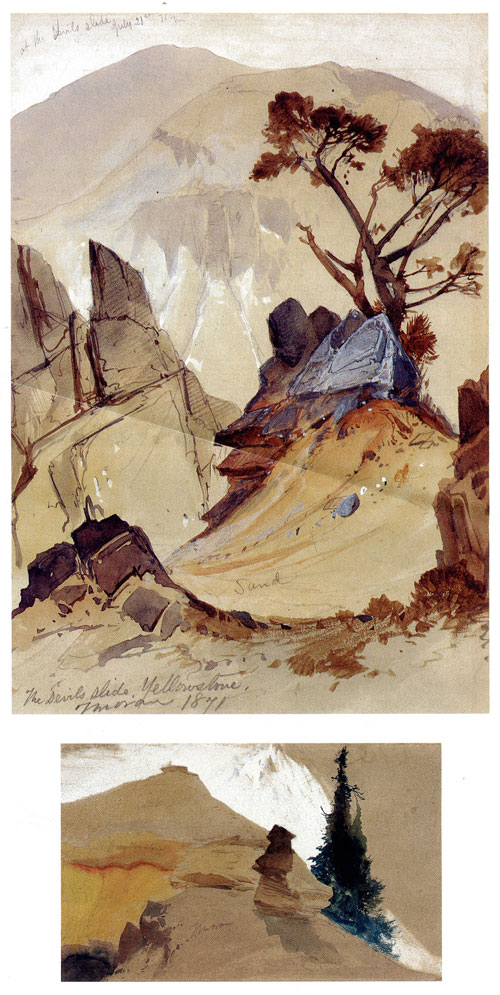
Some years ago, my husband and I saw a show of field studies Thomas Moran did when he was the artist accompanying the Hayden Expedition, which surveyed Yellowstone, resulting in the creation of Yellowstone National Park. He worked on toned paper with watercolor, using an opaque white for his body color. I really loved the look he got and started to experiment with different papers. What I’ve settled on is a 100% cotton paper, Annigoni, from Cartiera Magnani, an Italian company that dates back to 1404.

I’ll be using another Magnani paper, Pescia, when I want to work on a white surface. Both take water media quite nicely.

Here’s two examples of my inspiration, courtesy Thomas Moran. The light brown tone is the paper color, which means this method also saves time:

And an example that I did at Hustai National Park on my 2006 trip. As you can see, the toned paper is perfect for punching up the white on the sunlit side of the gers:

Pan gouache on Annigoni paper, 10x7"

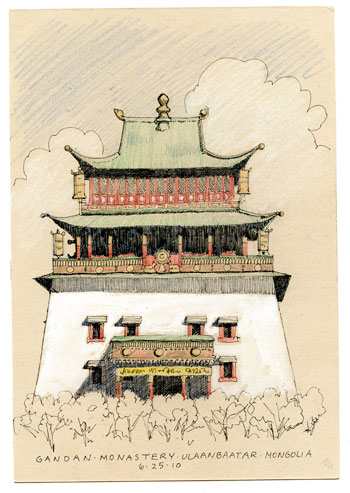
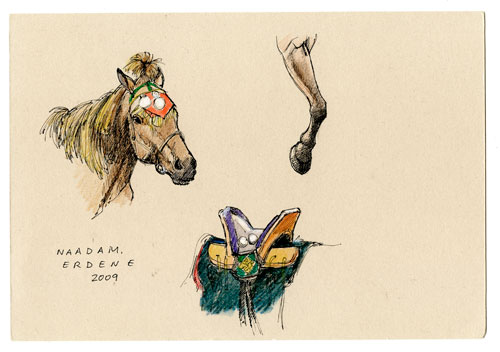
Last week’s pieces. I did them pretty quickly, less than a hour for each larger one. I wanted to replicate as closely as possible how I would do it in the field, even if I was working from photographs. For the pen work I chose Sakura Micron .01 pens. The ink is archival and waterproof. This means I can do the pen work first if I want to and then add water media:

Main Temple, Gandan Monastery- Sakura pen, watercolor pencils and body color, Annigoni paper, 10x7"
Enroute from Ulaanbaatar to Arburd Sands ger camp- pan gouache, Annigoni paper, 10x7"
Horse and tack studies- Sakura pen, watercolor pencils, Annigoni paper, 7x10"
Rock formations, Baga Gazriin Chuluu Nature Reserve- Sakura pen, watercolor pencils, Pescia paper, 7x11"

Mongolia Monday- More On Upcoming Trip Equipment

As I said last week, I had a few more things coming in and they got here the middle of last week. One is a 500GB Toshiba portable hard drive. My plan is to shoot my pictures, download them first into iPhoto on my MacBook Pro and then back them up to the Toshiba, so that they will be in two places. It’s light weight and has an internal shock sensor for protection. I bought mine on Amazon.

Next were two new memory cards for the cameras. This next trip will be almost twice as long as my previous ones and since I’m hoping to see lots of Mongol horse action close up, races and herders working, I anticipate using the burst function more than ever. I already know that I can fill a 4GB card in less than a day. The price of memory cards has continued to drop. My new SanDisk 8GB Extreme SDHC Class 10 High Performance Memory Cards cost less than the 2GB ones I bought a few years ago. I buy the “Extremes” because I can never be sure what weather conditions I’m going to encounter and I need a fast card that won’t hang up in the middle of the action. These came from an Amazon seller.

The third item I described as an “indulgence”. What I wanted were portable speakers for my iPhone, for listening to music when I was in a hotel or ger camp. I ended up ordering Livespeakers and returning them. Maybe my really good quality earbuds have spoiled me, but the sound just didn’t cut it. My husband, who understands how things like speakers work, explained why it’s physically impossible to get a real bass tone out of small speakers. I knew they would drive me crazy and I can use the fifty bucks for something else. Voices sounded ok though, so for someone who wants to watch movies I think it would be fine.

So, that’s about it. One pair of LL Bean tropic weight pants with cargo pockets still to arrive. I’ll do a packing dry run this weekend.