A Visit To The Metropolitan Museum Of Art

I had the opportunity to spend yesterday morning and early afternoon at the Metropolitan Museum of Art in New York City before my evening flight home. (I was there for a Society of Animal Artists board meeting and added a little time for other things). My main purpose was to see the Kublai Khan exhibition. He was the grandson of Chinggis Khan, which I hadn’t realized until I started to learn about Mongol history. That will be a Mongolia Monday post at some point.

Afterwards, I wandered through the 19th Century European painting galleries and was reminded once again that there is no substitute for seeing masterpieces in the original. I also noticed quite a few paintings with animal subjects. I didn’t have my Nikon, just my iPhone. So the following images aren’t great, but they will serve to share my favorites.

I didn’t remember to photograph the labels for all of them, I’m sorry to say, but did track down titles and artist for all except one. But it really doesn’t matter who did them. The takeaway is to see and appreciate the great lineage of animal art that those of us who have chosen our fellow creatures as subjects are part of.

Tiger and Cubs- Gerome

Animal art has a long and honorable history in European painting and was not dismissed with the snobbery so many of us encounter today.

detail of horse painting- Bonheur

It is instructive to see how artists of the period, who had tremendous ability as painters in a variety of subject matter, could also do a specialized subject like animals extremely well. That is often not the case today.

Detail, camel

There was one entire room dedicated to European artists who painted North African subjects. Many also traveled to the Middle East. The collective term for them is Orientalists. I should do a post on them sometime since their approach and reaction to what they saw is interesting for any artist who, like myself, is also fortunate enough to journey to distant places.

Before the Audience- Gerome

What IS that black cat doing there? A spy, perhaps?

Friedland detail- Messonier

This is a detail from a massive painting of one of Napoleon’s greatest victories, with a cast of dozens. This horse is around 5″ from top of head to bottom of hoof. Stunning description of action and anatomy. Here’s the whole thing:
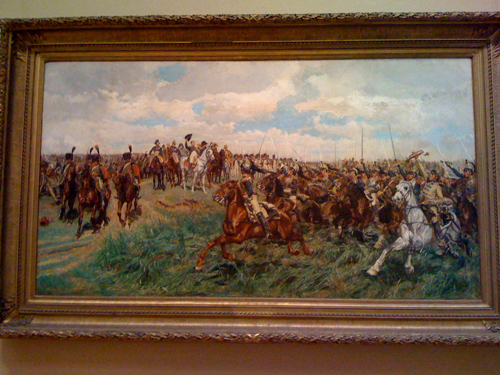
Friedland- Meissonier

Since we have a rough collie in the family, I naturally had to have a photo of this one, which has a more old-fashioned shape to the head:
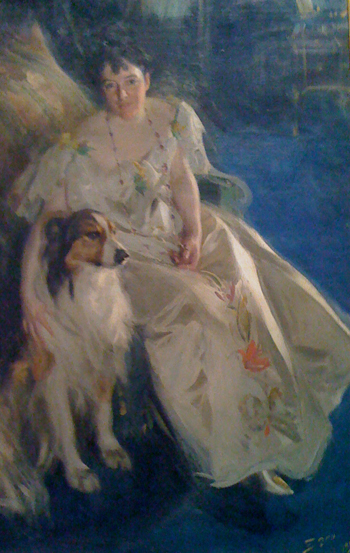
Mrs. Walter Rathbone Bacon- Zorn

The Met also has a phenomenal collection of Greek and Roman sculpture. The main hall was filled with schoolkids drawing from the marble and bronze figures.
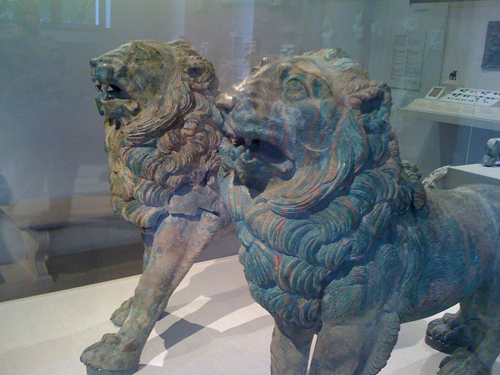
Bronze lions, ancient Greece

If you have access to a museum with animal sculpture, you have a great rainy day opportunity to go sketch animals that will hold still.
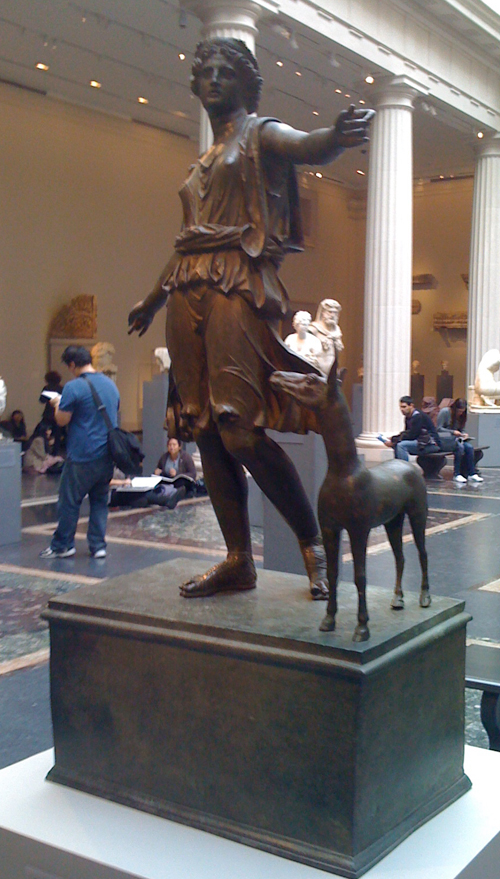
Statue of Artemis/Diana

It’s interesting to note how artists interpreted something like the head structure of a deer over 2,000 years ago.
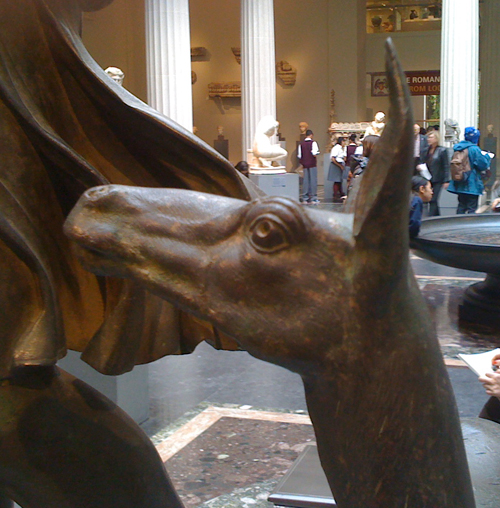
detail of deer's head

I also want to strongly make the point that there is no substitute for seeing great art “live”. Reproductions in books and posters are, at best, rough approximations. The color is probably not accurate. The size certainly isn’t. And size matters. The visual impact of a painting like “Friedland” is due in no small part to its large dimensions: 53.5″ high and 95.5″ wide.

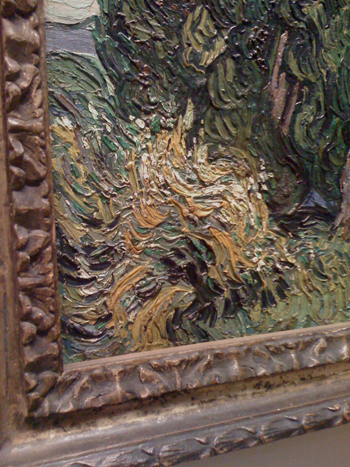
But what I think is missing almost the most is that a painting has a visual texture, sometimes subtle, sometimes not. Printing an image of a painting on a flat piece of paper eliminates that aspect completely. As an admittedly dramatic example, here is a Van Gogh. First the whole work. Then a detail shot at an angle that shows how the paint was applied. When he put it on this thickly, the painting almost becomes a live thing.
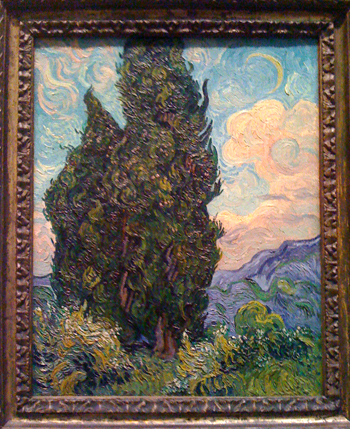
van Gogh
detail

A painting like this is about more than the image. It’s also about paint as paint.

Inspirations: 10 Great Quotes About Drawing


Tamenaka and wrestling scene, Hokusai


I firmly believe that drawing is the fundamental prerequisite for success in representational painting.  There is no way around it. No excuses to be made if an artist wants to be an excellent, or even simply competent, painter. Good drawing is inextricably linked to good painting.

With that in mind, here are some quotes that I really like about drawing:

In spite of everything I shall rise again: I will take up my pencil, which I have forsaken in my great discouragement, and I will go on with my drawing.
Vincent Van Gogh

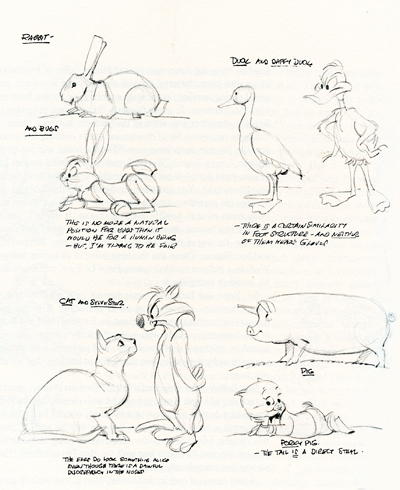
The whole essence of good drawing – and of good thinking, perhaps – is to work a subject down to the simplest form possible and still have it believable for what it is meant to be.
Chuck Jones

It is only by drawing often, drawing everything, drawing incessantly, that one fine day you discover to your surprise that you have rendered something in its true character.
Camille Pisarro


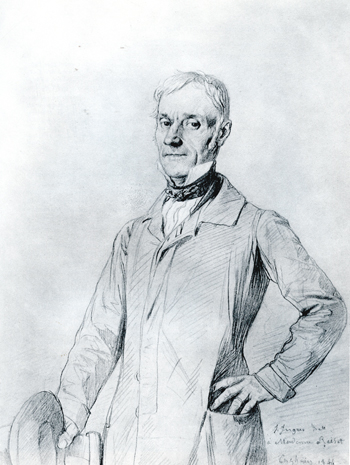
Portrait of Louis Reiset, Ingres


Drawing is the honesty of the art. There is no possibility of cheating. It is either good or bad.
Salvador Dali

Originality depends only on the character of the drawing and the vision peculiar to each artist.
Georges Seurat

Pure drawing is an abstraction. Drawing and colour are not distinct, everything in nature is coloured.
Paul Cezanne


Example sheet, Chuck Jones


A drawing is simply a line going for a walk.
Paul Klee

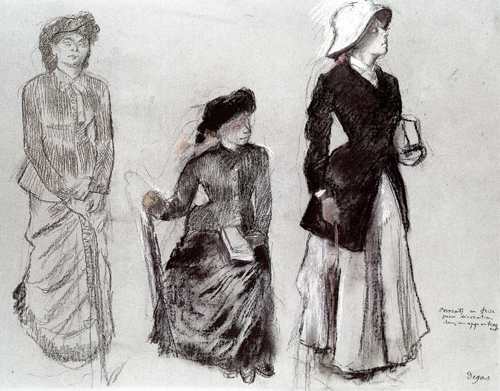
Drawing is not the form; it is the way of seeing the form.
Degas

To draw does not simply mean to reproduce contours; the drawing does not simply consist in the idea: the drawing is even the expression, the interior form, the plan, the model. Look what remains after that! The drawing is three fourths and a half of what constitutes painting. If I had to put a sign over my door [to the atelier], I would write: School of drawing, and I’m certain that I would create painters.
Ingres


Portraits en Frise, Degas


From the age of six I had a mania for drawing the shapes of things. When I was fifty I had published a universe of designs. but all I have done before the the age of seventy is not worth bothering with. At seventy five I’ll have learned something of the pattern of nature, of animals, of plants, of trees, birds, fish and insects. When I am eighty you will see real progress. At ninety I shall have cut my way deeply into the mystery of life itself. At a hundred I shall be a marvelous artist. At a hundred and ten everything I create; a dot, a line, will jump to life as never before. To all of you who are going to live as long as I do, I promise to keep my word. I am writing this in my old age. I used to call myself Hokosai, but today I sign my self ‘The Old Man Mad About Drawing.’
– Hokusai, The Drawings of Hokosai

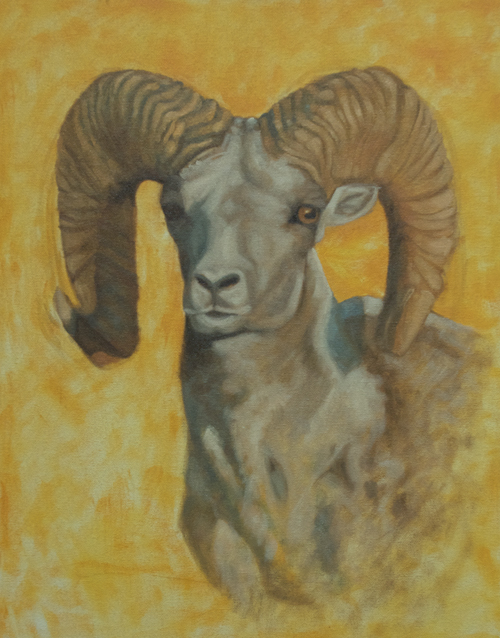
New Painting Debut!- Argali Ram (Head Study); And A Cautionary Tale Of The Importance Of Good Reference Images

I find that I have a perfect opportunity to demonstrate how critical good reference is and what a difference familiarity with a species makes in how well one is able to draw and paint it. Besides showing off my latest work.

I first went to Mongolia on an Earthwatch Institute-sponsored project “Mongolian Argali” in the spring of 2005 at the Ikh Nartiin Chuluu Nature Reserve. I had two Nikon D70 digital SLRs that shot 6MB RAW files. Quite good at that time. My lens was a Tamron 100-300 with a 2x doubler, which made it slow, but did let me get decent stuff from quite a distance. I took 735 images of argali sheep during my two weeks on the project and I was hot to paint them when I got home. For reasons that are now lost in the mists of time, I chose the image below for my first head study (file under “What was I thinking?”)

Now, granted I could zoom in on it quite a bit and I was really interested in understanding the shapes, not details, but still. Why didn’t I pick one like this?

Much closer. Better light. Structure of things like the area around the eye easier to see. Maybe I was seduced by the beautiful set of horns on the ram. Oh well, live and learn.

In any case, I sent a jpg of the finished study to the Mongolian scientist I worked with and he thought I’d done a very good job, which was nice to know. But……the painting continued to bug me, so I did a re-paint. And then another. And futzed with it some more. And then life moved on, the painting was shelved and that was that. So now it’s kind of a mess and I’m not going to work on it again. The only image I have of it when it looked finished is on a promo page I did for myself. The image below is scanned from that, so it’s not great, but it does show my first attempt to paint an argali head.

Fast forward to this year’s trip during which I spent a week at Ikh Nartiin Chuluu and shot 852 images of argali. I now have Nikon D80s which have 12MB RAW files (you are shooting RAW format, aren’t you?) with a Nikon Nikkor AF VR-80-400 and the difference in the optics is obvious.

Here’s the shot before the reference shot. It’s a little out of focus, but I make it a practice to never, ever put my prime painting reference images on the internet. But my subject, the ram in the middle, has pretty much the same head position.

Now THAT’S  some good stuff to paint from! Scroll back up to the previous image and see how flat the light is by comparison. I really handicapped myself right out of the gate.

I’ve now been painting and drawing argali for five years and have been back to the reserve to observe and photograph them four more times. I’ve also learned a lot more about their behavior and what their lives are like. All of that feeds into my paintings so I’m not just rendering their surface appearance, as too many wildlife artists are wont to do.

One piece of advice I would give to aspiring animal artists is to absolutely paint what you love when you feel the need to paint it, but consider focusing in on one or two species and get to know them really well in all aspects. I think you will soon perceive a difference in what you have put into a painting with those subjects versus those which you approach casually because you happen to have a photo that you like.

Here’s the step by step of the new painting:


Brush drawing, indication of shadow shapes, laying in a background tone; notice that it goes into the animal


Adding a cool tone to the shadow areas


Starting to model the forms of the head and horns; things look a little ugly at this point


Working on the light areas, continuing to define the form and structure


Almost there; time to punch up the areas that are most important


Argali Ram (Head Study) 18x14" oil on canvasboard


Improve Your Paintings! Today’s Tip

I thought that I would start to share some of what I’ve learned over 13 years of painting in oil and almost seven years of picture-making as an illustrator through a new on-going series, Improve Your Paintings!.  We’ll start today with…

USE A MIRROR

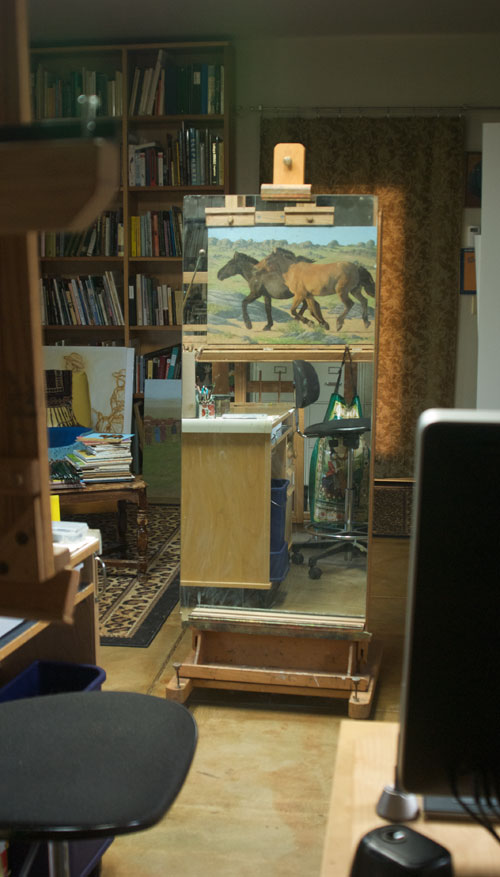
There really isn’t a better or faster way to check your drawing or composition for accuracy. Almost any decent mirror will work. I happened to have an old full-length mirror that I found for $15 at a yard sale many years ago. I mounted it onto my old easel, which lets me roll it to different positions and also out of the way.

A mirror is particularly useful when you have to get two sides of something that are similar to match up and need an “extra eye” to evaluate it. Do those butterfly wings match? Are the eyes of that wolf lined up properly?

It is also very valuable for checking the overall drawing. Do all the parts fit together accurately in that 3/4 view of the mountain lion’s head? Have you compensated correctly for the foreshortening and flattening effect in an image of a bighorn sheep, also in a 3/4 view? Is the body of that horse too big for the head or vice versa? In the example below, I’ve used my mirror to get a fresh look at the relative value pattern between the horses in the foreground and the background landscape.

Do you use a mirror? If so, what do you find it most useful for?

(And yes, you’re getting a sneak preview of my newest painting, “Mongol Horse #5-Afternoon Romp”. It’s almost done and I’ll post it next Friday)

Coming up soon! North Coast Open Studios. I’ll be doing Weekend 2, June 12-13.