I spent a great morning at the American Museum of Natural History during my recent quick visit to New York to attend the Society of Animal Artists board meeting and show jury.
This time I wanted to sketch and once again see the fossils that Roy Chapman Andrews’ Central Asiatic Expeditions brought back from Mongolia. I got to chatting with one of the volunteer docents and found that she knew the location of some Mongolia items that I hadn’t found on my previous visit in 2009.
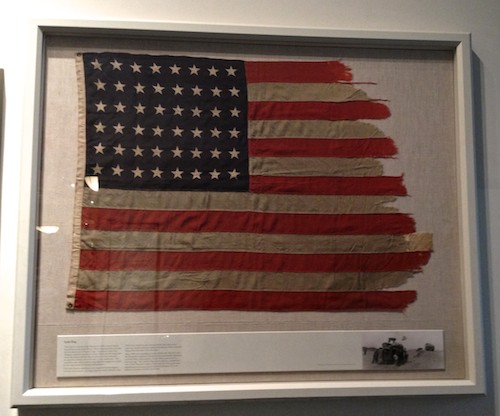
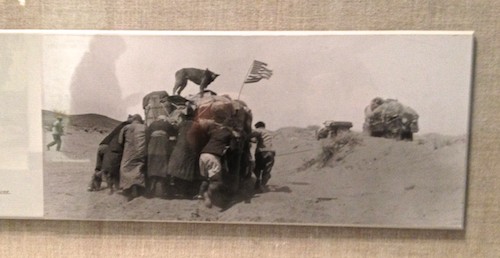
The jackpot was an American flag that flew from one of the expedition vehicles. It was in a glass case that had been mounted on the wall in one of the stairwells, not exactly a prominent, easy to find location, so I appreciated the docent’s help a lot!
Here’s a “album” of photos from the museum, filled out with a couple from my previous trip, ending with a couple of iPad sketches I did.
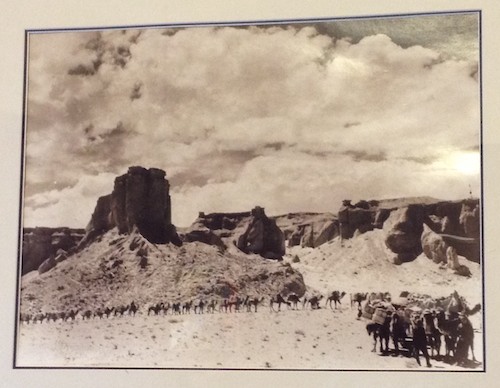
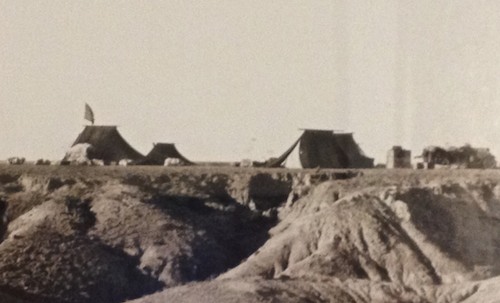
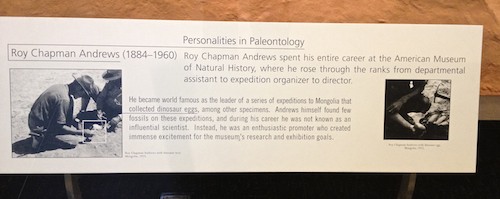
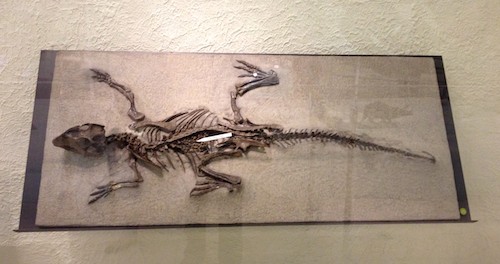
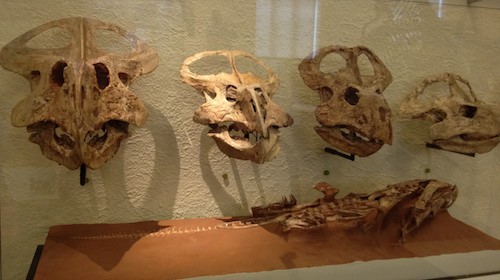
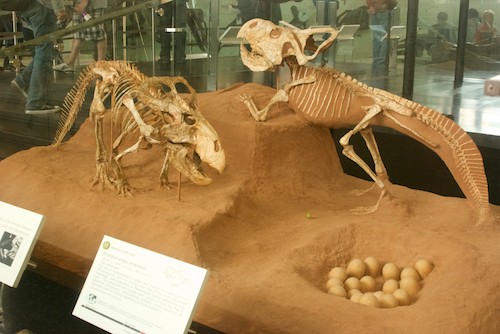
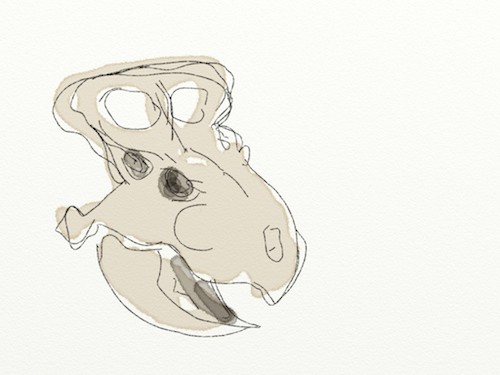
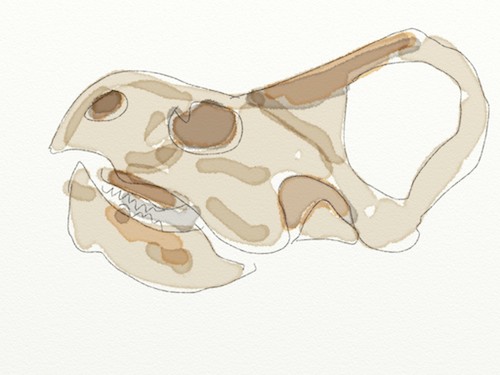
American flag carried to the Gobi of Mongolia by one of Roy Chapman Andrews’ Central Asiatic Expeditions.Closeup of the photo. I’ve helped push a vehicle or two on my trips, but without a dog to supervise.The walls in the cafe closest to the Paleontology section are lined with photos of the Central Asiatic Expeditions to Mongolia. This one is of what Andrews dubbed “The Flaming Cliffs” which are located in an area the Mongols call Bayanzag (Place of the saxaul trees). I’m pretty sure I watched the sun go down along the lengthy of this butt in September of 2006. He used large caravans of camels to transport supplies and get them into position before the rest of the expedition arrived in motor cars.Another photo from the cafe, this one showing the Expedition’s camp. The tents are “maikhan” or summer tents, which are lighter and even more portable than the better known felt gers.Short profile of Roy Chapman Andrews. It has been speculated that he was one of the inspirations for Indiana Jones. And if you’ve read his biography, that’s not hard to believe, although there is no proof.One of the fossils from Mongolia, a Psittacosaurus mongoliensisInformational sign about the above fossilProtoceratops fossil skulls of varying sizes; the expedition’s scientists found far more of these than any other speciesA pair of protoceratops (image from 2009)Although the Expeditions failed in their original goal, which was to find evidence that “man” had originated in Asia, not Africa, the find that electrified America was the discovery of the first known fossil dinosaur eggs. Andrews’ decision to sell one created a firestorm of controversy. (image from 2009)Besides the flag, this was the other item from Mongolia that I’d missed on my previous trip, an amazing fossil of a female dinosaur which contains a egg with a recognizable embryo, something never before seen or found.
Finally, here are a couple of quick sketches I did of protoceratops skulls using ArtRage on my iPad.
I’m very proud to announce that my latest takhi painting “Enchanted Evening”, has been accepted into the Society of Animal Artists’ 52nd Annual Exhibition of “Art and the Animal”. This is the fourth year in a row that I have had work in the show and they have all been Mongolia subjects, which pleases me a lot.
The exhibition will be held at the Hiram Blauvelt Art Museum, which is located in Oradell, New Jersey, and officially opens on the weekend of October 5-7. I plan to be there for all the festivities. More details later on as the opening approaches, but consider yourself invited!
The story behind the painting: Last August, nationally-known sculptor Pokey Park and I were on a two-week tour of the best wildlife watching locations. We were leaving Hustai National Park, one of the three places in Mongolia where takhi have been reintroduced, after a last horse-watching drive, which had already been very successful. Then, less than 50 feet from the road we spotted this small group of takhi coming down to a pool of water. We stopped and got our cameras ready. Would they come or not…
Trying to decide…We’re thirsty!
And here’s a short video that I shot on my Flip HD. Unfortunately we ended up with a lot of cars stacked up behind us, just like a bear or bison jam in Yellowstone. One woman came up next to me out in plain view (I was behind the open door of the car, using it for kind of a blind) and spooked them, but at least they’d all been able to drink. Enjoy!
I’m now in Denver, staying at the home of the President of the Society of Animal Artists, Diane Mason. She and her husband drove me up into Rocky Mountains National Park yesterday. On the way, in the adjoining National Forest, we saw a good-sized group of bighorn sheep, including a ram, right by the road and, in the park, hundreds of elk and a lot of mule deer.
Once I’m home I’ll post some side by side photos of argali and bighorns and rocky mountain elk and marel/ red deer. The latter look almost alike and are in the same genus, Cervus, but are different species.
We’ll go back into the park this afternoon and I’m hoping to get some video of the sheep. Got some of the elk yesterday.
I’m extremely pleased to announce that my friend and colleague James Coe will be coming to northern California to hold his first ever workshop out here in July! Below are all the details. We expect his workshop to fill up, so get your reservation in soon! As I’ve made the arrangements, please direct any questions to me.
Source of the Saco by James Coe
Nationally known landscape painter, bird artist and author James Coe will be giving his first-ever West Coast workshop, “Plein Air Landscape Painting in Oils”, July 9-14, 2012, to be hosted by Westhaven Center for the Arts.
This will be an intensive 5-day program which will explore the challenges of working en plein air directly from the landscape and also introduce the traditional methods and materials of alla prima (direct) painting in oil. There will be a presentation and orientation session Monday evening which will include topics ranging from the history of plein-air painting to the preparation of homemade painting panels for use in the field. The session will also include a step-by-step presentation of the instructor painting outdoors and in the studio, using plein air studies as references for larger studio canvases.
The workshop will be based at Westhaven Center for the Arts, which is located in Humboldt County on the beautiful and scenic north coast of California, about six hours north by car from San Francisco. Painting locations will include coastal seascapes and beaches, redwood forests and the nearby fishing town of Trinidad.
PLEIN AIR LANDSCAPE PAINTING IN OIL- Workshop information:
Instructor: James Coe Dates: July 9-14 (Monday evening orientation, Tuesday-Saturday plein air sessions) Workshop fee: $600 ($100 deposit due upon sign-up) Class size: maximum of 10 Location: Westhaven Center for the Arts
501 S. Westhaven Dr.
Westhaven, CA 95570
Supply list, travel information and lodging/meal options will be provided upon registration (fee is for workshop only)
For more information or to reserve a space, call Susan Fox at 707 496 1246 or email her at sfox at foxstudio dot biz (email address format is to foil web crawlers; use normal format for emailing me)
Encroaching Shadows, Roadside Barns
About James Coe: Jim’s oil landscapes, which typically feature natural settings and rural scenes from New York’s Hudson River Valley and Northern Catskills, are recognized for their naturalistic palette and painterly handling.
A signature member of the Oil Painters of America, and chosen in 2011 as a Leigh Yawkey Woodson Art Museum Master Wildlife Artist, Jim has been featured recently in PleinAir magazine, Western Art Collector and Wildlife Art Journal.
His art has appeared on the covers of Sanctuary, Bird Watcher’s Digest, Birding World and The Auk, the professional Journal of the American Ornithologists Union. He is represented in the permanent collections of the New York State Museum, Hiram Blauvelt Art Museum, Leigh Yawkey Woodson Art Museum, Massachusetts Audubon Society and the Bennington Center for the Arts.
Jim lives with his wife and two children in a farmhouse on the western rim of the Hudson River Valley, where he continues to seek a balance between plein air landscapes and larger studio canvases of birds in natural settings.
I visited two very different parts of Mongolia in 2010 on my two week camping trip: the Gobi and, directly to the north, the Hangai Mountains. Today I’d like to share five of my favorite photos from the mountains, which I hope very much to explore more in the future. I think you’ll see why…
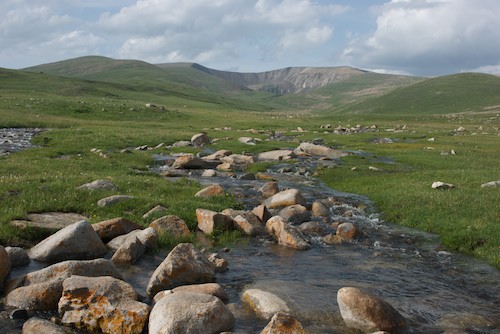
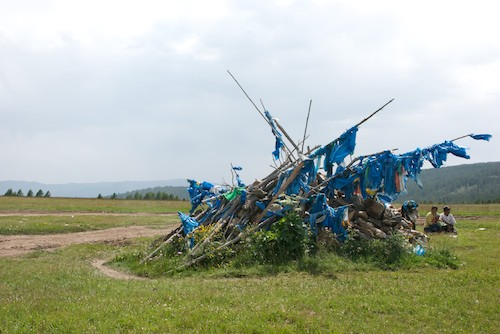
Gachen Lama Khiid, Erdensogt Soum- this has to be one of the great undiscovered places in Mongolia, an old monastery located north of Bayanhongor in Bayanhongor Aimag. I could spend days sketching and painting this beautiful temple and the stupas overlooking the river valley. There are more photos and the story of our visit here.We had spent the night camped out on a hillside with a lovely view. The next morning I crawled out of my tent to the sight of local herders moving their yaks out to graze. Being in plain view, we soon had visitors, including this older gentleman. He perfectly sums up the dignity and presence of the Mongol country people. He also knew I was taking pictures of him...We had to come down out of the mountains proper to circle around to get back in to our next destination. There was a small temple just outside a small soum center. I peeked inside and was treated to this riot of color, all kinds of candy and other food left as offerings. I don't know the story of the statue, but wish I did. More on the day I took this photo and the one above here.Our destination that day was Khuisiin Naiman Nuur National Park, a series of nine ("naim" in Mongolian) mountain lakes, only accessible by car by driving up the length of this incredibly beautiful valley, which is where we camped for one night. I could have stayed there two weeks. More photos here.We wended our way higher into the mountains reaching a pass where we found this fantastic ovoo made of wood and festooned with dozens of blue khadag (offering scarves). The tradition is to walk three times around it clockwise and leave some kind of offering or token, even if it's only a stone that one has picked up from the ground. Ovoos are always on high places and passes. The creation of them dates back far beyond the arrival of Buddhism to the ancient beliefs of Tengerism (or what westerners call "Shamanism"). More photos of the beautiful, wildflower-filled mountains here.
Cape Buffalo Head Study (collection of the artist)- done in about two hours from an ok photo with constant interruptions at an art festival. You just never know...
1, Don’t be too happy with your work. Too much self-satisfaction will stop your ability to improve and learn.
2. Don’t be too discouraged with your work. Being too down on yourself makes it impossible to evaluate your work objectively.
3. Don’t think that detail=quality. It doesn’t, despite what too many people believe. Less really is more most of the time. It takes much more work and experience to see large shapes and masses than to paint blades of grass. That’s easy. Saying “grass” in two values with a large brush is, by comparison, hard because it requires abstract instead of literal thinking.
4. Don’t excuse bad drawing by saying it’s an “interpretation” or it’s “expressive” or it’s “impressionistic’. You can fool yourself, but you can’t fool others. Use a mirror, show your work to another artist, anything it takes to get the drawing right.
5. Don’t reject criticism by telling yourself that “it’s all subjective”. It’s not, especially if you are a representational painter. There are principles of the craft which have been well-established over time. Professional accomplished artists all share a body of knowledge that is not in dispute.
6. Don’t believe that if it’s in the photo it must be true and you must paint it that way. Photos lie, flatten, distort. Cameras “see” in a particular way which is different than how the human eye sees. Use YOUR eyes.
7. Don’t start a painting without knowing why you are doing it. And there must be one idea only. All other elements must be subordinate to that idea. If you get into trouble, ask yourself if getting away from the idea is the problem. Be ruthless, wipe/scrape/remove anything that distracts no matter how great it is by itself. You have to be willing to kill the thing you love.
8. Don’t “practice”. Do or not do. There is no “practice”. However, one might choose to do “studies” to work on specific things. But the same focus and attention is still desirable. Everything you do is “real”.
Mongol warriors escorting Chinggis Khan's mother, Hoelun: National Naadam opening ceremonies, Ulaanbaatar, July 2009
Mongolia has always been considered an incredibly remote and exotic destination by most westerners. The shorthand expression for the farthest a person could be from any place has been to say that they’ve gone all the way to “Outer Mongolia”.
The reality today is that it is quite simple to get there from the United States and Europe. I fly to San Francisco (one hour) to Seoul, South Korea (11+hours) to Ulaanbaatar, the capital of Mongolia (three hours). There are non-stop flights to Ulaanbaatar from Berlin and Moscow. But before air travel, before trains, before the country was essentially closed to foreigners by the communist government from 1921 to 1990 (other than the Russians who were stationed there), Mongolia was a challenging place to get to and travel in.
This will be an occasional series about westerners who have traveled to Mongolia in times past and left written accounts of their experience.
Epic. Journey.
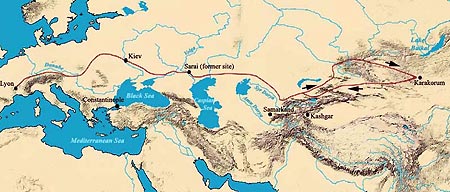
First up is a man known in English as John of Plano Carpini, sent to Mongolia by Pope Innocent IV in April of 1245 to find out all he could about the “Tartars” who had beaten every army of European knights sent against them, but had then mysteriously vanished as quickly as they had appeared.
He and his party were stopped for a time in Russia at the camp of Batu, one of the most important Mongol princes, who finally ordered them to travel on to the court of Guyuk, who was the grandson of Chinggis Khan through his father, Ogedei Khan. 106 days and 3,000 miles later, in July of 1246, they arrived at the Mongol imperial capital of Kharkhorin. Carpini was in time to witness the Great Khural during which Guyuk was elected Great Khan.
Guyuk declined their invitation to become a Christian, although there had been Nestorian Christians present and living in the empire for some time. He did, however, give Carpini a letter to take back to the Pope demanding that he travel to Kharkhorin and submit to Mongol authority.
One page of the letter from Guyuk to the Pope
Guyuk allowed them to begin their journey home in November. They re-traced their route across the length of the Central Asian steppes through the winter and on into spring, then summer, finally arriving at Kiev in June of 1247. Traveling on, they delivered the Khan’s letter to the Pope in Lyon, France, who was not inclined to obey.
This epic journey was really a spy mission. The Mongols had withdrawn from Europe, it turned out, due to the death of Ogedei Khan (the cause is presumed to have been acute alcoholism) and the requirement to return to Mongolia to choose his successor, but the westerners, not knowing any of this, had no choice but to assume that they might return at any time and pick up where they left off, on the verge of entering central Europe. Carpini’s mission, which he courageously carried out, was to gather all the information he could, not only about the Mongols themselves, about whom nothing was known, but everything he could find out about their military: numbers of men, armor, weapons, tactics. Of course, if this had become known to the Mongols, it would have been a one-way trip for all of them.
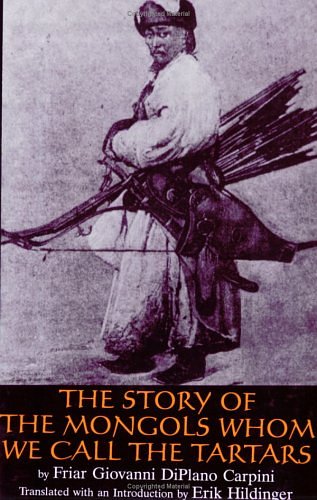
The edition I have.
Once home, he wrote it all down in a report for the Pope, which has become the book, “The Story of the Mongols Whom We Call The Tartars”, the first account of the Mongols by a westerner. It has been translated into English and is a fascinating read for anyone interested in history, Central Asia, the military, travel and the Mongols themselves. You can get a hardcopy translation by Erik Hildinger at Amazon or read a free online version, translated by Richard Hakluyt here, which also has various download options.
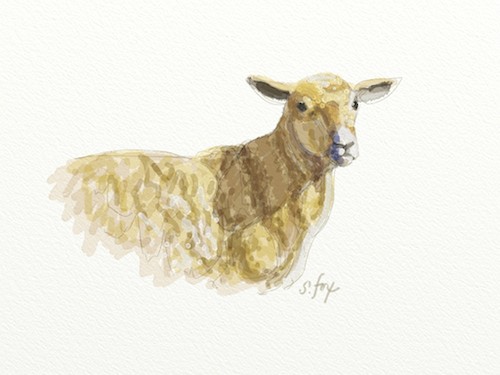
An artist friend and colleague, Guy Combes, just told me about a iPad art app called ArtRage. So of course I had to buy it and try it. Below are a few of my first pieces using it.
ArtRage provides tools that correspond to all the regular media and tools artists use…pencils, brushes, pastels, pens, palette knife, airbrush and also chalk and crayons. You can also pick your “paper”. The app is designed for the tools to make the same kind of marks on the different virtual papers that they would on real papers and canvas.
I think it’s a good complement to Autodesk’s Sketchbook Pro, which is more illustration oriented in terms of the tools it offers. ArtRage is definitely targeted towards fine artists. But both can be easily and productively used by either depending on what one wants to do. I like having both! Here’s what I’ve done using Sketchbook Pro.
So far, I’ve only messed with the watercolor brush on watercolor “paper”. I’m interested in being able to use my iPad for location painting in addition to sketching and I think this will work, once I get the hang of it.
Young horseNeighborhood sheepWhite-napped crane, Bronx Zoo










 Susan Fox, American Artist