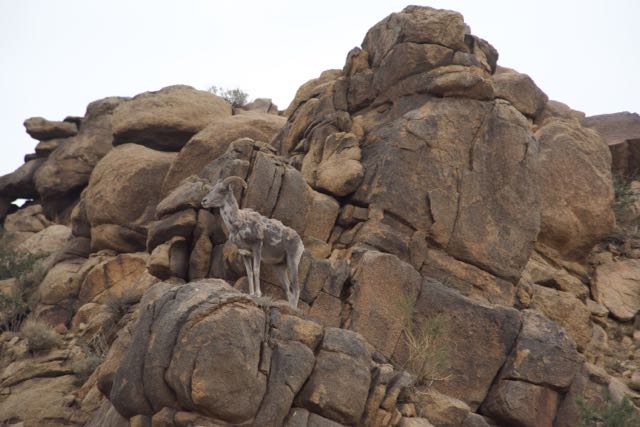
I arrived in Ulaanbaatar, Mongolia late at night on June 28, was in town for a day and then took the train down to Ikh Nartiin Chuluu Nature Reserve. I saw quite a few argali and got some great reference photos.
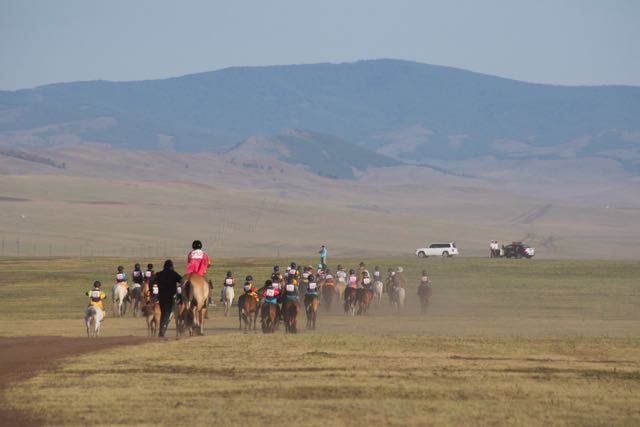
I returned to Ulaanbaatar (UB) after four days, had one day in town again, then joined a Mongolian friend of mine and her family for the annual Naadam celebration in Erdenet, which is a city to the northwest of UB. I got to see four horse races and learn quite a lot about horse racing culture in Mongolia since my friend’s brother is a race horse owner. It was a terrific look behind the scenes.
Once ready to go, the horses are ridden out to the starting point, so they will have done the course twice, out at a walk/trot/canter and back at a run. The feature race for adult Mongol horses was a little over 20km. It had been shortened this year since the rains have been slow in coming and the wasn’t as much grass as was wanted and needed.
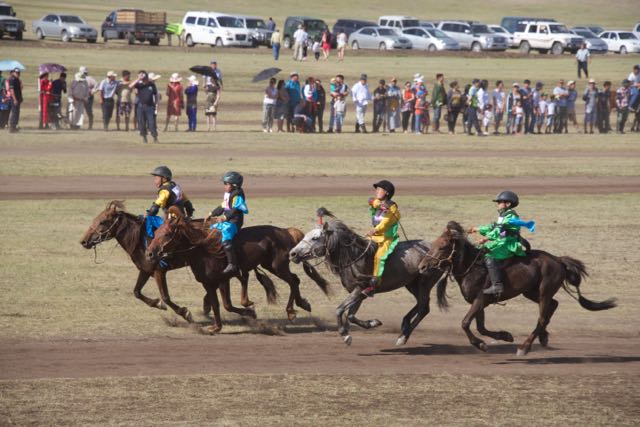
A recent development is crossing Mongol horses with Arabians or American or British thoroughbreds, trying for more speed. These “hybrids” run in their own separate race. Above are four of them approaching the finish line.
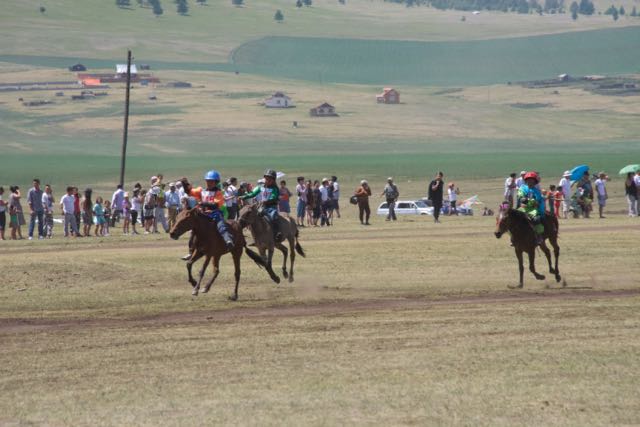
There is also a race for two-years olds, which will be their first. The above two photos show the finish of that race. It’s a test to see how they do in a real race. Horses who show promise might be purchased from the breeder on the spot.
The rules governing the jockeys changed a couple of years ago to increase safety. The lower age limit was raised to seven years from five. The boys and girls (not many but there’s usually one or more) are required to wear helmets, knee and elbow pads and to wear shoes. They can still ride bareback, on a pad or in a saddle. Insurance is also required.
They really do start them early in learning to ride. I saw fathers putting two year olds up on a horse and holding them in place for a minute or two and riding with a bit older child seated in front of them. The young boy in the above photo was perfectly confident, sitting very calmly as he guided his mount.
Unlike American and European racing, the default for Mongol horse racing is geldings. There is one race just for stallions. Mares are not raced since they bear foals and provide milk. This stallion made sure he was between me and his harem. The racing horses are watched much more closely and aren’t allowed the same free range as the working horses. Their training for the naadam begins six weeks before the festival with a carefully calibrated diet and a conditioning routine. The ones picked for racing love, love, love to run and holding them back can be a challenge.
Here are two horses in the final stage of training. They were finally allowed to run and took off like a shot. The trainer and maybe the owner are in the car carefully observing them. The night before the race the men stay up all night with the horses who will race the next day, feeling the state of their stomach and feeding them at the appropriate time.
This is the jockey who rode my host’s horses. He’s eight years old and was all business. Never saw him crack a smile.
We stayed at this camp set up by my host just for the naadam races. It was a wonderful site with an almost 360 degree view of the surrounding countryside.
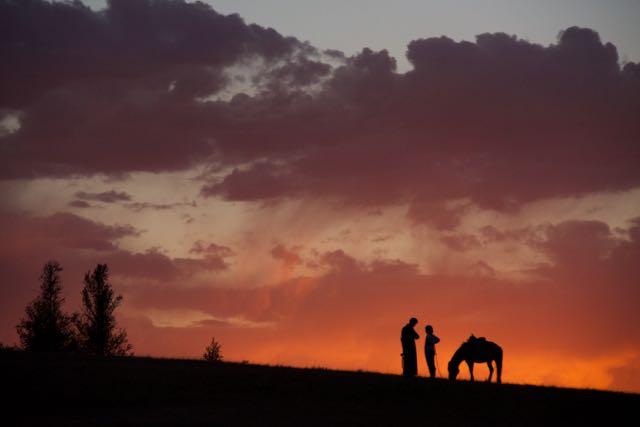
Two of the cousins of the family watching the sun set.
It wouldn’t be a naadam without horse racing and wrestling and we also got to watch the latter. The rules are simple: if any part of your body other than the soles of your feet or the palms of your hands touch the ground, you lose.
The competition begins with all the wrestlers doing the Eagle Dance in front of a national standard.
It’s all very colorful, from the maikhan (the tents) to the officials to the wrestlers themselves. It’s single elimination all the way through. One loss and done.
I also got a tour of the city, known for its enormous copper mine which was established by the Russians back in the 1970s. Everything produced, which also includes molybdenum, goes to Russia.
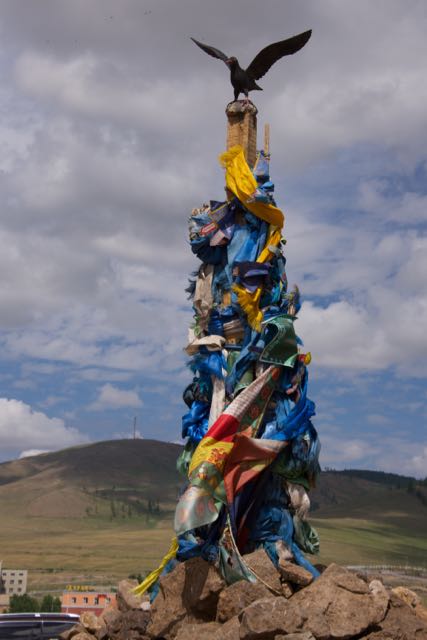
There is a new Buddha statue which will form the center of a planned development. It’s one of the biggest in Mongolia and is directly across from the copper mine. There was also an ovoo with an unusual wooden bird on the top. I’ve never seen that before.
After four fun and rewarding days we took the overnight train back to Ulaanbaatar. I’m resting up and seeing friends, plus doing a little last-minute shopping because on July 16 I depart for western Mongolia for my third WildArt Mongolia Expedition which has been awarded a Flag from The Explorers Club! Stay tuned!
I have a 6am flight tomorrow to San Francisco, where I’ll catch a United flight to Incheon International Airport in South Korea and, after a bit of a layover, fly on to Ulaanbaatar on a Korean Air/MIAT codeshare flight (since United doesn’t have a Star Alliance partner who flies into UB).
For some years now I’ve been doing pre-departure posts on new equipment I’ve acquired. You can read last year’s, which also has links to the previous posts here.
Also last year I decided to try to have gadget charging available in the field and wrote about a Power Monkey Extreme. I ended up returning it before I left since the little solar panel was useless and pain to set up. But I’d still like to have some kind of alternative available and that’s kind of the theme for this year.
But first, at the top, is my new external hard drive…a 2TB Western Digital My Passport. WD seems to be the consistently reliable choice. It will replace a 250GB Toshiba, which I’ve used for years. My procedure in the field is to download my camera’s memory card into, as of this year, Photos, on my MacBook Air. I create folders on the HD and export image copies to those. So all my images and video are in two places. Three if at the end of the trip I don’t wipe the card. Since I now have two Nikon D750 camera bodies that shoot 27MB files, plus HD video and my total images shot for last year was 9,255, which could easily go up this year, 250GB wasn’t going to cut it. 2TB should be enough for the next few years, I hope. :0)
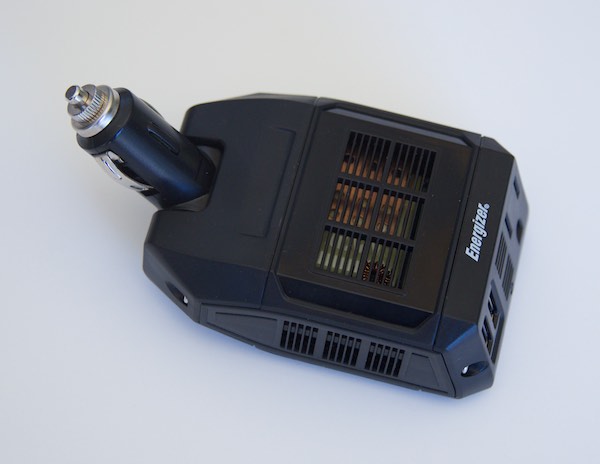
On to re-charging….I had a Kensington inverter that finally stopped working and wouldn’t seat firmly into the car lighter. I still have the Belkin inverter shown above, but as you can see, it only has USB ports. What to do? I’m going to take two options, both from Energizer. If you read the reviews on Amazon you find that there are quite a few options, but most of them are cheaply made and don’t last. Hoping the brand name choice will do better. So here’s the inverter that plugs directly into the lighter. It has two USB ports and one for a regular plug. My plan, based on past experience, is that I’ll be able to plug in my laptop and charge it while we roll and also my camera batteries. The drivers are willing to do that, but want it unplugged when stopped. They want no drain on the battery whatsoever, just in case. That’s what the margin for error can be out in the countryside. So travelers to Mongolia (probably true elsewhere also) with gear need to think this all through ahead of time. Pulling rank (I paid for this trip!) because you didn’t is not appreciated. I’m hoping the adjustable neck is a feature and not a bug. It only moves between two positions and seems to lock in firmly. A couple of weeks, possibly, in a Russian van on the earth roads will tell the story.
The charger below is one of those “I’m not sure I’ll use it, but it could be the PERFECT solution and only one, depending on the situation” purchases. It’s an Energizer 180 watt inverter with a base that rests in a cup holder. Clever. So less bulk hanging off the lighter, which the drivers will like. I also think anyone I’m with who’s driving a Land Cruiser will get a kick out of it. The Russian vans don’t bother with effete stuff like cup holders. I like that the charge base is stable and only a cord has to go into the lighter. I could plug almost everything into this one at once….the laptop or camera battery charger, iPad iPhone and will probably try it if I can.
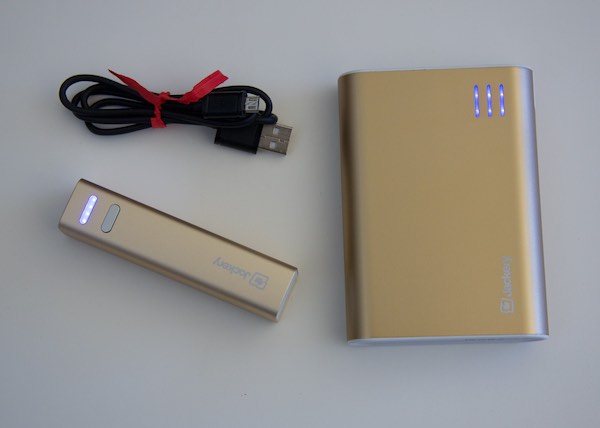
Finally, after searching and researching and reading the reviews on Amazon, I’ve settled on two sizes of Jackery portable batteries. I picked the lovely gold to match my iPhone 5, but they also come in black, silver and orange. This is a Three Bears deal: there’s a mini, a medium and a Giant+. My plan is to use the mini for the iPhone and the big one for the iPad and in a pinch. I’m hoping, the laptop just to get enough juice to finish a download.
This is how I’ll carry them. It’s one of a set of three nifty, well-made zip cases I found at K-Mart for $15.
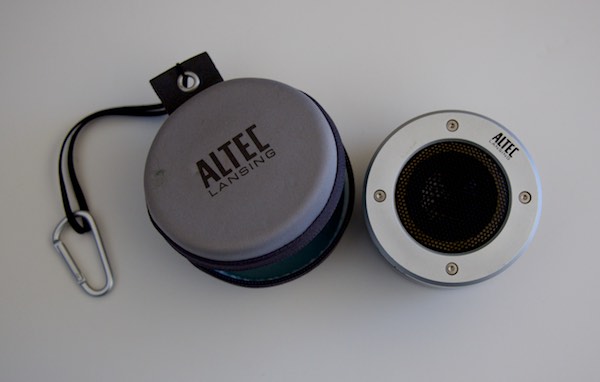
I also want to give an update on the little Altec Lansing speaker I bought some years ago. It’s the bomb. I reliably get 13 hours or so of music from the three AA batteries. The sound quality is still good.
Other equipment that is still with me and doing well is the KATA camera pack which I believe has unfortunately been discontinued, the hiking boots, sleeping bag, gear ties, tripod, Smartwool socks and earbuds. My faithful Domke photo vest, which I’ve had since my first trip to Kenya in 1999 finally has failed. Tears at the corners of the pockets that can’t really be fixed and places where the fabric is finally wearing out. I got online and, of course they’re not being made anymore either, but eBay to the rescue!. I scored a new vest in like-new condition for 20 bucks, including shipping!
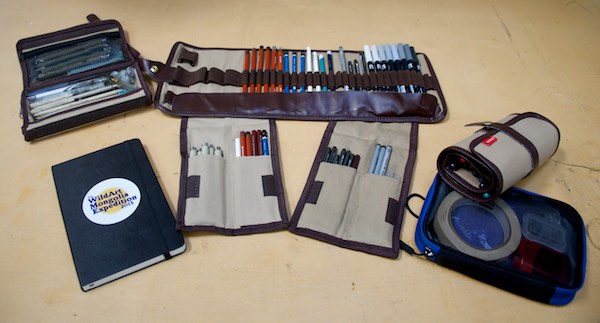
I’m planning to do as much art in the field as I can this trip, both drawing and watercolors. While we were London there was an art supply shop near where we were staying. They had some things that are not available here, like the small cloth Derwent pen and pencil holders. The larger one that rolls up is available from Jerry’s Artarama last I looked.
Watercolor supplies
Drawing supplies
As I have for some years now, I’ll use a Moleskine Sketch Journal to record the trip. One for the WildArt Mongolia Expedition and one for everything else.
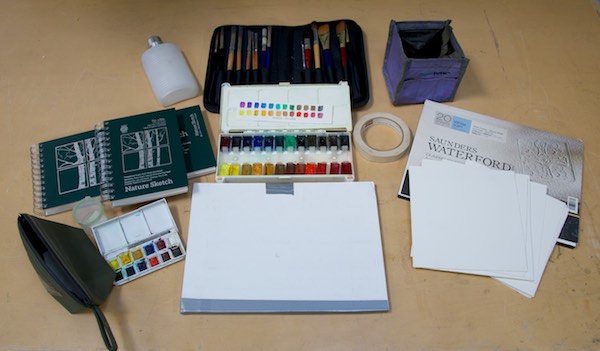
Watercolor supplies:
1 Winsor Newton Cotman Travel Set
1 Yarka watercolor set (I have the color chart because I got some new colors and re-arranged the order of the pans)
A variety of brushes. The rounds are ProArte, Cass (the house brand of London art shop) and Robert Simmons Sapphires. I don’t use real sables anymore. The synthetics work just as well for my purposes, cost less and don’t require killing small mammals.
Saunders Waterford cold press 140lb. paper; in a block and also cut from a large pad into approx. 8×8″, a format which I’ve found I like a lot.
Pentalic Nature Sketch multi-media pads in two sizes; can also be used for drawing; indispensible now that they’ve upgraded the cover from thin paper to sturdy board
Plastic water bucket
Water flask
Homemade matboard support covered with clear tape for holding watercolor paper
Drafting tape
Small green pouch to carry the Cotman set, a small water container, paper towels, a brush; slips into the pocket of my Domke photo vest.
Drawing supplies:
Sakura Micron pens in a variety of sizes in black and brown
Cretacolor Monolith graphite pencil sticks in a variety of “B” softness; really, really liking these a lot
Derwent Graphitone water soluble graphite pencils in 2B, 4B, 6B
Derwent regular and Inktense water soluble colored pencils
Koi Waterbrushes in three sizes; for getting a tone with Graphitones or blending the water soluble colored pencils
Derwent Drawing pencils in Chocolate and Venetian Red
Staedtler Mars Lumograph pencils
Prismacolor brush and hard tip pens in shades of grey
A couple of other Strathmore sketchbooks; one white paper, one toned paper
I applied for an Explorers Club Flag last year for my 2015 WildArt Mongolia Expedition and was notified in January that the President and Board would give me that honor. I then was asked which Flag I wanted to take. After doing some research on the Club website, I made my choices. I was notified late last week which one will go with me to Mongolia. It arrived via FedEx yesterday so now I can break the news….I will be carrying Flag 179, which as been taken out into the field 35 times since 1959. It has been carried to, among other places: Mt. Everest, the South Pacific, the North Pole, Ecuador, the Amazon, Thailand, the Caucasus Mountains, Rwanda, St. Pierre and Yeman. On June 27th it will travel with me to the Land of Blue Skies. I requested this one because one of my sponsors for my application to join the Club, Stephen Quinn, took it to Rwanda where he searched for and found the exact location where Carl Akeley painted the study which became the background painting of the mountain gorilla diorama at the American Museum of Natural HIstory. Steve painted his own study from that same spot and I got to see it when I visited his home. So I am now the second artist to carry this Flag.
There is also Expedition news! I’ve been offered the opportunity to join two argali researchers, Dr. Barry Rosenbaum and S. Amgalanbaatar, to observe and record the capture, collaring and release of Altai argali for four days at Hokh Serkhiin Nature Reserve. I will be flying from Ulaanbaatar to Ulgii in the far west on July 16. Joining me will be a young Mongolian artist whom I met last year, Tuvshintur. We’ll be sketching and painting in the field for three weeks as we visit a variety of wildlife destinations. You can find out more on the Expedition page.
More on The Explorers Club, founded in 1904, here.
My main destination – Piatra Craiului National Park and the small town of Zarnesti
I already know that I want to go back to Romania. One week barely scratched the surface of a country, like Mongolia, that really deserves to be better known, especially by nature-lovers. My goal was to visit the Carpathian Mountains of Transylvania to see part of the largest remaining areas of the ancient European forest and, if possible, see and photograph European brown bear (Ursus arctos arctos). I got all that and much more!
Romania is a modern European country and is a member of both the European Union and NATO. Above is the bread section of a large grocery store in a shopping mall in Bucharest, the capital. I love visiting grocery stores in different countries and seeing what’s familiar and what is new. Also, in the bigger stores, how things are designed and laid out. This store was very well done.
One of many colorful flower stands we passed on our way north out of Bucharest. I booked a custom trip with a British travel company, Wildlife Worldwide. In Romania my trip was handled by Atu Travel. I had a wonderful driver/guide named Laurentiu who was knowledgeable about all facets of the country.
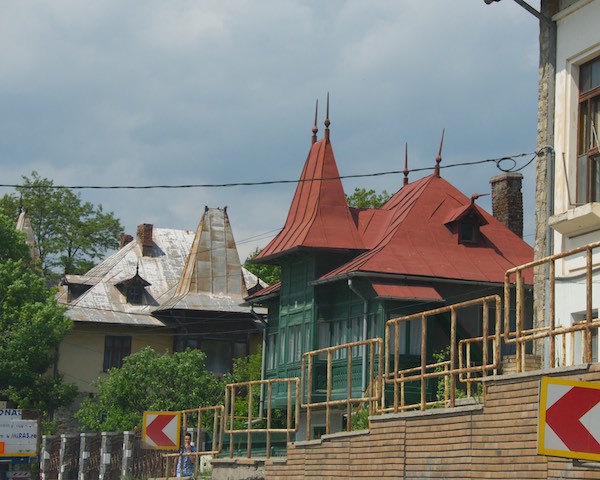
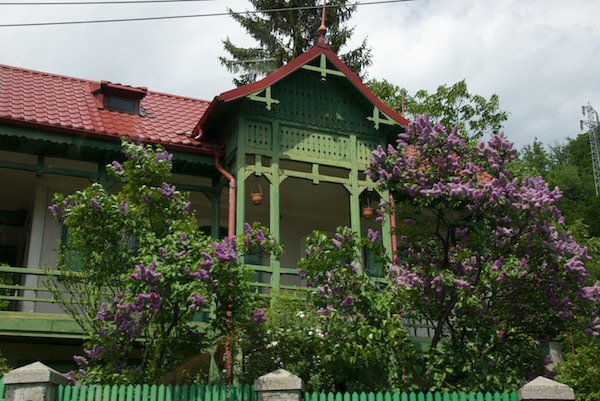
My first happy surprise was discovering the storybook traditional architecture as we passed through this town. I’d love to go back there for a few days of sketching and painting.
Lilacs were in bloom everywhere we went. These were all grab shots from the car since we didn’t have time to stop.
The first morning Laurentiu took me to this “castle”, Peles Castle, which is really a palace that King Carol I had built in the late 19th century. It has over 170 rooms decorated a variety of historical styles. Unfortunately it wasn’t open when we were there, but i did get to see the grounds.
Rasov Castle, perched on a hilltop, is visible for miles around. We didn’t go there, but I did get some photos. It dates back to the 14th century.
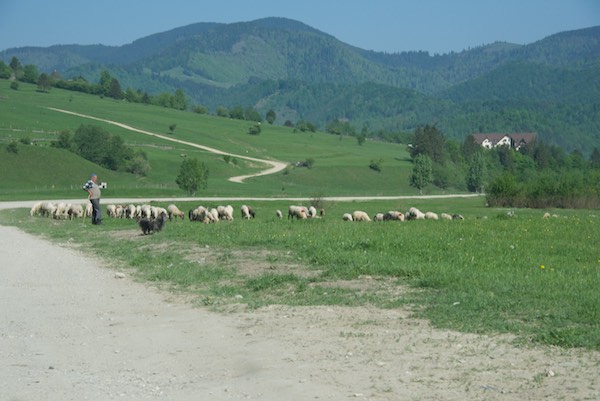
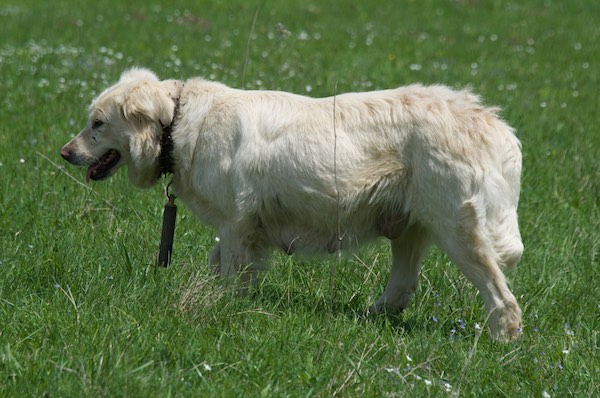
Like Mongolia, livestock herding is still how many people make their living. The Romanian shepherds use two kinds of dogs: large strong ones who guard the flock from predators like wolves and smaller quicker dogs who move the flock. Here’s an example of each.
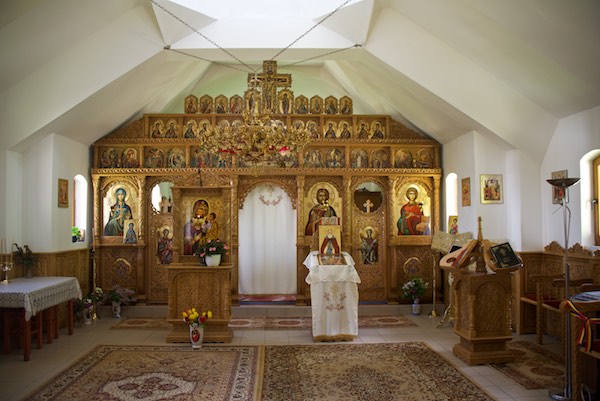
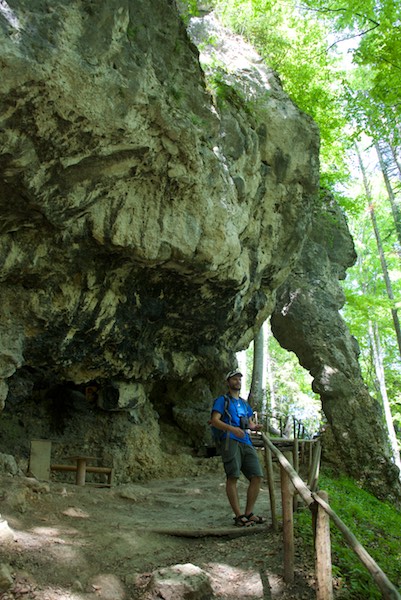
Our next stop was a trail is that leads up to a monastery, the Colti Chiliei Hermitage. It was a lovely wildflower-filled walk.
The interior of the chapel.
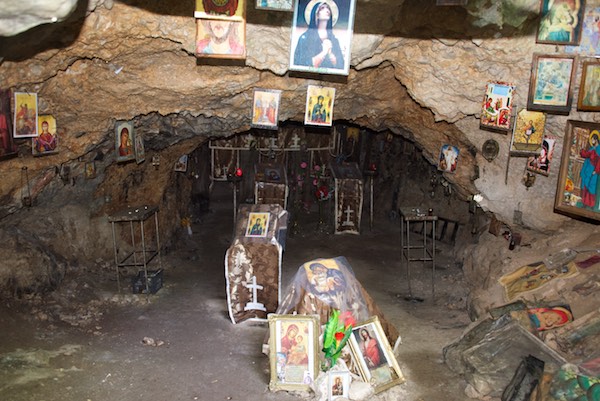
The site dates back to the 15th century, when local people took refuge in the mountains to escape the Ottoman Turks. The next two photos are of a cave up in the woods above the hermitage.
It is still a place of pilgrimage and worship today.
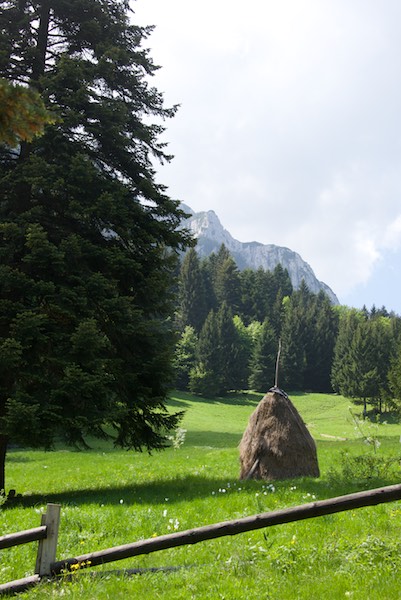
The surroundings are very beautiful. In the foreground is a Romanian-style haystack.
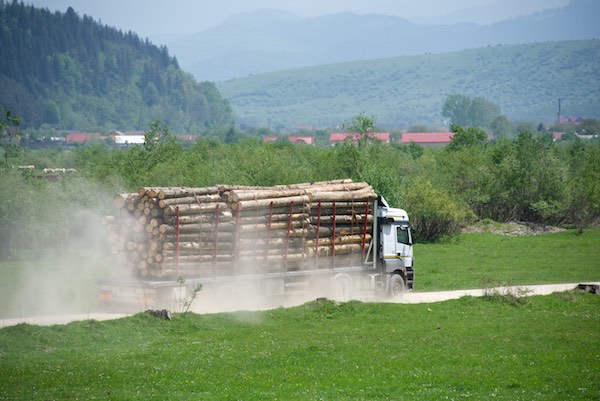
Logging of the ancient forests has become an issue in Romania in recent years. The government is cracking down on the corruption that feeds the illegal logging. Laurentiu told me that every truck is tracked and that legal logs all have a red dot on them, like the ones in the photo below.
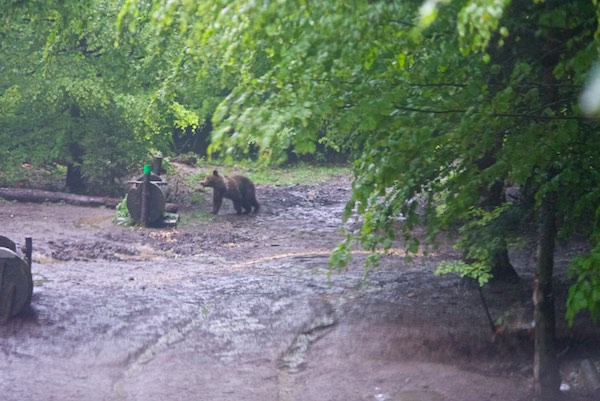
That evening we went to the first of two bear hides (“Hides” are small raised up huts with a large area of glass on one wall). We arrived along the road early and went for a walk. It started to rain. By the time we met up with ranger it was really raining. We were also down in the trees where it was pretty dark. All to say that while I got quite an eyeful of not just a bear, but wild boar, I didn’t get very good photos. But I knew I’d have one more chance.
First up was a family group of European wild boar, which was great since they keep to themselves and are not often seen.
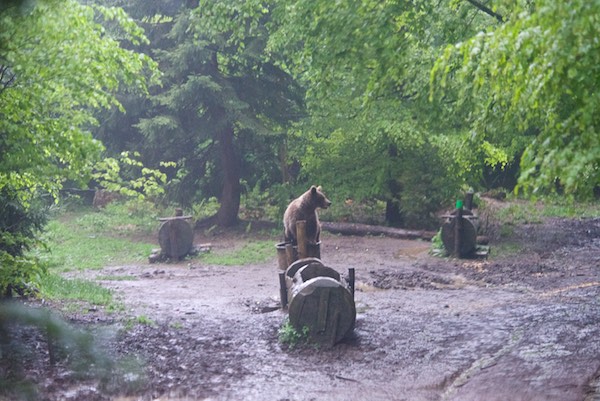
They grazed and poked around, then startled and moved back into the trees. A few moments later a small brown bear showed up. There’s “bait’ in the can, chocolate and grain. I wasn’t thrilled about this, but it’s the only way visitors have a chance of seeing the bears, which are a major tourist draw.
After going head down into the can, the bear suddenly alerted.
A little more time passed. It got darker and the rain came down harder. It was finally too dark for photos. But….the boars back at the edge of the trees seemed to collectively decide “what the heck?” and came charging out, chasing the bear away! Laurentiu said that he had only seen this once or twice before in all the times he’s taken visitors to the hides. I may have to do a painting of it sometime…
The next day was what turned out in my mind to be The Hike. Laurentiu described it to me and I wondered if I was up for it since I hadn’t done any hiking since last year in Mongolia, we were at around 2000 ft. and I live more or less at sea level. But this was my chance to really get out and up into the forest and mountains, so off we went.
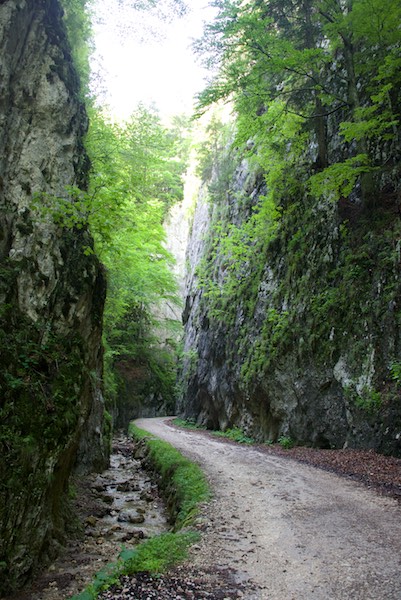
We started by walking through the Zarnesti Gorges, quite well-known to serious birders.
It was lovely and cool trekking between the limestone cliffs, although I don’t recall that we saw a single bird. Soon enough, we reached the trail up into the mountains and for the next 3-4 hours I was thoroughly tested, going up slopes that were sometimes 30 degrees. With my camera pack. The photo below is the one that shows part of a section I’d just come up.
As we got higher up where it was flatter and more light could get in, an understory appeared with a variety of wildflowers like these forget-me-nots.
We finally came out of the trees into the sub-alpine zone. The small building is where the shepherds live in the summer. More below.
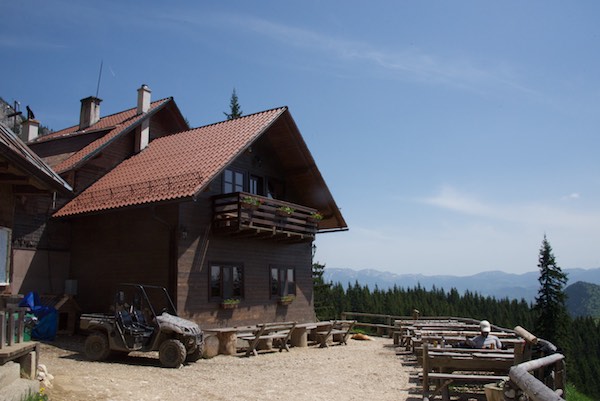
And here’s our goal, the Alpine Hut. Which had a spectacular view. And cold beer. We were able to refill our water bottles from a spring before we started down.
There were even dogs to pet!
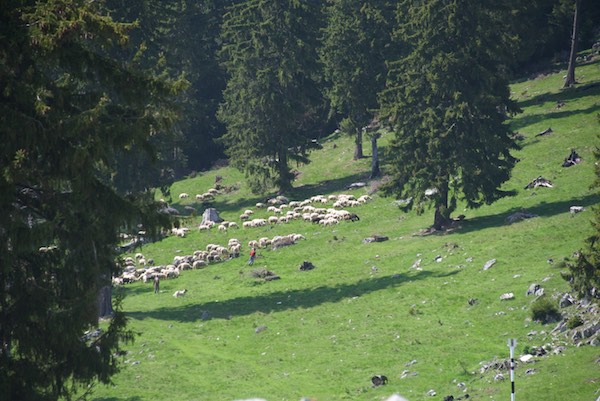
As we headed across the meadows we started to hear the sound of sheep and bells. I saw them down in the trees a fair ways below us, but there wasn’t time to stop. They came up quickly, though, and I got a few photos. The shepherds are moving up onto the mountain for the summer, staying in huts.
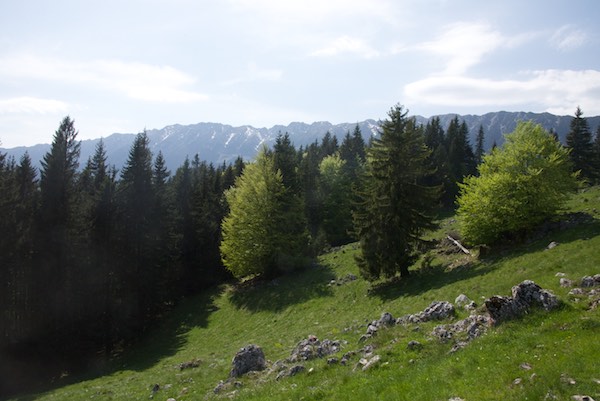
We still had 2 1/2 to 3 hours to go. This was a last look before we descended back into the forest.
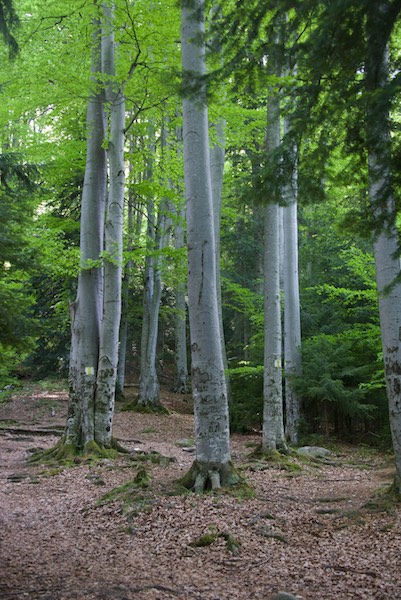
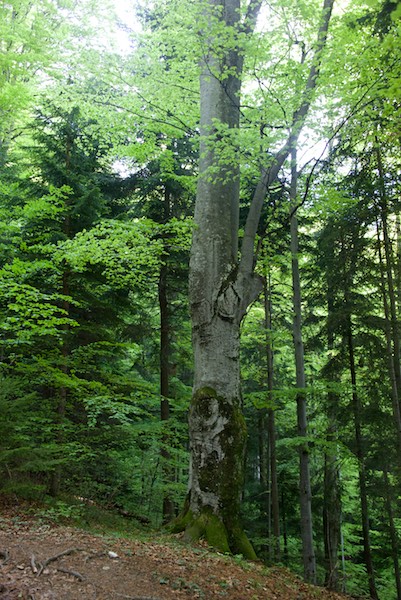
I had to put the cameras in the pack since the trail was slippery from the previous night’s rain and we had to very carefully pick our way through a lot of rocks on the trail. My hips and then my knees started to hurt but there was nothing to do but stop when I had to rest a bit, otherwise just keep going. When we came into an area with ancient old growth beech trees I had to stop and have Laurentiu get a camera out for me. It had a magical feeling of ancient beauty. This was one of my favorite parts of the whole hike and made it all worthwhile.
But that wasn’t the end of the day! After resting and getting dinner at Guesthouse Elena, where I was staying and being treated to their excellent hospitality, it was off to the second bear hide. This time we went through a small village and into the Stramba Valley, another birding destination. It was late afternoon and the cows were going home.
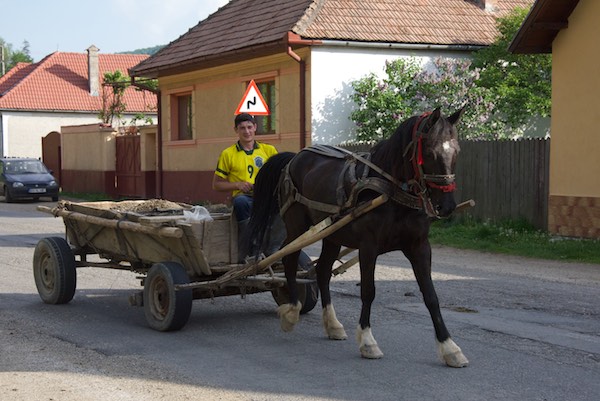
So were the people, some in a very old form of transport…
I asked Laurentiu why horses and wooden carts were still used. He told me that they were less expensive and more reliable than trucks and that the horses could also be used for other tasks.
I saw nesting storks in a number of locations as we traveled around.
Once again we met up with a ranger, drove up a valley and parked. The hide wasn’t far from the road.
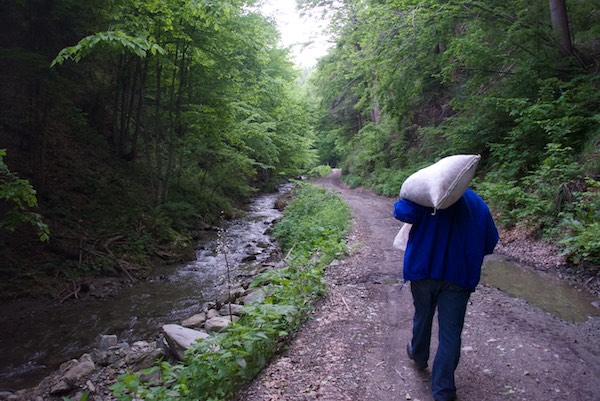
He’s carrying grain and biscuits for the bears. As we crossed the stream and walked up the trail I spotted this…
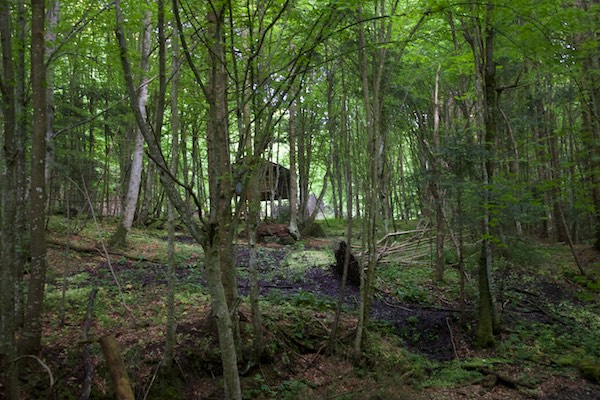
You can see the hide through the trees. The clearing where the bears come into view is on the other side of it.
We were getting close and the ranger stopped, saying something to Laurentiu, who told me in a very low voice that there was already a bear in the clearing! So we walked quickly and quietly to the hide and up the stairs. I got my cameras out (two Nikon D750 bodies; one with a Nikon 28-300 mm lens and one with a Nikon 80-400 mm lens). There was a bear there, a 3-4 year old female. She never saw us, just kept digging around in what looked to be a wild boar wallow.
After a bit the ranger said he wanted to go put out the bait. I was torn over whether or not to say something. A bear in the hand, who would certainly run off, or the chance to have one come in much closer. I didn’t say anything, having learned long ago in Mongolia not to second-guess the locals. And not only did Bear No. 1 come back and stay, but Bear No. 2, also a female, showed up and came right in close to the hide.
About an hour had gone by and then Bear No. 3 came in to join the party, although the females backed way off since this was a 7-8 year old male.
I was able to get a shot with all three bears.
Finally, after about 90 minutes it was getting too dark to really get anything, even at a very high ASA. Then the ranger said something. Laurentiu translated saying that the ranger had just said that we had to leave right away because there was a fourth bear! I looked out the side window of the hide and could see another smallish bear in the trees only 15-20 feet away from the hide. I packed everything up as fast as I could, thinking that, no, we weren’t really going to leave the hide with a bear right out there, were we? Yes we were and yes we did. The bear moved farther away when she heard us, so all we had to do was walk quickly and carefully, because it was still quite muddy from the rain, down the trail, back across the bridge and onto the road. The ranger asked Laurentiu if I was happy. Are you kidding? Any bear close enough for good photos would have been great, amazing, super lucky, but THREE? An excess of riches. What an evening.
The next day was for cultural sights and since I’ve been interested in medieval history for many years, I love getting to visit places from that era. Plus, having done a little research, I knew that the Mongols had come through Transylvania, including the part I was in, when they invaded eastern Europe in 1240-1241. In fact, they pretty much depopulated Transylvania on their way to Hungary. They are remembered, but not with any hostiity that I could tell. And, since it was close by, I figured I ought to visit Bran Castle, famous for it’s (completely untrue) connection to Dracula and Bram Stoker.
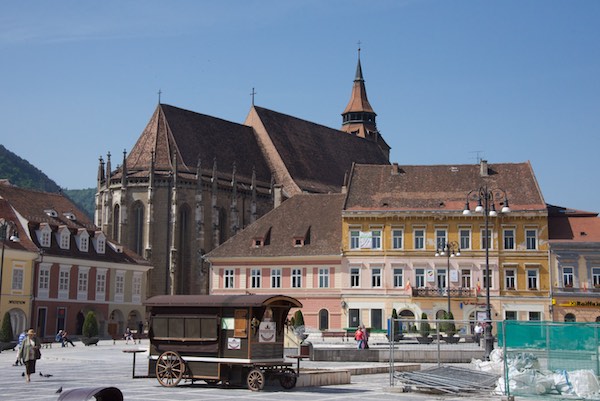
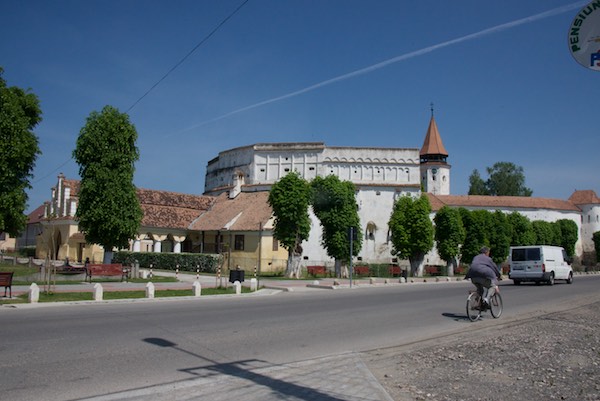
First we went into the medieval city of Brasov, a bustling architecturally handsome city in the older part which is backed up into a horseshoe-shaped valley. There’s still a short section of the wall left. The mouth of the valley used to have a moat. It was one of four fortresses built to defend the area, the others being Bran Castle, Rasov Castle and our next stop, Prejmer Fortified Church, a fortified monastery which belonged to the Teutonic Knights.
The town square in Brasov, showing the back of the Black Church.
Prejmer Fortified Church. A UNESCO World Heritage site.
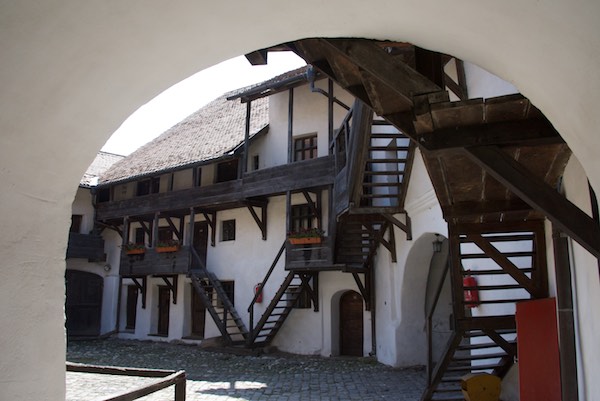
Inside the citadel
Inside the church
Then it was on to Bran Castle. Anyone who loves castles will love this one. Forget the Dracula stuff. There are no vampires. Bram Stoker’s story was set elsewhere. And Vlad the Impaler wasn’t here either. It’s actually a reasonably comfy and elegant family home that was used by members of the Romanian royal family and is still owned by a Hapsburg Archduke. Many articles, objects, images and family momentos are there, along with real medieval armor and weapons.
The main sitting room. Notice how the old fireplace was altered to create a cozy nook.
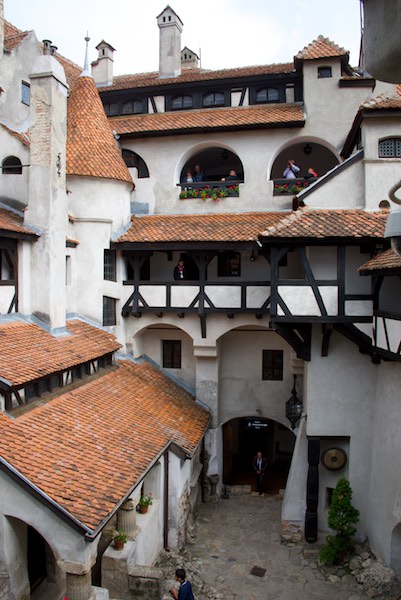
The interior courtyard. It’s quite something to wander around through all those different levels and rooms.
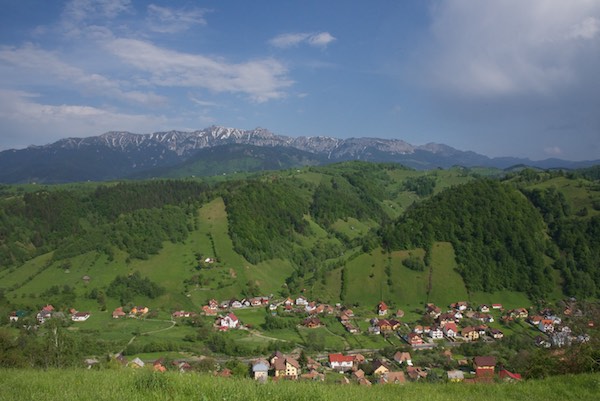
Once we’d finished with the castle Laurentiu took me to a justifiably famous viewpoint. Two, in fact. One on each side of the road.
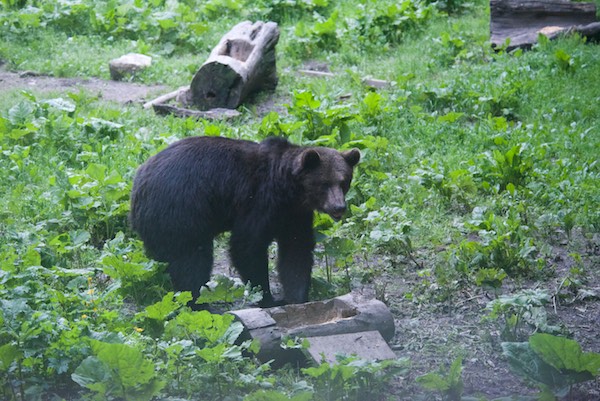
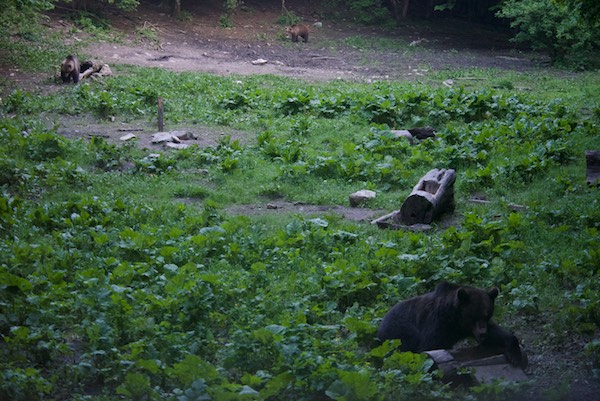
The next morning there was one last stop, the Libearty Bear Sanctuary. They have 80 bears who have been rescued from cruel and inhumane conditions and who will now live out their lives in comfort and safety, getting to be simply bears. Click on the name to go to their website. There’s also a book about them and other European bear sanctuaries that can be accessed from the site and purchased through Amazon. Here’s one of their bears, enjoying the morning sun.
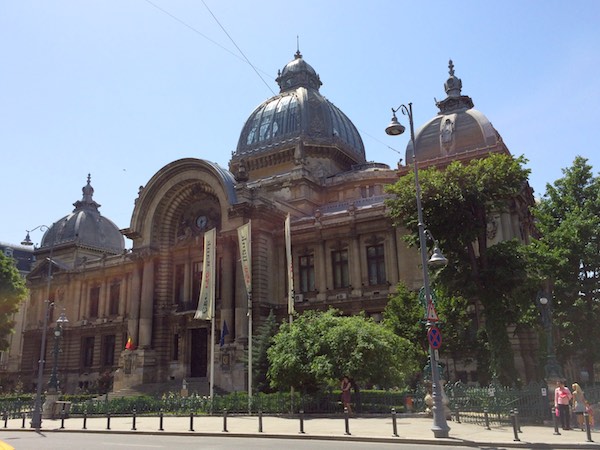
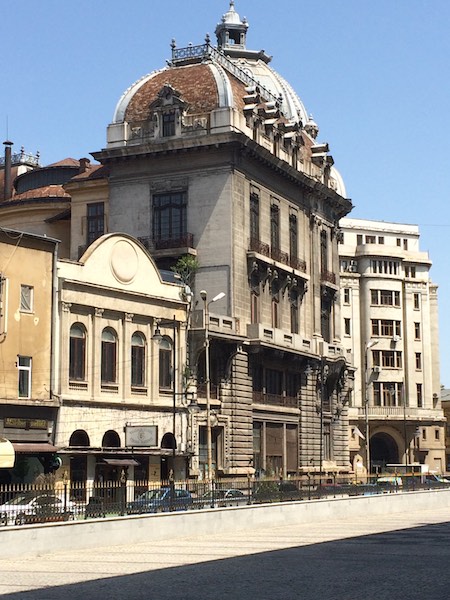
And that concluded my trip to Transylvania. I arrived back at the hotel in Bucharest in the afternoon. My husband (he’d had business meetings all week) and I spent our last day in Romania checking out Bucharest’s Old City, which turned out to have drop-dead gorgeous Second Empire French architecture.
And then there was Nicolai Ceausecu’s monument to meglomania which was left unfinished when he and his wife were run to ground and shot after the fall of communism. Since it turned out to cost more to demolish it, the new government went ahead and finished it. Over 300 rooms worth. It is now called the “Palace of Parliament”. I was expecting a classic “East Bloc” ugly slabby thing, but other than the inhuman scale, it’s not architecturally too awful. Except that the site used to have the core of the Old City on it. See above…
But what’s really important is that the Romanian people have survived and are largely thriving, living normal lives, welcoming and friendly towards visitors. They have a beautiful country that I hope to visit again.
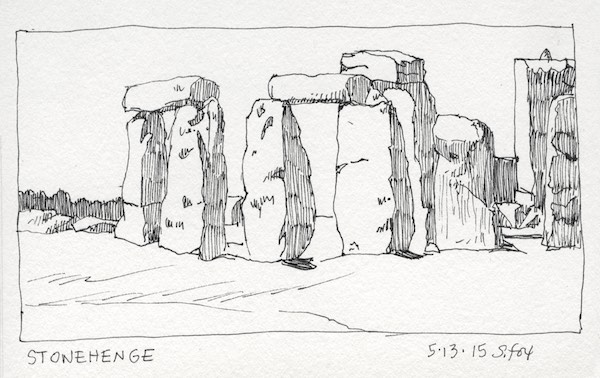
I’m back from our three week trip to England and Romania, a success on all counts! It was lovely to be in England in May, my first trip there in eleven years. Not much had changed…the countryside was still beautiful, the beer was excellent and I was able to get a nice selection of flower garden seeds at a big Garden Centre. I loved seeing Stonehenge again and we finally got to really explore Avebury, which we’d only had time to drive through on a previous trip.
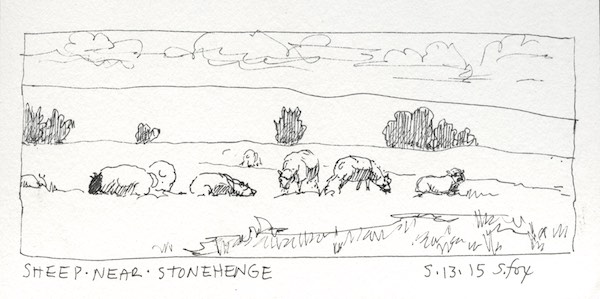
Here’s a album of sketches, plus a couple of watercolors I did (Sakura Micron .01 pen on paper):
In San Francisco waiting to board and then at Heathrow waiting to get the rental car. It’s fun sometimes to just find something to sketch right where one is.New Forest PoniesStockbridge, HampshireStonehengeStonehengeStonehengeSheep grazing near StonehengeStonehengeStonehengeAveburyAveburyBourton-on-the-Water
And on to Romania, a country that I had never been to before. I did a little research and ended up booking a tour to the Carpathian Mountains of Transylvania in hopes of experiencing the largest surviving areas of the ancient forests that used to cover Europe and seeing European brown bear, of which there are close to 5000 in Romania, the largest population of any country in Europe. I succeeded on both counts and and all that and more will be the subject of a couple of upcoming blog posts.
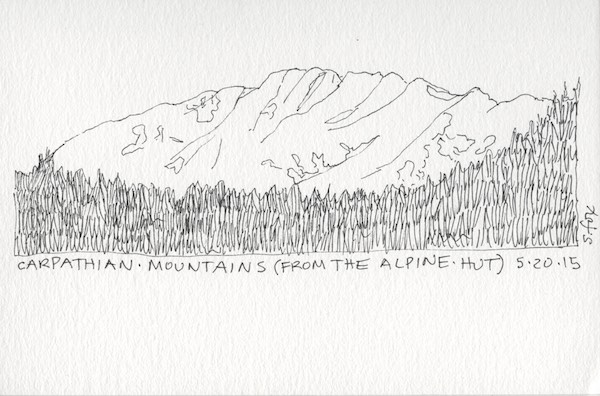
View from the restaurant patio where I and my driver/guide had lunch en routeScenery near a monastery that we hiked up to. In the foreground is a haystackThe second day we went on an eight hour hike high up into the mountains to what is called The Alpine Hut, which is where I did this sketch. And had a well-earned beer.Another view from The Alpine Hut, which was between two ridgelines in the sub-alpine zone
After a week in Romania, we went back to London for three days, catching the “Sargent and Friends” exhibition at the National Portrait Gallery on the last day. We also spent time just hanging out at Trafalgar Square, where I did these sketches.
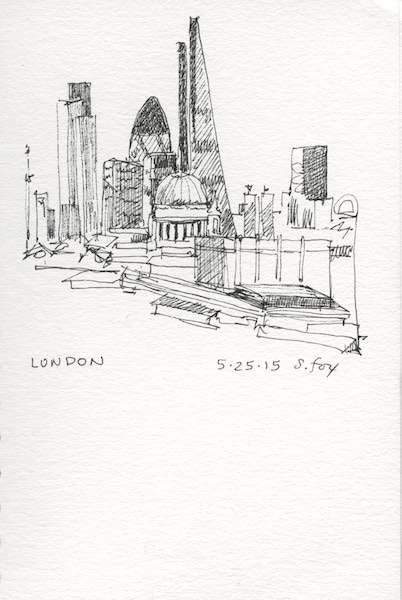
The spire of St. Martins-in-the-FieldsSir Edward Landseer’s lions at the base of the Nelson Column, Trafalgar SquareQuick copy of a dog in a painting by Murillo; people at Trafalgar SquareWay in the distance we could see the Egg and the dome of St. Paulr’s from the window of our Airbnb apartment in Soho, which had the most amazing view of the city
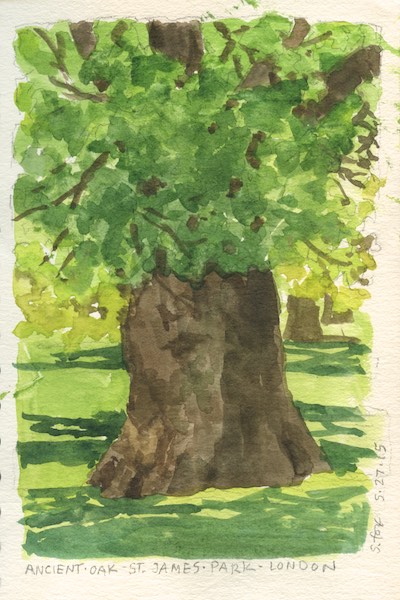
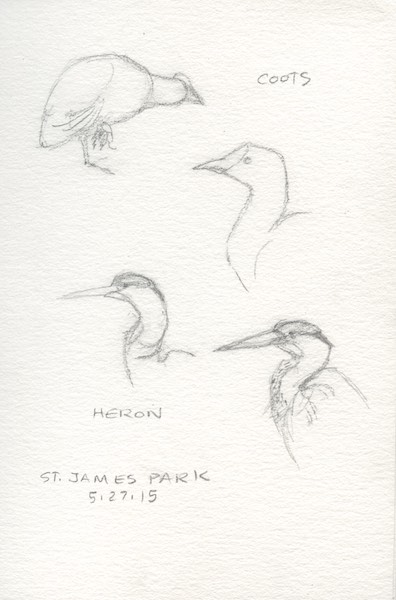
On our last day, we spent the afternoon at St. James Park, which had great birdwatching and many very old trees. I got out my watercolors, finally, and did a couple of small paintings.
Ancient oak tree, St. James ParkPencil sketches of birdsPencil sketches of birdsPencil sketches of birdsA view of the London Eye from St. James ParkLondon skyline from the apartment
I’m currently on the road, having just spent a five days in England, my first trip there since 2004, and am now in Bucharest, Romania. I’m heading out to the Carpathian Mountains of Transylvania tomorrow to Pietra Craiululi National Park hoping to see brown bear and other wildlife. There are more bears in Romania than any other European country, around 5000. I hope to get in some sketching and painting time also. As you can see from the above photo, I got to visit Stonehenge, which is as impressive as I remember it being from my first trip to England in 1987.
Here’s a few favorite images from The Sceptered Isle:
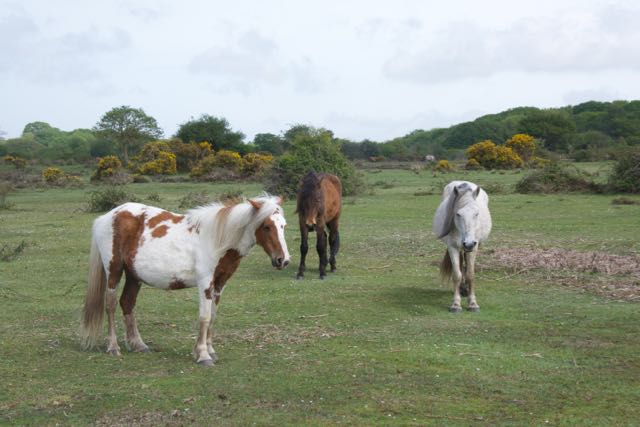
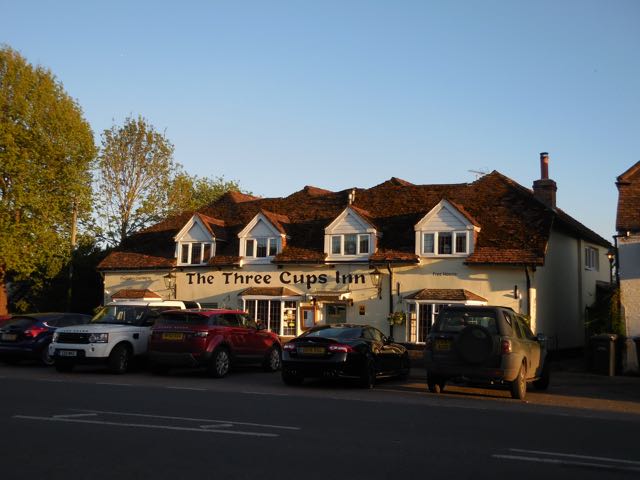
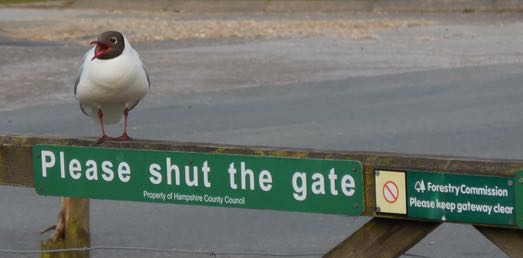
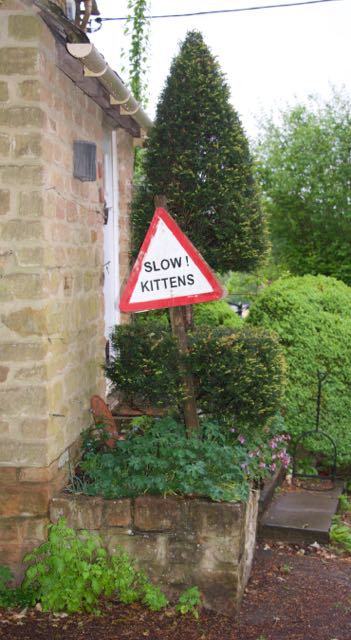
Great Tew, the Cotswolds“Lyrebird” Sculpture by the LakesNew Forest poniesThe 3 Cups Inn, Stockbridge, one of the places we stayedBlack-headed gull, the New ForestRoad sign, Great Tew
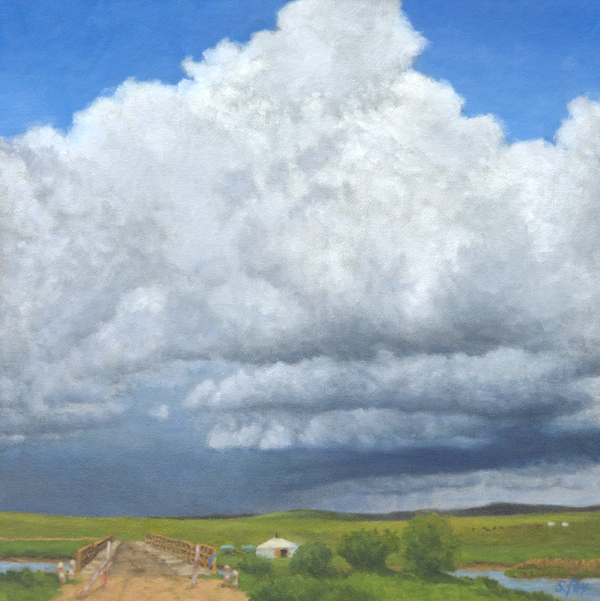
Last year I finally made it to the eastern steppes, the largest remaining stretch of an ecosystem that at one time stretched from near the Pacific Ocean all the way west to Hungary. Now there are only remnants and Mongolia has the largest, best preserved part. We were heading west from Toson Hulstay Nature Reserve, a steppe area that is home to Mongolian gazelles and a variety of other mammals and birds, and had just crossed the timber bridge in the painting. We stopped to stretch and walk out on it to see the river. I got out of the van, turned back to look toward the way we’d just come, and saw this enormous cloud formation with rain in the distance. Summer is the rainy season in Mongolia and storms like this are welcomed by the herders whose animals depend on the grass that is watered by the rains. A good grass year means that more animals have a better chance to survive the long hard winters. So I never mind rain when I’m traveling there. I’m just happy for the local people.
I’m very pleased to announce that “A Good Stretch”, 20×24″ oil on canvas, has been accepted into the 55th Annual “Art and the Animal”, the prestigious international juried exhibition of the Society of Animal Artists (I’ve been a member and Signature Member since 2002). The venue for this year is the Roger Tory Peterson Institute of Natural History from August 28-October 25. There were 395 submissions from 237 members (the Society has almost 500). One could submit two works, but only would be accepted. It’s extremely competitive and a real honor to have made the cut. (This is my fifth time in the show since I first got in in 2009.)
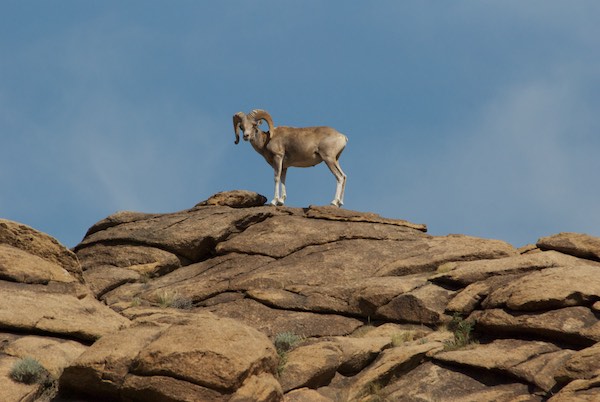
My subject is a Gobi argali ram, seen above, who I spent a hour with at Ikh Nartiin Chuluu Nature Reserve last year. I climbed up and sat on a rocky slope overlooking the valley where the research camp is located, across a draw from him and in full view. Even did a few sketches. When I got home and went through my photos I realized that he was in three of my argali encounters over the four days I was at the camp. The white area on one horn where the surface layer has broken off (almost certainly from a fight during the rut) makes him easy to recognize. Nice for me because I always want to paint individuals.
Limited space still available for the third in my series of art adventures with a conservation connection!
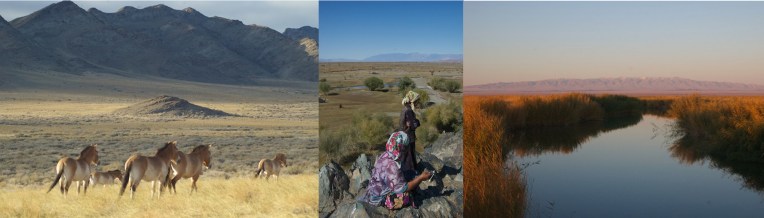
This year’s Expedition will travel to western Mongolia to explore Khar Us Nuur National Park, which includes Jargalant Hairkhan Uul, a mountain with a known, and currently being researched, population of snow leopards; Khomyn Tal, one of the three locations where takhi/Przewalski’s horse has been reintroduced; and the Altai Mountains locations of Altan Hokhii and Hokh Serkhiin Nuruu Strictly Protected Area for snow leopard, argali sheep and Siberian ibex. We will be meeting both with WWF Mongolia scientists and staff and also local people. I am hoping to set up a meeting with the country’s leading argali researcher, who is currently scheduled to be working at one of our destinations. There will be plenty of time for painting and sketching on location. We will be traveling in remote areas of great natural beauty and interest!
This is a real Expedition to an area where few visitors go. Lodging will be a combination of tent camping and stays in community gers. We will be traveling in Land Cruisers with a Russian fergon van for support. Besides the drivers, there will be an English-speaking guide and a cook. There will be limited amenities and you need to be in decent physical condition. Flexibility when traveling in Mongolia is a must. Local conditions may cause changes in the intinerary (a flooded river due to recent heavy rains, for example, which might required a detour). Nomadic Journeys, who I have traveled with since 2006, will be handling all the logistics, as usual.
Preference will be given to professional artists with field art experience, but instruction from Susan Fox will be available for those who wish to learn field sketching and/or painting in watercolor, an activity that has a long and honorable history in exploration.
Here’s the link for the organization that runs the takhi reintroduction project at Khomyn Tal: http://www.takh.org/en/ .
The dates are July 26-August 16. The cost is $3800, excluding airfare. Visit the Expedition webpage for more information. Please don’t hesitate to ask any questions you might have. I hope you can join us!
Use the Contact and Purchase Information form to sign-up (you will need to pay a $200 deposit to hold your place) or request more information. You may also ask to be added to my email list to receive updates on this and future Expeditions.
The 2015 WildArt Mongolia Expedition has been awarded a Flag by The Explorers Club. Susan is Fellow of the Club. You can find out more about carrying the Flag here.



















































 Susan Fox, American Artist