I’m currently on a road trip in southern Georgia. I flew to New York on March 10 (which is why there was no blog post last week) to attend the Explorers Club Annual Dinner (ECAD) and had a terrific time. The opening of the group exhibition “Wildlife Art: Field to Studio” is the evening of March 31 at the Flinn Gallery in Greenwich, Connecticut. What to do in between? It didn’t really make sense to fly home to California for two weeks and then fly back, so I decided to see what there would be to do on the east coast where it was warmer and in the same time zone. After considering a number of possibilities, some more ambitious than others, including flying to Paris for a week or going to somewhere like Belize or Costa Rica, I took another look at the map, Florida being too expensive and everything pretty much booked, and saw….the Okefenokee Swamp National Wildlife Refuge, somewhere I’d wanted to go since I was a kid. Plus there’s the barrier islands of the Georgia coast. Sold! I flew down on Monday to Savannah, picked up a rental car and drove to my first of three Airbnb lodgings, this one near Brunswick. The next day I did quite a long drive over to the western entrance to the swamp. Here’s some of what I saw:
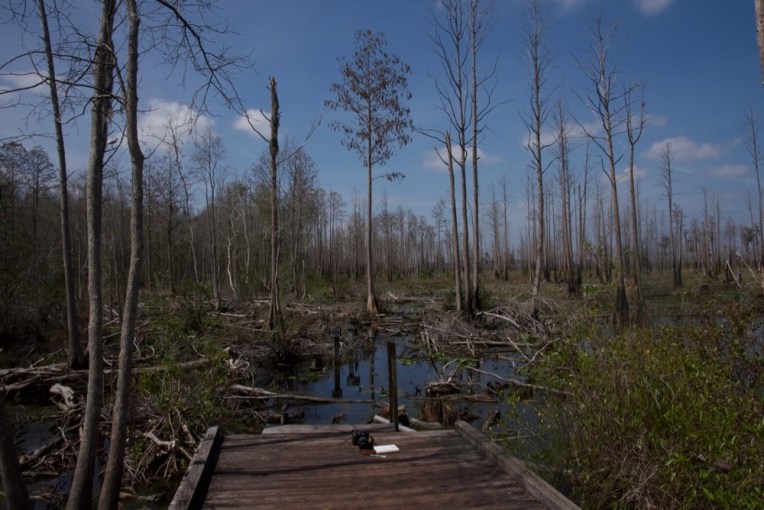
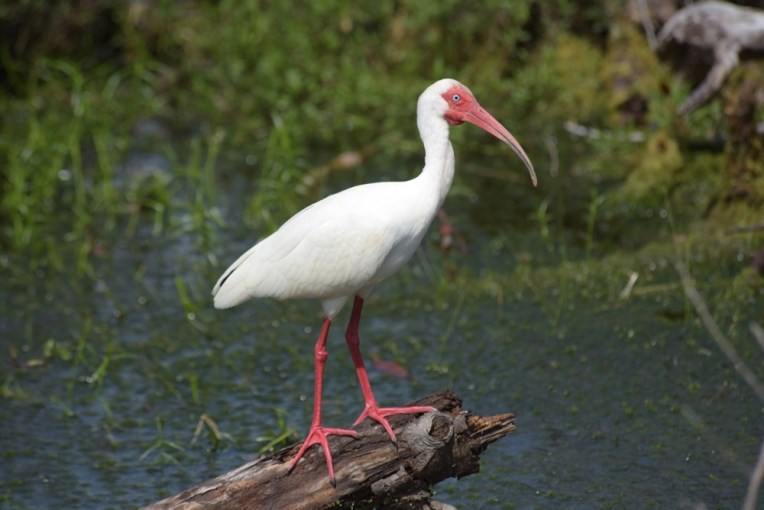
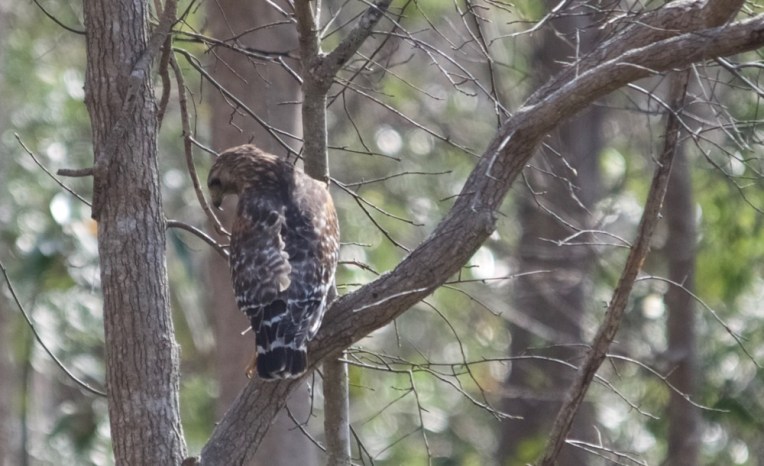
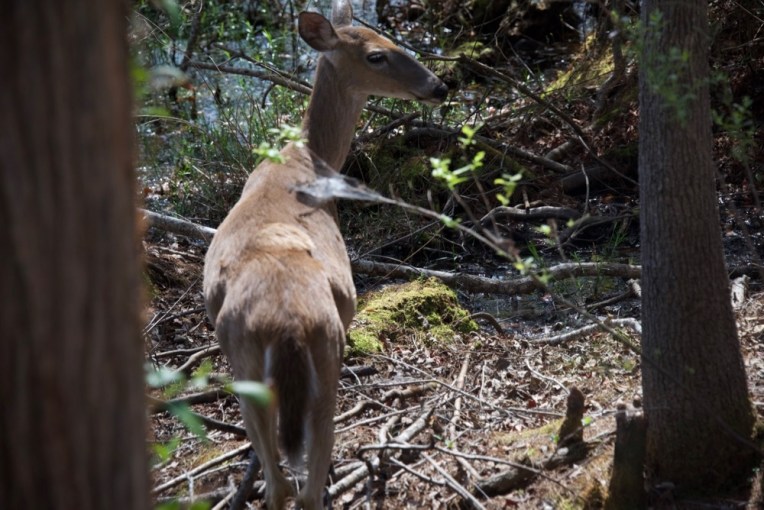
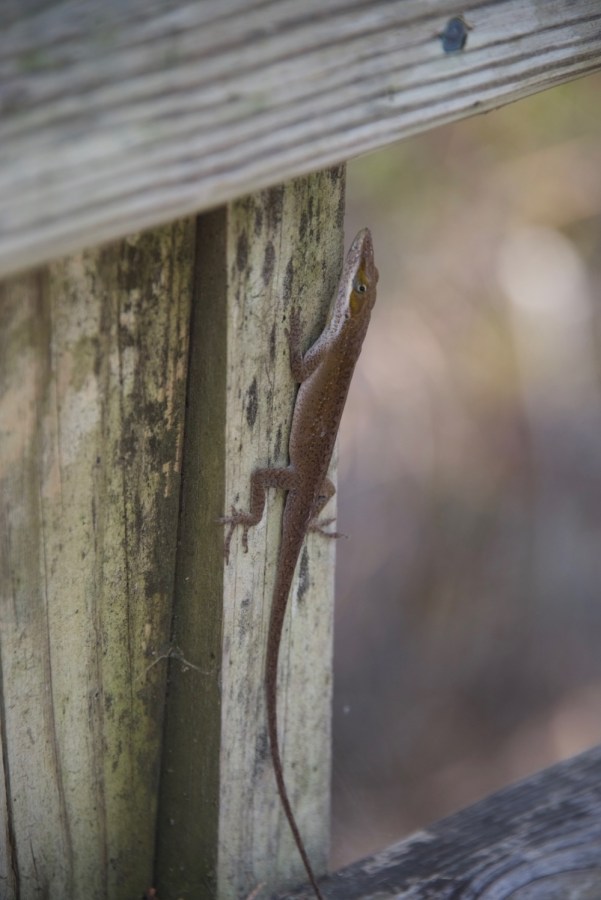
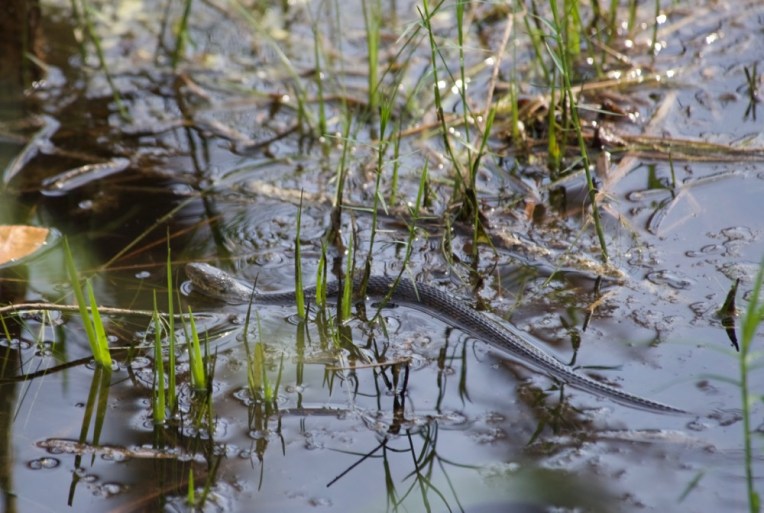
I sat at the end of this boardwalk to sketch and do a watercolor.There was a large flock of white ibis all aroundOf course everyone wants to see the alligators, but they’re a wild animal, so you never know. But this little one swam right across in front of where I was sitting.On the way back I spotted this red-shouldered hawkI was on another section of boardwalk over water and there was suddenly a loud “galoop” of water. This whitetail doe came out from underneath. I had walked right over where she was. But she stopped, had a little chin scratch and then started to browse the leaves on the trees.I took a break at a bump-out seating deck and there was this green anole (currently turned brown) who stayed around for me to take quite a few photosI got up to leave, walked over the balcony. looked down, saw a movement in the water and spotted this water snake (non-poisonous) swimming by
The next day I met up with artist and fellow Explorers Club member Alan Campbell, who took me around Harris Neck NWR.
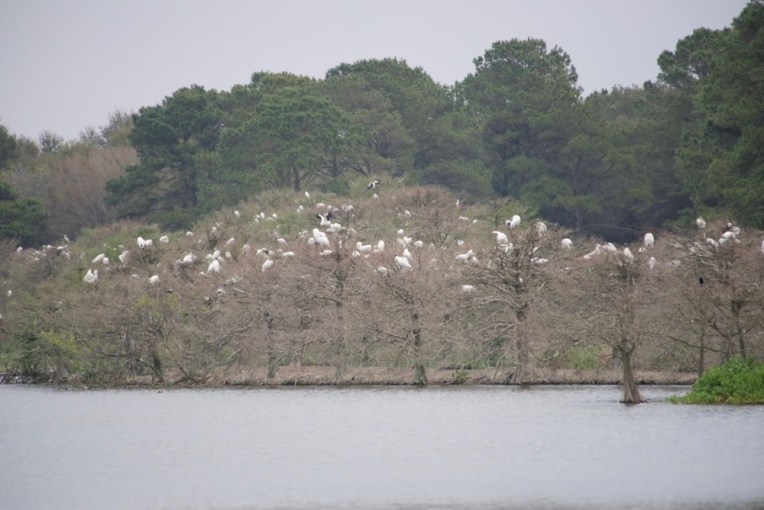
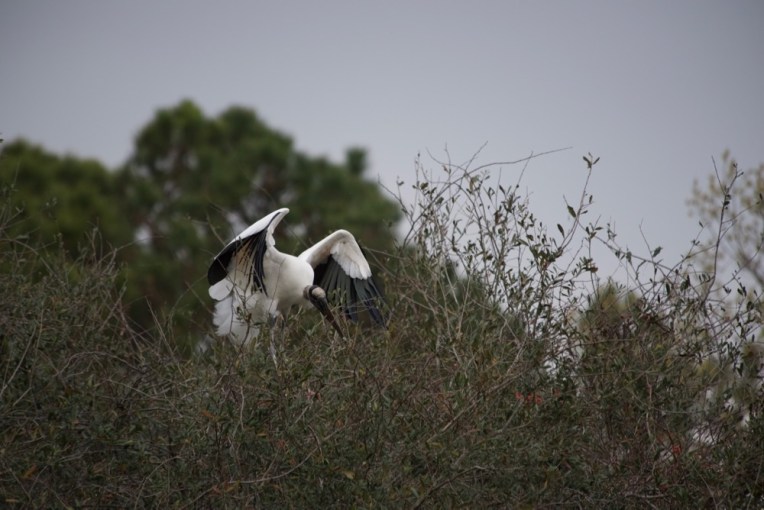
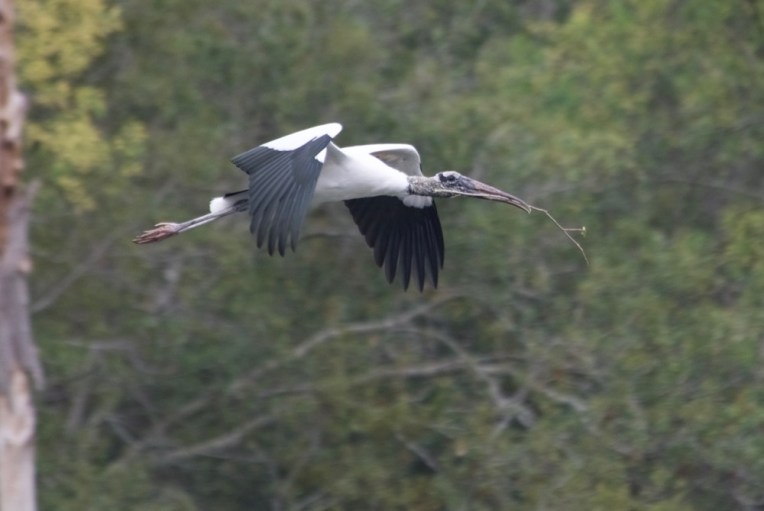
The refuge is known for it’s wood stork rookery.Wood stork gathering nesting materialsWood stork carrying twigs back to the rookery. The birds have recently been removed from the endangered species list.
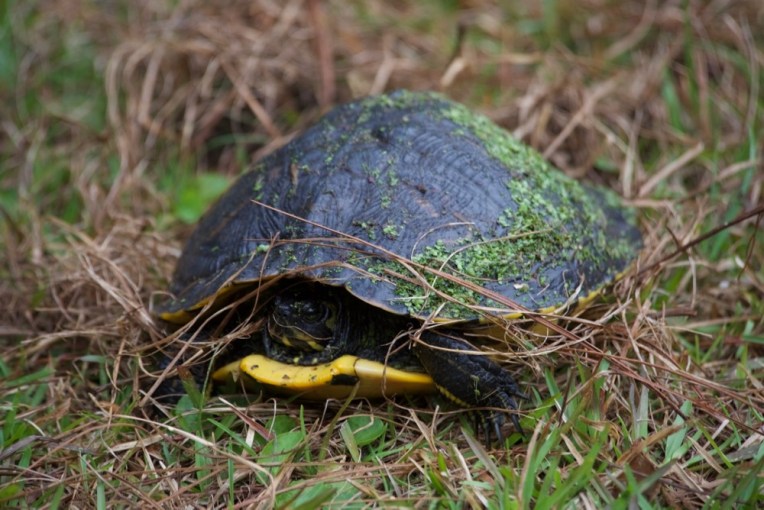
We twice drove the route through the refuge so went a couple of times to a dike bordering the big pond where the storks since things are always changing. The second time we saw this turtle!
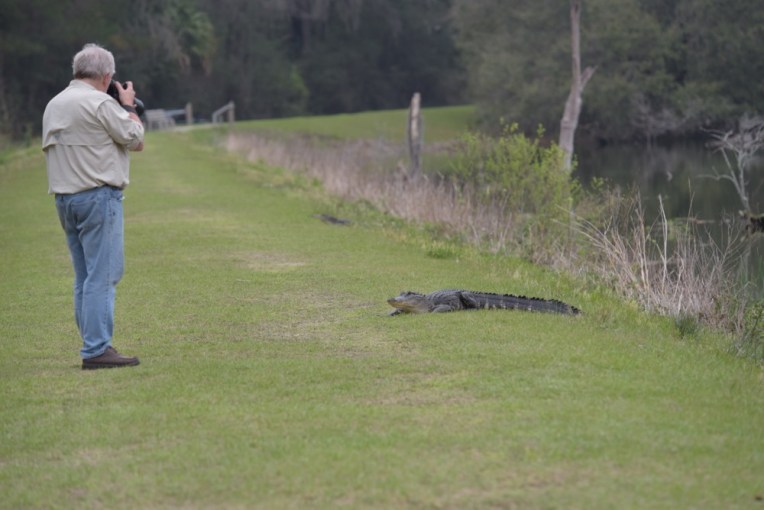
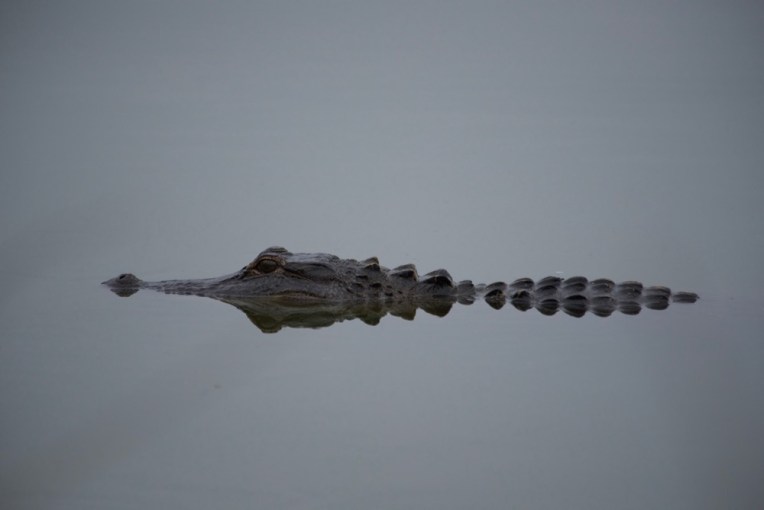
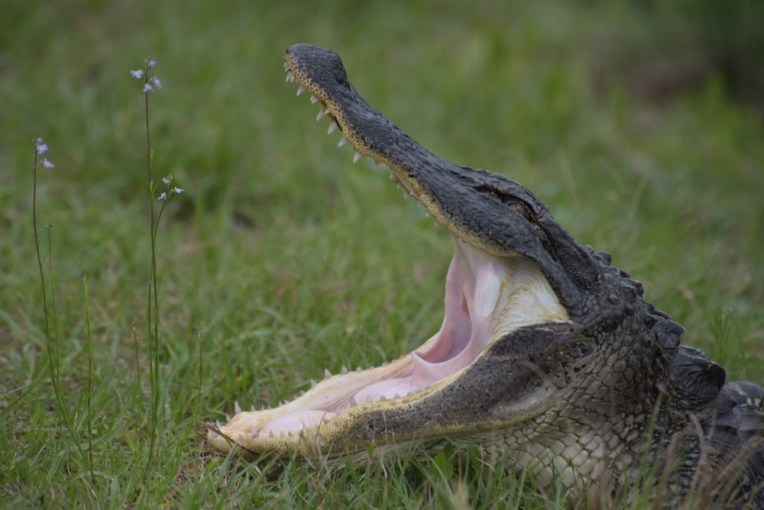
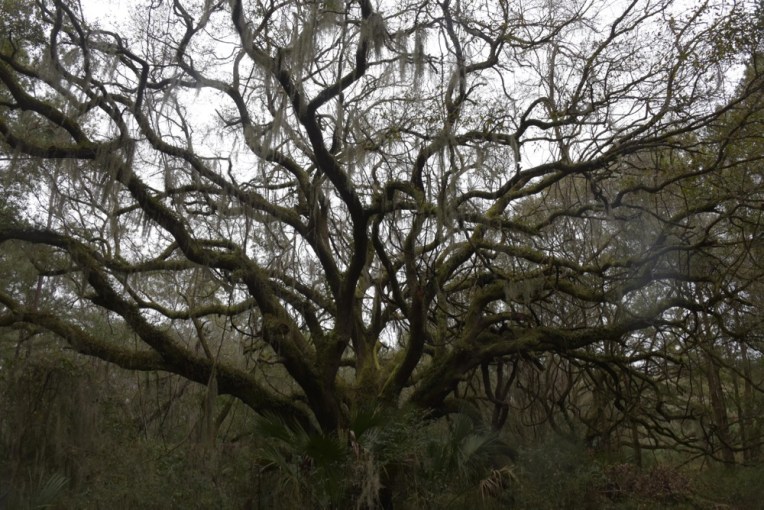
River cooter, a local species of turtleThere were a lot of little gators by the edge of the dike. This one came up onto the grass and Alan got some good close-ups. A few second later he raised his hind end and we both wondered what he was going to do, but he simply turned and walked back down into the water.Gator reflectionGator yawnOne of the quintessential trees of the Deep South…a live oak festooned with Spanish moss
It was a great day! I’m on the road again with trips to the other entrances to the Okefenokee and explorations of the barrier islands.
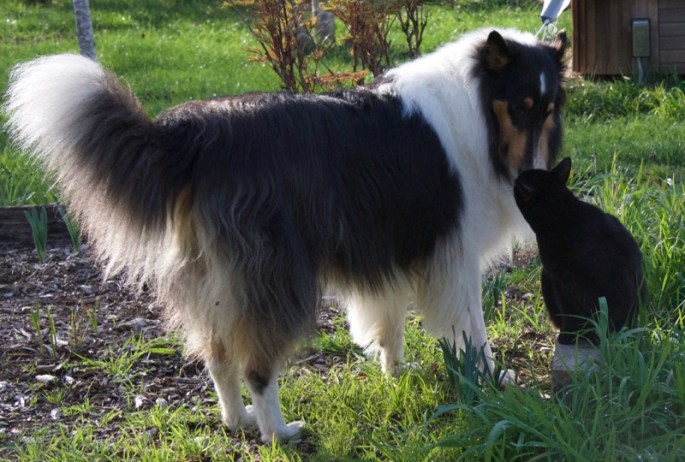
Hailey, our three year old rough collie girl and thirteen year old Eowyn…buddies
Spring is here and the bulbs are blooming. I’ve been posting quite a bit about the upcoming group exhibition “Wildlife Art: Field to Studio”. Well, the paintings are all done and framed. The packing crates are out.
Paintings and crates in my studio
I’m taking a break from the easel and getting some other tasks done. So I thought I’d share some of what’s been going on in the garden…
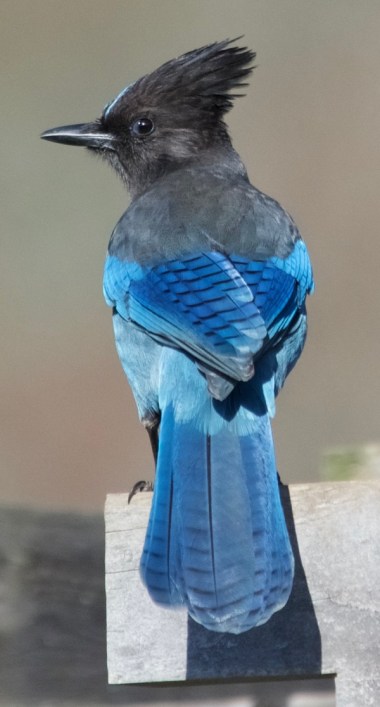
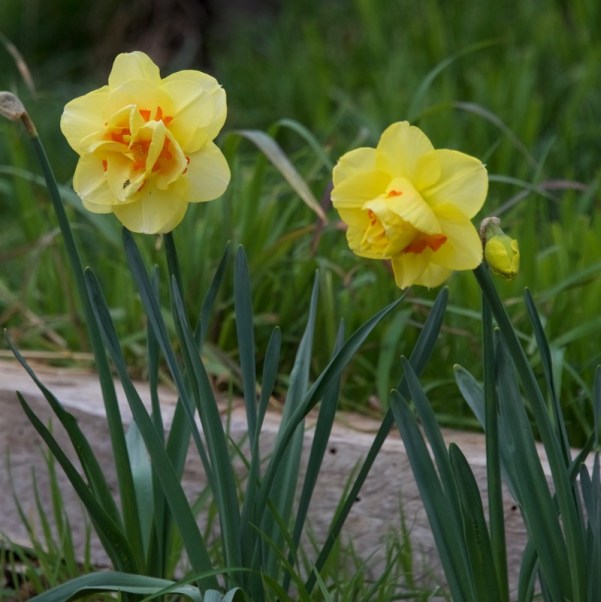
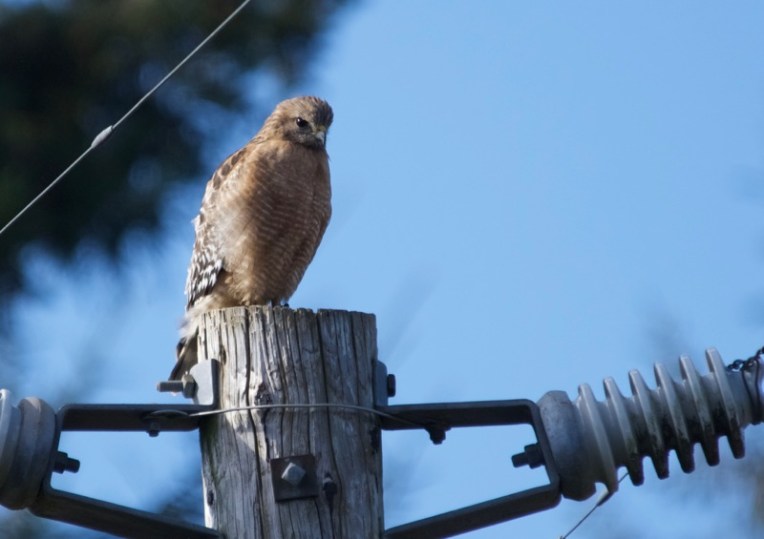
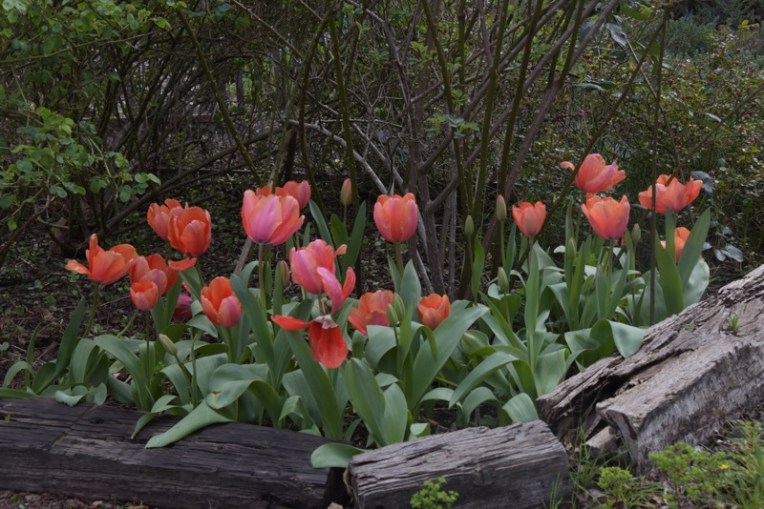
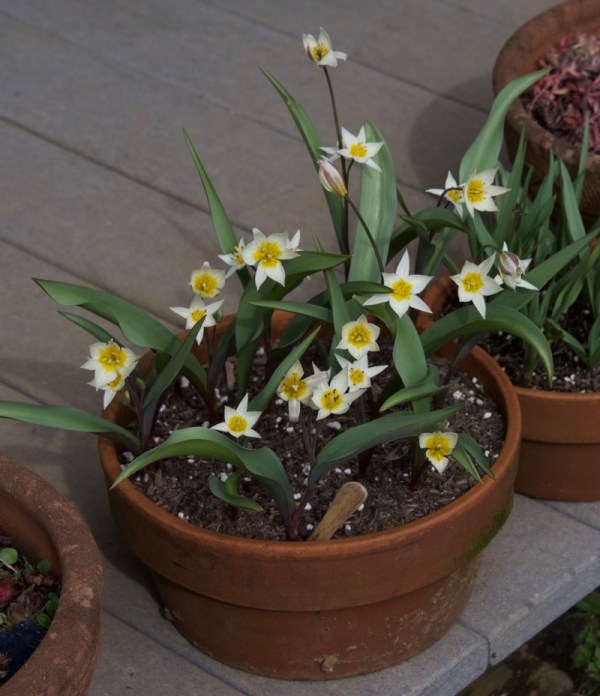
Steller’s JayPrimrosesMore primrosesEvening light and red alders“Tahiti” daffodilsRed-shouldered hawk up on a power line next to our property“Apricot Impression” tulips, looking a little blowsy, but still prettyDaffodilsSpecies tulip “Turkestanica”“Red Impression” and “Coleur Cardinale” tulips
“A Fine Fall Morning (Hustai Takhi)” oil 16×24″- One of my paintings that will be in the exhibition
The opening reception for “Widlife Art: Field to Studio” is barely a month away. I picked up the last of the frames today. There will be a frame-a-thon in the studio on Monday. But also time for working up drawings for a new body of work, taking things in a new direction, so stay tuned for more on that. In the meantime, here’s the link to a great promotional presentation created by David Rankin, one of the artists in the exhibition. Enjoy! https://slate.adobe.com/cp/8TLS4/https://slate.adobe.com/cp/8TLS4/
This is one of thirteen paintings (and just completed), which will be in “Wildlife Art: Field to Studio” a group exhibition at the Flinn Gallery in Greenwich, Connecticut from March 24 to May 4. You can see the rest of the paintings I will have in the exhibition here. All are available for purchase. A percentage of the proceeds will be donated to support individual researchers in Mongolia.
This is from the press release that was sent out to national art publications:
“Seven Signature Members of the Society of Animal Artists will have a groundbreaking group exhibition at the Flinn Gallery in Greenwich, Connecticut, from March 24 through May 4, 2016. The Flinn is located at 101 West Putnam Avenue on the second floor of the Greenwich Library; regular gallery hours are Monday through Wednesday, Friday & Saturday from 10Am -5PM, Thursday from 10AM-8PM, and Sunday from 1PM-5PM. All are welcome to attend a free reception to meet the artists on Thursday, March 31st, from 6-8 pm, and an informative lecture and demo series will follow April 2nd through the 4th (See Schedule Below).
Despite varied backgrounds, the participating artists are united by the unique theme of the show- their reliance on direct observation of animal subjects in the field. Wildlife Art: Field to Studio acknowledges the overarching importance of field work and how it directly influences studio work by exhibiting examples of both disciplines together. Along with the finished originals, a selection of fieldwork, original drawings, and print reproductions will be available for sale. The Flinn Gallery is sponsored by the Friends of Greenwich Library, and a portion of proceeds from every sale will support their valuable community programming.
The artists, Susan Fox, Sean Murtha, Alison Nicholls, David Rankin, Karryl Salit, Kelly Singleton and Carel Brest van Kempen, find inspiration in the natural world and have honed their skills in the field, sketching and even sculpting, using both traditional plein-air techniques and new digital media. Their work features the wildlife of Mongolia, Africa, the Rocky Mountains, the Himalayas and their own backyards. They paint in oil, acrylic and watercolor, sculpt in bronze and draw in a variety of media, both traditional and digital. Styles range from loose and painterly to highly detailed and from an emphasis on the animals themselves to depictions which include their native habitats. What all the work has in common, whether painting or sculpture, is an accuracy of appearance, behavior, and setting that can only be gained by spending time in the places where their subjects live. The participants in the exhibition are the latest practitioners in a specialized area of animal art that goes back to the 18th century and which includes such familiar artist-explorer-naturalists as John James Audubon, Louis Agassiz Fuertes, Carl Rungius, and Charles Tunnicliffe to name a few.
Lectures and Artists Demonstration Series at The Flinn Saturday, April 2- 11am-12pm- Sketching session with the artists for children ages 9 and up, Flinn Gallery; 2-3 pm- Artist Talk, Flinn Gallery Monday, April 4- Susan Fox, Sean Murtha, Alison Nicholls, David Rankin, and Karryl Salit will speak about the exhibition at The Explorer’s Club, New York.
THE ARTISTS: Susan Fox- foxstudio.biz; Sean Murtha- seanmurthaart.com Alison Nicholls- artinspiredbyafrica.com; David Rankin- davidrankinwatercolors.com; Karryl Salit- karryl.com; Kelly Singleton- kellysingleton.com; Carel Brest van Kempen- cpbrestvankempen.com”
“On the Run (Altai Argali, Hokh Serkhiin Nuruu, Mongolia) oil 36×48”
Yesterday I finished and signed two of the largest paintings that will be in “WildlifeArt: Field to Studio” a group exhibition with six other Signature Members of the Society of Animal Artists. It will be at the Flinn Gallery in Greenwich, Connecticut March 24- May 4, 2016. The opening reception will be on March 31 from 6-8pm and is open to the public. The other participating artists are Alison Nicholls, Sean Murtha, Karryl, David Rankin, Kelly Singleton and Carel Brest van Kempen. What makes this show unique is that for the first time that I know of, we will be showing not only our finished work, but also the fieldwork that inspired and contributed to it. And that is what we all have in common- we get out into the field. Some of us travel to places like Mongolia and Africa. Others stay closer to home, but we sketch and paint and, in Karryl’s case, sculpt in nature.
I’m posting all the images of the work that I will have in the show in an album on my Facebook page here. You can read a article that just came out this week in Plein Air Collector about the exhibition here. Another article will be in the new issue of Western Art Collector, which will be available on newstands around February 16.
Horsin’ Around (Khomyn Tal Takhi Foals) oil 28×36″
Last year I joined up with an informal “Sunday Painters” group. One person posts the next location on his Facebook page on Saturday and then whoever wants to shows up. There’s been close to a dozen of us at times. It’s about a 50/50 split between those who work in watercolor and those who paint in oil. I’ve mostly been using it as a busman’s holiday and doing watercolors. It’s always great fun and camaraderie. Here’s a selection of what I’ve done over the past few months.
I use either a set of Yarka poured watercolors or a Winsor-Newton set of half-pans on Arches cold press 140lb. watercolor blocks or loose 8×8″ pieces of Saunders Waterford 140lb. cold press. I’ve also been experimenting with Lanaquarelle cold press and hot press. I’ve got a variety of brushes. My current favorite is a large synthetic round that I got at Cass Art Supply in London last May, but I also like Robert Simmons’ Sapphires. I just got a new Stephen Quiller flat, the same as my friend and nationally-known watercolorist David Rankin uses, and plan to try it out this weekend since so far the weather forecast is looking good. David has posted a ton of wonderful tutorials on his website and his Facebook page. If you do watercolor or want to, check them out. I’ve learned a lot from him, not only about handling the media, but picture-making in general.
It gives me great pleasure to announce the 2016 WildArt Mongolia Expedition!
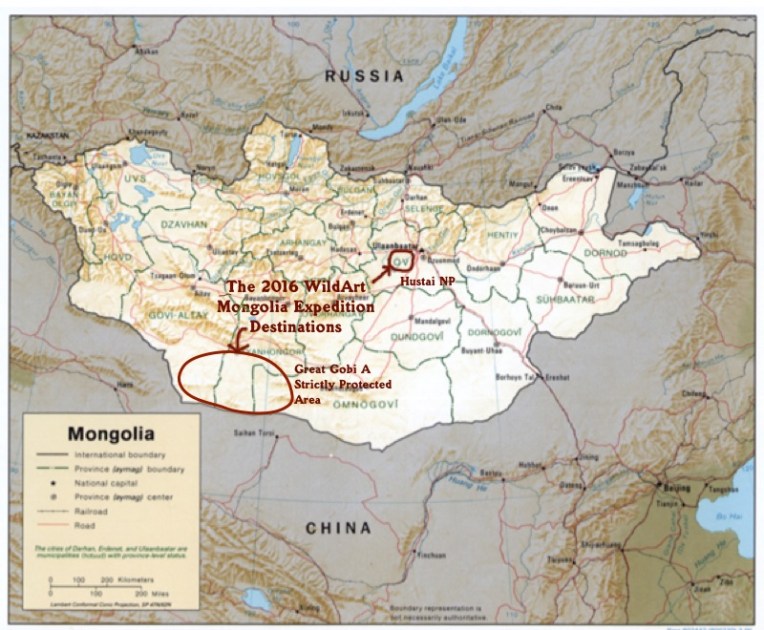
The fourth Expedition will travel to the Great Gobi A Strictly Protected Area (see map below) to try to see critically endangered Gobi bear and, if possible, meet with the researchers. The current estimate is that there are around 40 bears. That’s all. They are a brown bear (Ursus arctos gobiensis). There are also wild bactrian camels (including a breeding facility that I’m going to try to arrange for us to visit), khulan/Mongolian wild ass, Gobi argali, Siberian ibex and Pallas’ cat, along with a variety of birds and small mammals. Wolves are present, but it’s unlikely we’ll see them. This is a remote place that tourists never go to. I am also arranging for us to visit with staff and local herder families who are involved with the Mongolian Bankhar Dog Project, which is breeding the traditional mastiff-type guard dogs, bonding the puppies with livestock and placing them with families who live where their animals are exposed to predation. The dogs will stay with the sheep and goats 24/7. One goal of the project is to reduce the killing of predators like snow leopards and wolves. Another is to address desertification, an increasing problem in Mongolia.
If you have never tried field sketching, I will be happy to provide instruction. It’s a very special way of recording what one has seen and quite different than “just” taking photos (although I take thousands of those, too).
EXPEDITION INFORMATION:
I have limited space this time. I can take three more participants. There are currently three, including myself. That is three people per Land Cruiser so that everyone has a window seat.
Dates: May 22-June 10, 2016 (these dates give us the best chance to see the bears and avoids the worst of the summer heat)
Cost: $3900 per person double occupancy, excluding airfare to Mongolia, alcoholic beverages, lodging before and after the Expedition (people will probably have different plans; there are nice guesthouses that charge $25/$35 a night for a private room, including breakfast and also the Bayangol Hotel (which was a little over $100 a night in 2015 if booked through Nomadic Journeys).
Nomadic Journeys, who have made all my in-country travel arrangements for nine of my ten trips to Mongolia (the first was an Earthwatch project in 2005), will be handling, as usual, all the arrangements and logistics. We will be tent camping (in stand-up tipitents, possibly with cots) and traveling in Land Cruisers with drivers, guide and cook. All meals are included (vegetarians can be accommodated with advance notice; vegans regretfully cannot). A three season sleeping bag is necessary. As mentioned above we’ll be going to a place that is remote even for Mongolia, so I’ll be renting a satellite phone in case of emergencies.
It is necessary to plan for two nights in Ulaanbaatar before your international flight home, just in case we’re delayed in the field.
To reserve your place on the Expedition, please pay a $300 deposit on the Nomadic Journeys website here. For “Trip Name”, write WildArt Mongolia Expedition. While you’re on their site you can explore their options for before or after the Expedition, including self-guided ger camp stays.
If you have any questions, please don’t hesitate to write to me via the contact form on my website. Further information will be sent on expected weather conditions and equipment/clothing suggestions to those who are participating.
I’m into the final push now to finish the paintings that will be in “Wildlife Art: Field to Studio” at the Flinn Gallery in Greenwich, Connecticut from March 31 to May 24. It’s a group exhibition with six of my colleagues, all Signature Members of the Society of Animal Artists who take their inspiration from the field, which in this case includes Mongolia, India and the Himalayas, Central America, Africa, the Rocky Mountain States, the Chesapeake Bay and Long Island Sound areas. There will be a lot more on the exhibition soon, but if you live near Greenwich, mark your calendars for the opening reception on March 31. It looks like all of the artists will be there!
The painting at the top, “Chronos, Khomyn Tal Takhi Stallion” is of a horse that I saw at Khomyn Tal in western Mongolia this past July. It turns out that he is one of the original 22 horses who were reintroduced there in 2004. Since I was there in 2006, I may have seen him. I had no idea that any of those takhi would still be alive, but there are a number of others besides him.
Tolai Hare oil 16×12″
I photographed the tolai hare at Ikh Nartiin Chuluu Nature Reserve. I’d been trying to get paintable reference of Mongolia’s only native lagomorph (member of the same family that includes rabbits) for years and mostly all I had was them running away after exploding almost at my feet and just about giving me a heart attack. But this one evening at the research camp, I was already sitting up on a rocky slope waiting for argali to come to the spring to drink and this hare hopped out into the great light to nibble on grass and forbs. All I had to do was stay as still as possible and click the shutter. I believe this is the first painting ever done, at least by a western artist, of this species.
On my trip to Mongolia last year, I learned that out in the west the drivers are also the cooks. When it came time to head out into the countryside I went with him and my guide to the local Nomin Market in Hovd and helped with the shopping. It was really fun. And I learned what ingredients one can find for real Mongol food in a grocery store. I’d had the traditional noodle soup with mutton in it, but either made from scratch or served to me already done. This time I found out very useful information such as that boortz, the dried meat strips, which I’d only seen before hanging on a string tied between the roof poles of a ger, could be purchased dried, chopped up and packed in a bag ready to use! The driver also bought a few bags of dried noodles. Ah ha! Then during the trip I watched him make the soup and knew I could do it at home.
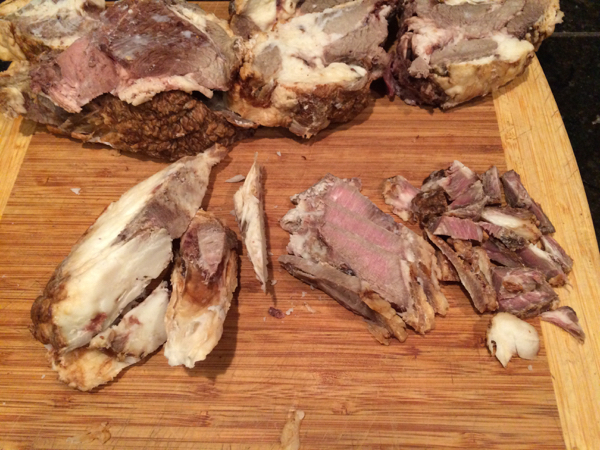
Last year, before I went to Mongolia, we had bought a ram and ended up with 108 lbs. of mutton in the freezer. In the top photo is what’s left over from the last shoulder roast we had. And a bag of noodles, half-used because I’ve made this soup once already. I knew that dishes like the soups and tsuivan (noodles with bits of mutton, mutton fat and vegies) were a way of using every last bit of meat. I set aside the big pieces for a second dinner and used the smallest pieces that were surrounded with fat. And there was plenty of it, as you can see on the left in the photo below. On the right is the leaner meat.
I’ve divided the mutton into the fat, the leftovers for the next dinner and, at the bottom, the meat and fat that will go in the soup.
Here’s the small stock pot I used with the water heating up on our gas cooktop.
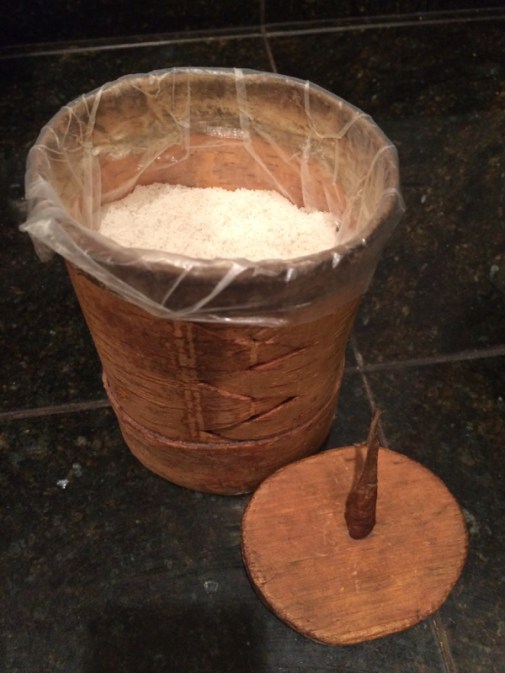
This is a very simple soup: water, mutton, mutton fat, salt and I added some onion flakes, although a Mongol cook would go out and snip some wild onion. But the salt I used is from Mongolia, lake salt from Uvs Aimag, out in the northwest. I bought a couple of boxes of it at the market a couple of years ago. I had stayed in an apartment with the mother of an acquaintance that same year and saw her kitchen. Next to the stove was a lovely little birch bark container that she kept her salt in. I loved it! And later on during the trip had the great good fortune to find the container below in an Ulaanbaatar antique shop for only $15. I swear I would have paid fifty for it since it even still had its handmade wooden lid.
I happily brought it and my boxes of salt home. My host had put her salt directly into the container. But since, as far I knew, mine would be irreplaceable, I lined it with a small plastic bag. You can see the salt, which is large-grained, crumbly and very tasty.
I let all the ingredients simmer for about 30 minutes and, voila!, a pretty authentic Mongol noodle soup. It’s delicious!

















 Susan Fox, American Artist