Gallimauphry Friday: Foiling The Gophers


gopher
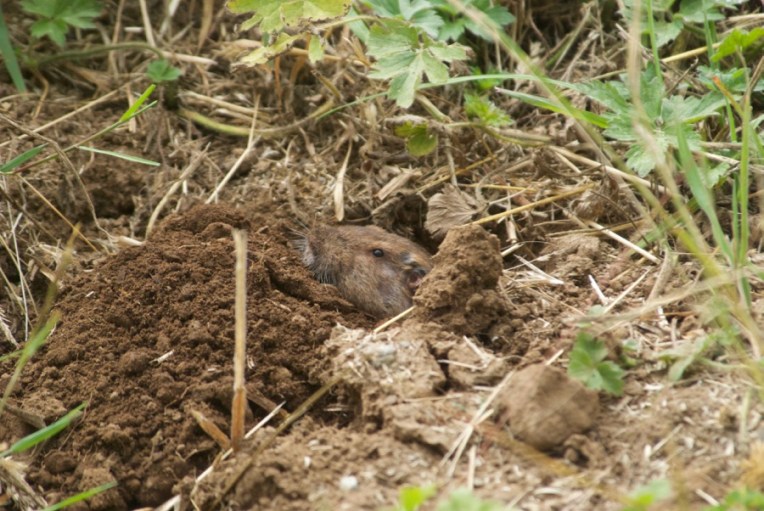
Botta’s Pocket Gopher (Thomomys bottae), back when I thought is was cool to see a wild mammal on the property. I got over it because of the destruction.

I like to garden and we have an acre to do it on. It’s great exercise, especially for easel artists like me who are either sitting or standing most work days. Lots of range of motion…reaching, kneeling, carrying yard waste to the compost pile etc. so it’s a good workout in the fresh air. And results in flowers, vegetables, herbs, fruit and berries. But, like many people who live in rural areas, we have gophers. The cats account for some (Alexander a Really Great Cat got a big one last month), we set traps in live holes, but of course they’re never gone for long. Nature finds a niche and fills it. I’ve lost a lot of bulbs and even some roses over the years. So when I wanted to replace a couple I decided that I wasn’t going to just plop them into the ground and cross my fingers We had some leftover gopher cloth from what we had put under the raised bed and there was enough to line a couple of planting holes. My goal is to give the roots enough safe growing space that they will stay alive and thrive. We’ll see.

The Black Hole gopher trap is the most humane solution that we’ve found. When triggered it crushes the thorax and they die pretty much instantly. Plus it doesn’t endanger our pets or other wildlife. A few years ago while I was on my annual seven week trip to Mongolia my husband trapped nine and the cats got eight. That stopped the worst of the damage, but we have to be eternally vigilant, especially now when they’re getting active again and hungry.

I thought I’d post a few photos of what we did in case you might find it useful. If you have found any non-toxic gopher controls that work, let me know in the comments.

The roses are “Graham Thomas” a beautiful golden yellow David Austin rose that can be grown as a climber.

gopher-1
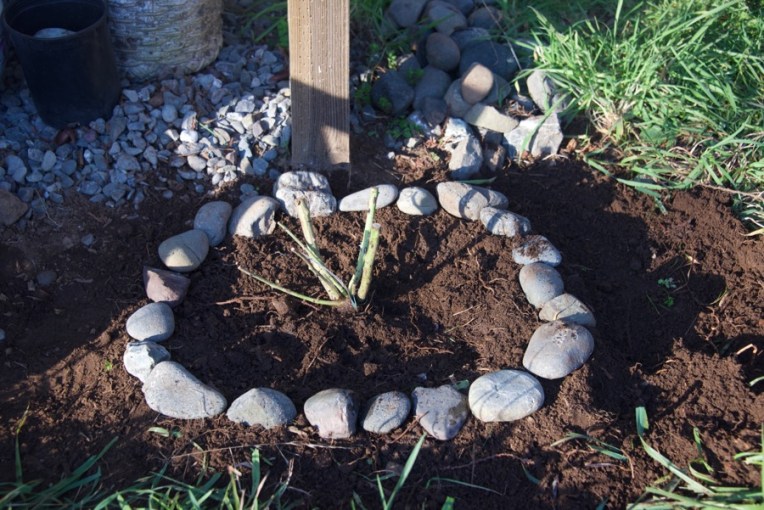
The first try. I dug the planting hole and we folded the mesh into it, dug out some more, tried it again, repeated until it fit the hole just below soil level.
gopher-2
And this is what it looks like with the rose planted with the addition of a river rock edge. It’s at the base of one of the vertical posts on the potting shed.
gopher-3
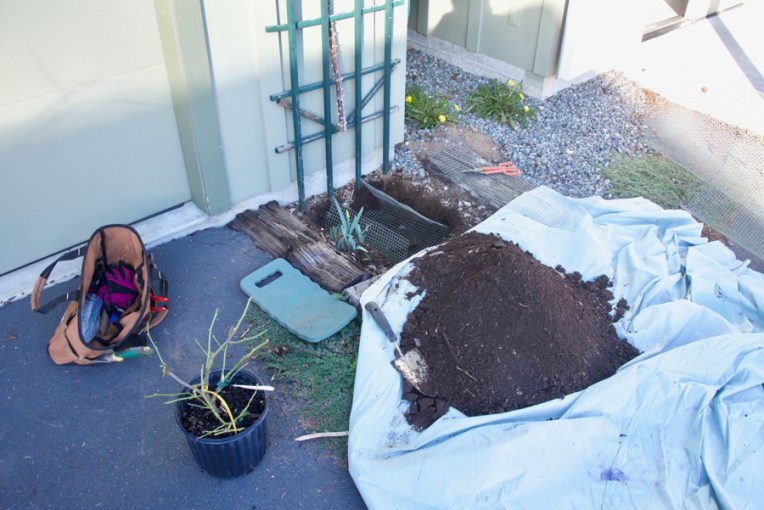
Out front planting space was tighter in the bed next to the garage door. I scooped the dirt out onto an old tarp.
gopher-4
Fitting the mesh into the hole
gopher-5
Then we formed the “basket”, folding the corners securely together.
gopher-6
The rose and its root ball in place. Next step was to refill the bed. Managed to not disturb the daffodils.

We’ve had a series of those “atmospheric river” storms, heavy rain and wind, so haven’t gotten much done other than to start pruning the roses. But in the next week or so I think the 2017 gardening season will be on!


The Art Life: Storage

drawing-stuff
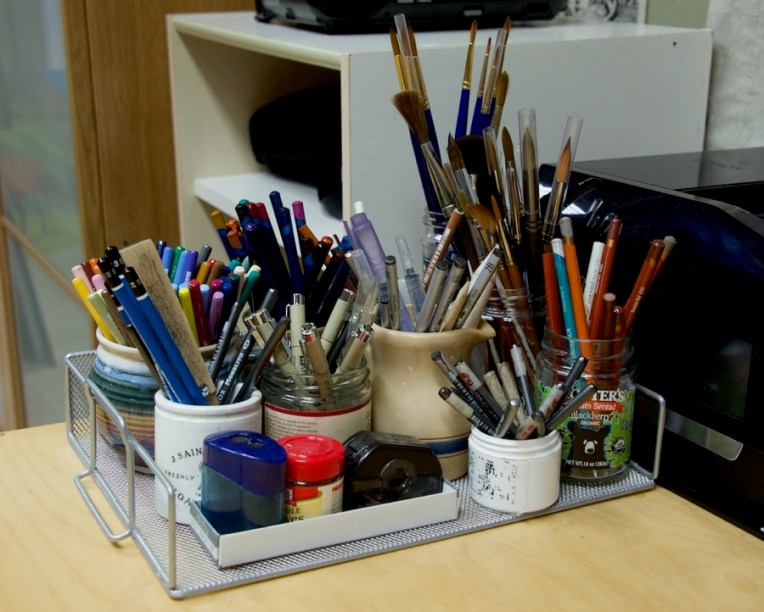
Drawing media and watercolor brushes stored in a variety of containers and organized in one unit of a stackable inbox

I don’t necessarily consider myself a neat and tidy person. But when it comes to my work, I’ve gotten borderline fanatical about having everything sorted and organized. I don’t want an idea to strike or find I need to have “x” right now for whatever I’m working on and have to break concentration and hunt around for it.

I’ve been in my current studio space at our home for over ten years now, using a couple of IKEA cupboards for supplies and some thin plywood boxes with dowel dividers my husband made for me years before that for canvas and painting storage. The IKEA units are doing great, the old canvas “racks” were well past their sell-by date. So a few years ago we were able to hire a contractor who was also a cabinet maker to build new storage units from birch plywood to my specifications. What a luxury! But also practical and financially sensible because properly stored paintings and canvases (I use RayMar geesoed cotton canvas boards almost exclusively) are less likely to get damaged. Plus we live in earthquake country. Every cupboard, cabinet and bookcase is attached to studs in the walls.

Come take a tour of how I store my art supplies and equipment…

supplies-and-canvas-boards

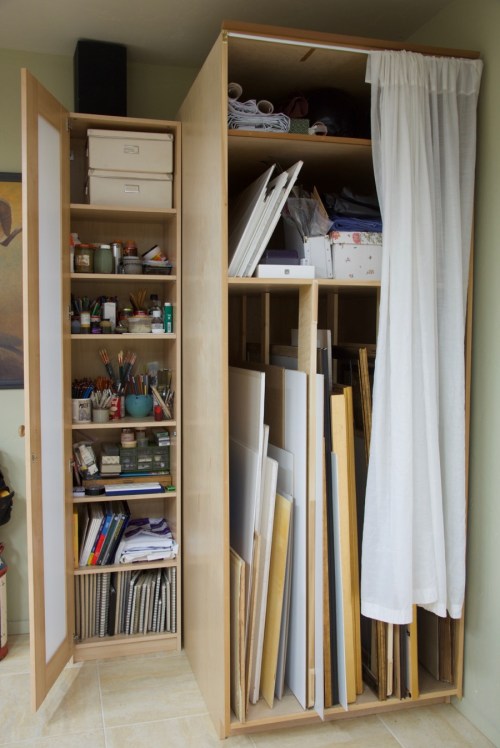
These units are in the northwest corner of the studio. On the left is an IKEA cupboard which contains all my supplies that aren’t in use. The top shelf holds greeting and notecard inventory in, yes, IKEA boxes. Next is a variety of containers. The next three shelves are drawing media, brushes, varnishes, odds and ends. Second from the bottom is paper for printing. And at the bottom are old sketchbooks.  All the way on top is a speaker.

On the right is one of the custom storage units, designed to hold paintings up to 5×5′. The top two shelves have miscellaneous things that don’t fit anywhere else. The bottom holds all my oversize paintings and canvasboards. The curtain, just an old one I had around, is to minimize dust.

On the south wall of my studio are four units ranged next to each other:

cupboards

These are two side-by-side IKEA cupboards. The one on the right, starting at the top, is blank sketchbooks, then small canvasboards and some stretched canvases with a gallery wrap so I don’t have to frame them.  Second from the bottom are canvas pads and oil paper pads, a few small toned canvases and my watercolor papers. On the bottom is my plein air carry-all, a plein air panel box and some large size drawing pads.

The left cabinet holds my old paintbox I’ve had since I was a kid, a pochade box from the Sennilier art supply shop in Paris, more plein air carriers, then various paper towels and brush holders, finished small works (see detail below). Next, drawings to be framed or referred to, below them a black plastic file organizer and binders for location watercolors and at the bottom old work framed and unframed. The two stacked boxes hold plein air oils.

small-works

This is the middle shelf of the cabinet on the left. I’ve used cardboard drawing pad backing for dividers, labeling them with a Sharpie, to separate and organize old paintings from workshops, projects, preliminary studies, in-progress repaints, available for sale, etc.

paintings

And here are the closed cupboards above on the left, next to my frame and painting storage units on the right. Of those, the one on the left mostly has the frames. It was designed to fit over my steel flat files. The one to the right of it is pretty much all paintings except for some big manila folders at the top right which hold working and finished drawings and next to them about a half dozen framed giclees. All the shelves are adjustable.

painting-table

Finally, here’s my painting table set up and ready to go. I clean the palette off on Friday afternoons and put the paint into one of those paper-lined round storage containers. My current palette is a leftover piece of Swanstone countertop. I got the idea from the Underpaintings online magazine some years ago. I like it because it’s a neutral color, it’s not reflective and once a film builds up on to a certain point, my husband is kind enough to sand it off for me. It’s the same color all the way through. As you can see I have an eclectic collection of containers for brushes, pencils, etc. Some are souvenirs of our travels, like the fish pitcher, which I got at a Debenham’s department store in London, England. I also like interesting coffee mugs with or without broken handles.

So there you have it, how one artist organizes her work life. If you have any ideas or want to share what you do, please leave a comment!

In The Studio: Three New Bird Paintings

piliated-woodpecker
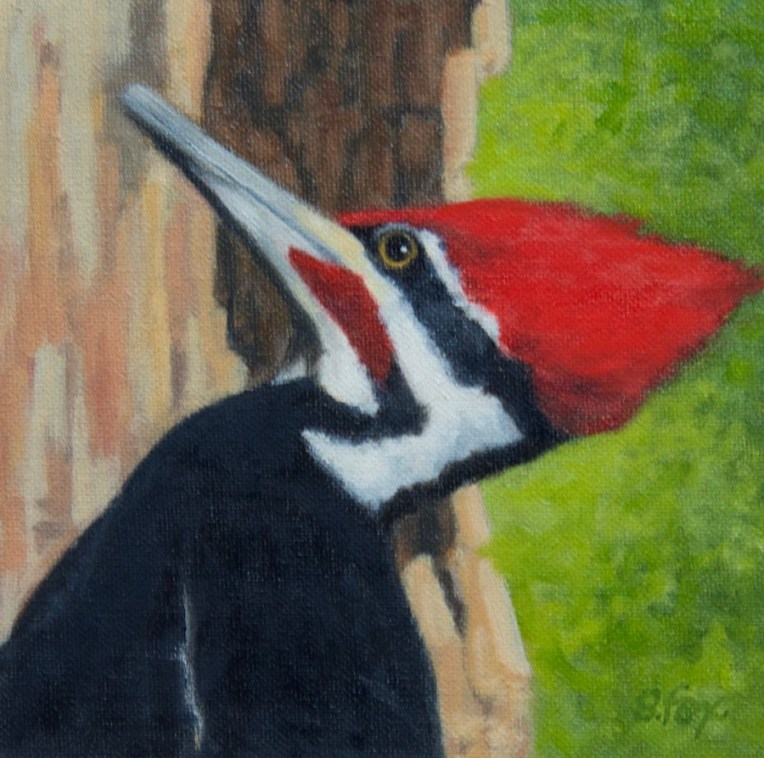
Piliated Woodpecker  oil  6×6″- observed and photographed in the Okefenokee Swamp National Wildlife Refuge, Georgia

The juried show season is under way! I keep a long rectangular white board hanging on the wall next to my desk, divided into squares for each month, on which I list the shows I plan, to or am thinking about, entering.  Sometimes I enter work I already have on hand and sometimes I do new work just for that exhibition. In this case, these have been submitted for the Spring Auction at the Salmagundi Club. Entry in their shows, for which all but one are members only, is free and it’s a chance to get my work seen in New York. Not easy when you live in northern California. Notification will be later this month. I’ll let you know what happens. But, in or out, I had fun doing them and will be painting more small pieces like these in the future, which I plan to list on eBay.

Except for a stint in September, I’ve gotten very little oil painting time in since May of last year. So these pieces served two goals.. One, to get back in the groove, and two, to create some small works that will be easy to ship and, with luck, attract buyers.

I chose for my subjects three east coast species of birds. Two I saw on my trip to Georgia and New York State last March and the other a few years ago when I and two artist friends went to Assateague and Chincoteague Islands on a very fun road trip.

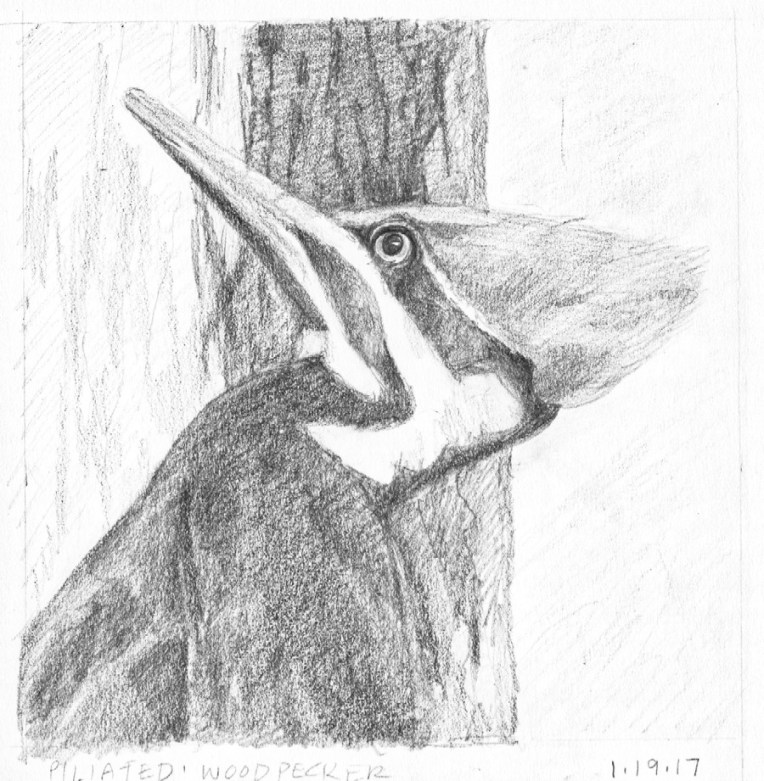
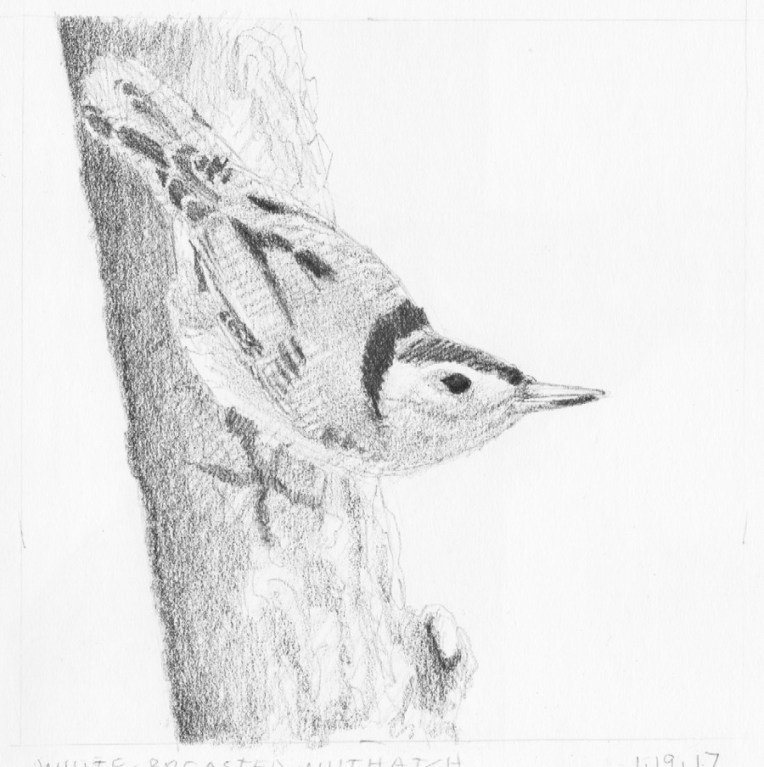
I wanted the emphasis to be on the birds with just a suggestion of location and habitat. So simple shapes and planning positive and negative shapes. I started with graphite drawings. I don’t do a lot of birds so I needed to make sure I understood what I was seeing in my reference photos and that I had the value pattern I wanted.

woodpecker

For this male piliated woodpecker I planned the composition to have the darkest dark  behind the bird’s head to pop out the black and white head pattern and also the red. It’s a warmer dark than the black of the bird, so there’s also a temperature shift. There are three shapes: the bird, the tree trunk and the background. I used  green because it’s the complement of red. In my reference photo, it being March, none of the trees had leaves and everything was brown. But so what? I’m the artist and can do anything I want.

nuthatch

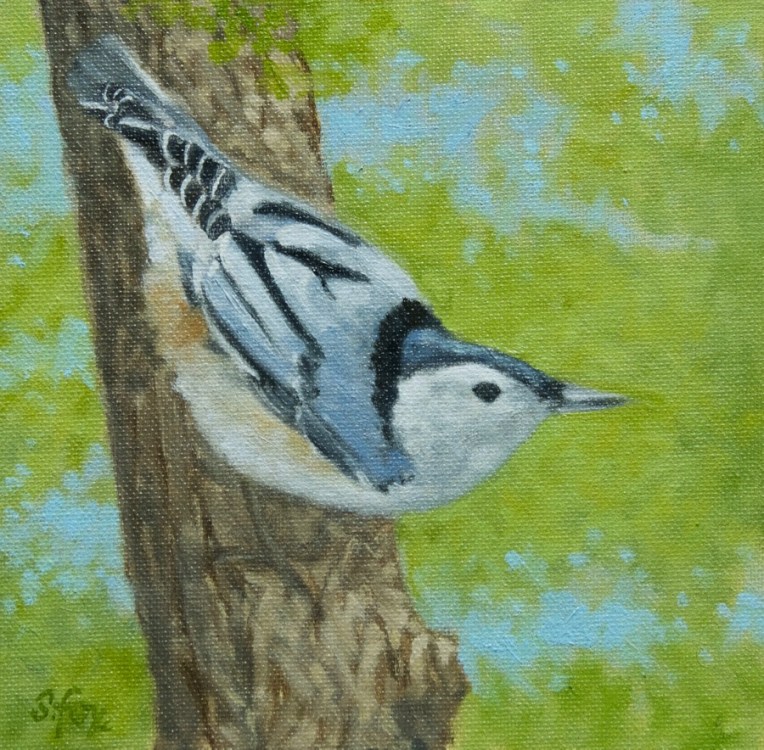
This is a white-breasted nuthatch that came to a bird feeder outside the window of an artist friend’s home I was staying at in the Hudson River Valley. I’d heard of them but had never seen one, so was happy to get some good reference. I didn’t want to include the feeder so I put the bird on a tree trunk instead, using a photo I shot of the trees that surround the home of famous Hudson Valley artist Thomas Cole, not far from my friend’s home, so I knew it would be correct.

white-breasted-nuthatch-2
White-breated Nuthatch   oil   6×6″

For the background I wanted the suggestion of foliage with some sky showing through, which are called “sky holes”. I did the them quickly over the green. And pulled a little of the latter over the tree trunk to connect the foreground and background. Once again, three elements…the bird, tree trunk and background. No fussing.

gull

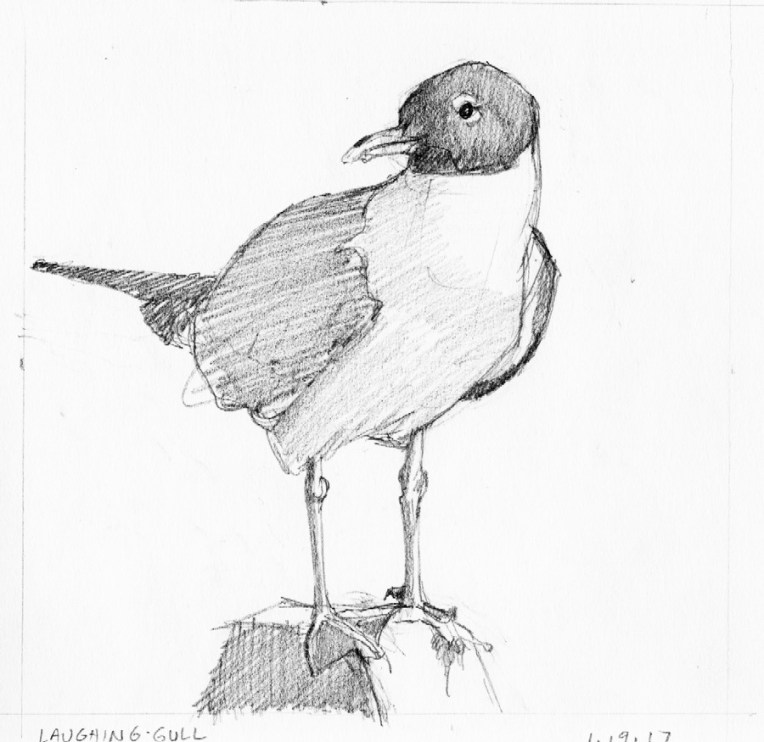
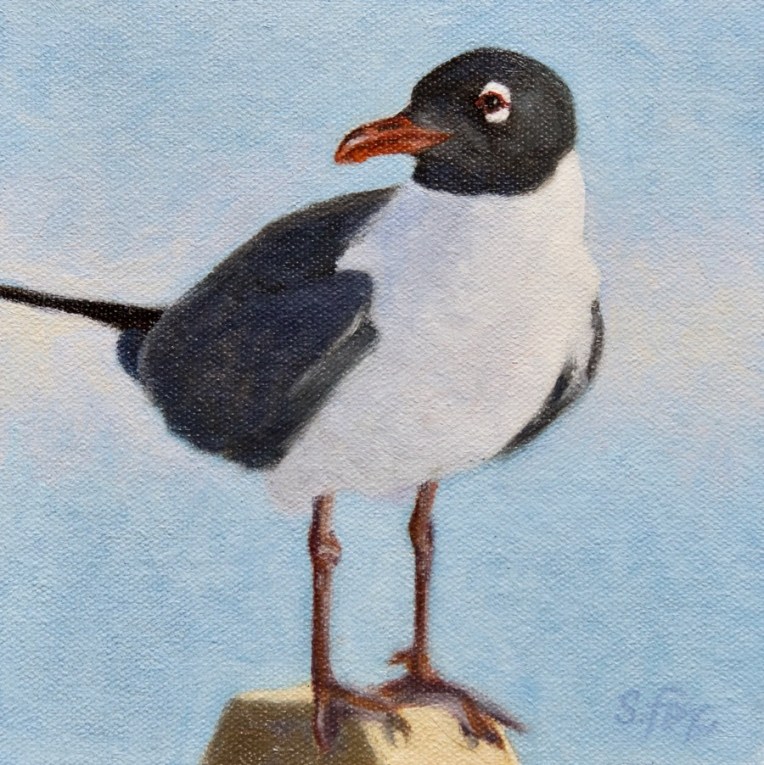
This laughing gull was perched on a post between a parking lot and the beach on Chincoteague Island. He was quite a good model and I had an excellent choice of reference to choose from. I’ll probably paint him again sometime. For this composition I went with one shape, the bird on his perch, against a plain background. No beach, surf or cars like were in the reference photo. Didn’t need or want them.

laughing-gull
Laughing Gull  oil  6×6″

As you can see, the gull’s proportions changed some from the drawing as I made corrections as needed on the painting while I consulted my reference photo. The blue sky alone didn’t seem like quite enough, so I added a soft band of warm white behind the bird. Notice also that I didn’t paint a single feather, but just treated each area as a shape that has a specific value and color. I had to get out a fine-tipped round synthetic brush to do the eye and bill, but I generally use Grand Prix Silver Brushes. I always use the biggest brush I can that will still get the job done.

Tales From The Field: An Ibex Day At Ikh Nart

4-ibex
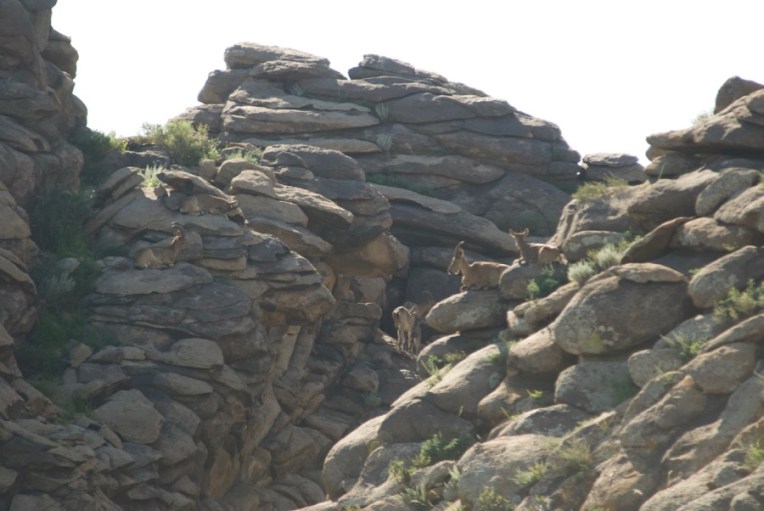
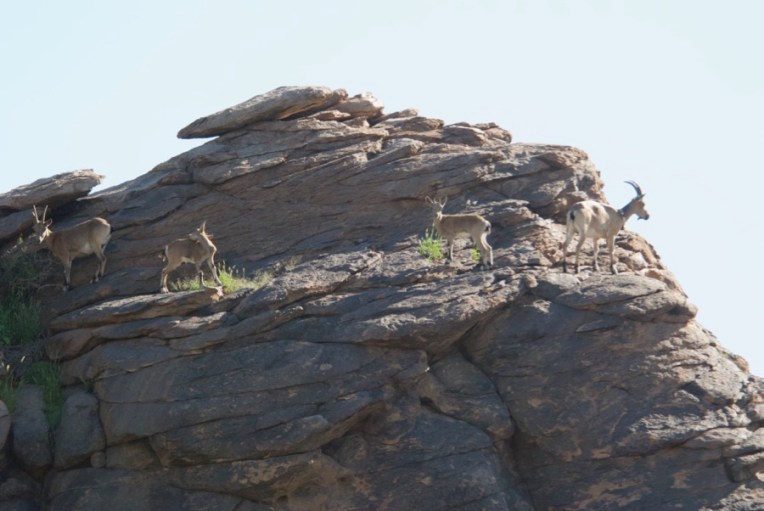
I spent over an hour watching this group of ibex nannies and kids, six or seven in all; I’m working on a painting of them is this great setting of rocks and green grass

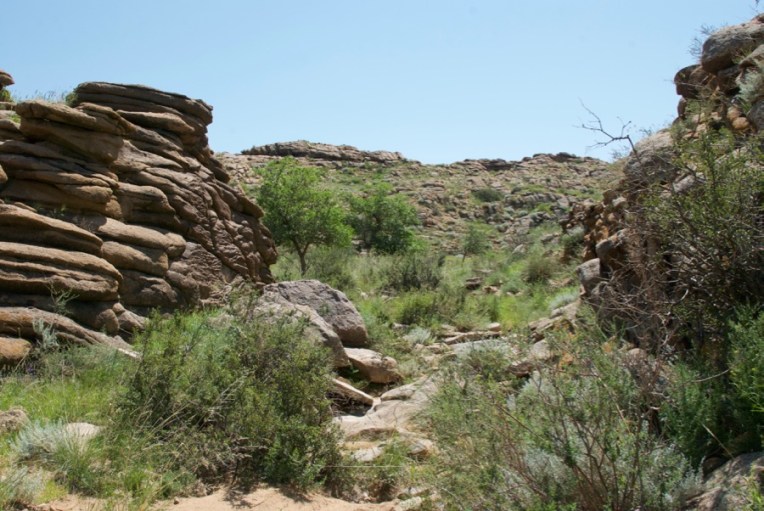
I was staying at the research camp at Ikh Nartiin Chuluu Nature Reserve in September of 2012. It’s one of the best places in Mongolia to see argali mountain sheep (Ovis ammon) and Siberian ibex (Capra siberica).

I went out walking one morning for a day of hiking around and it quickly turned into One of Those Days that wildlife watchers and artists dream of…nine separate sightings and three times spending an hour or more with an entire group.

About halfway through the morning I’d come along the top of the valley and was now walking down a draw towards the valley, intent on heading towards the western end rock formations and following a very narrow path left by various animals, both wild and domestic. I was maybe ten yards from where the draw joined up with a larger one which would drop down to the valley when, with no sound or warning, two ibex nannies came running at full speed around the corner of a rock straight at me! They pulled up fast, gave me a look and turned. One bolted back up the way she’d come and the other, which I now saw had a kid, ran off down the direction I intended to go. Everyone involved was equally surprised. Needless to say I didn’t get any photos of the actual encounter, but I can see it in my mind’s eye. all of us standing there for an instant looking at each other. No idea, of course, why they were running so hard and fast.

where-ibex-came-from
At the fork of the “y” where we all came together. I’d come in from the left, the ibex had come barreling around those rocks that are also on the left. I’m standing with my back to the draw I was heading for.

And, as you can imagine, my heart was pounding. They could have easily run right over me. But everyone was fine, they were gone, so I continued on down the draw. And, believe it not, there was the nanny and kid…

ibex-nanny-and-kid-2
The nanny  was straight ahead of me

Amazingly, the ibex had stopped running, had gone up on a rock formation and was just standing there.

nanny-and-kid-1
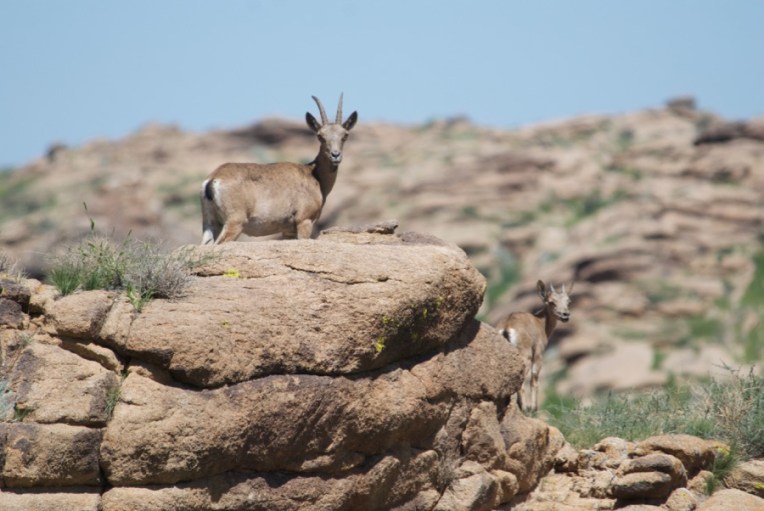
Siberian ibex nanny and kid

I walked forward a slow step at a time and got close enough for a few shots and her youngster. The photo above is not cropped. It was taken with my Nikon D750 and Nikon Nikkor 80-400 lens. She looked around a bit then she and her baby vanished on down the valley. I waited a bit to let them get ahead of me and be able to go where they wanted to go. I think she’d seen enough of me for one day.

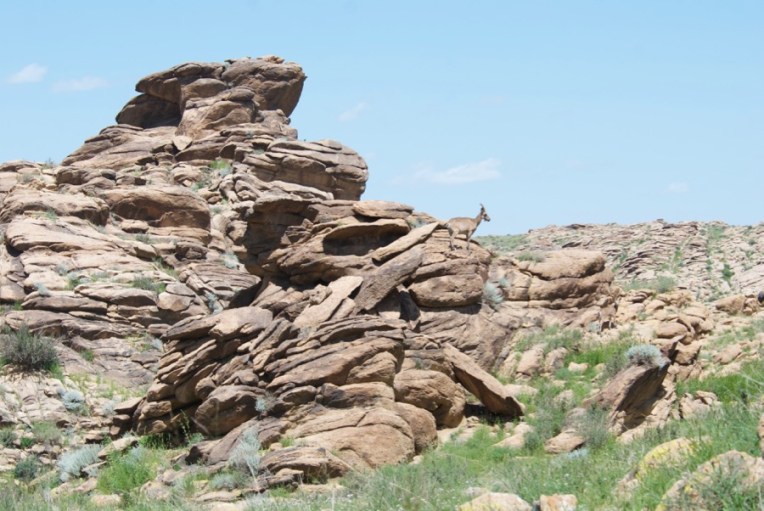
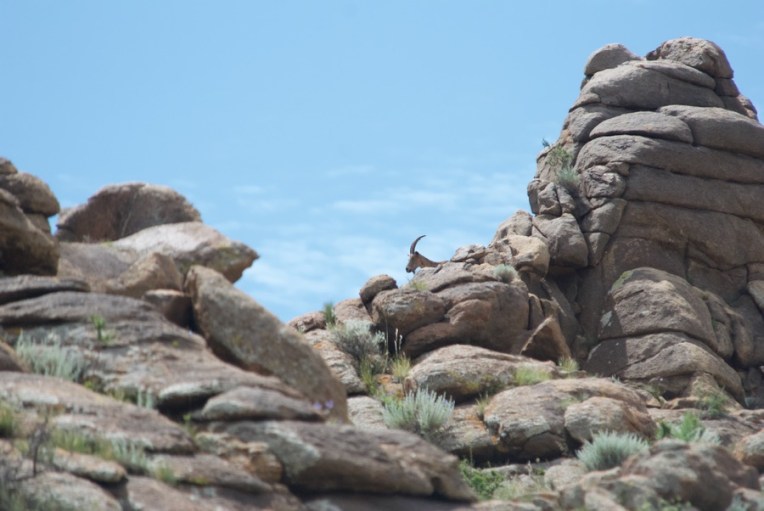
Here is a far more common way of seeing ibex. One learns to spot them from quite a long distance because the pattern of head and horns doesn’t match the rocks.

ibex-behind-rock
This was the first sighting of the day, very typical, just a head above the rocks.

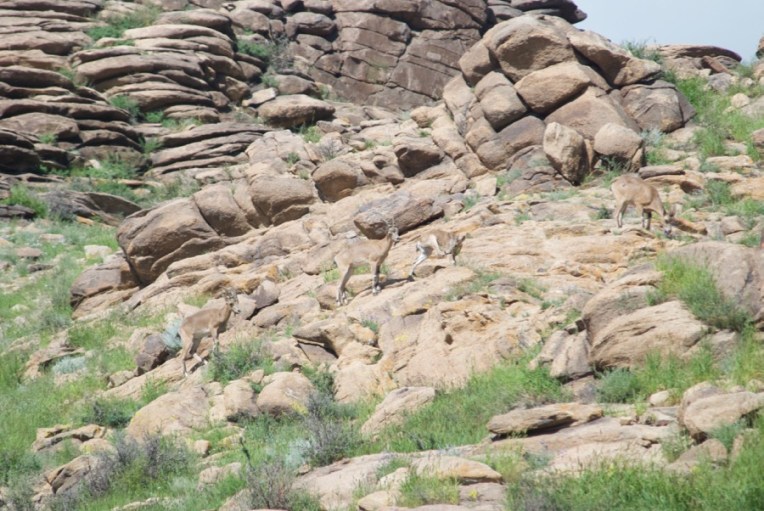
And here are some more photos of other sightings that day. I finally got down to the rocks on the south side of the western end of the valley and found a large group of nannies and kids, who I hung around with for over an hour.

7-ibex
There are seven ibex in this photo

Farther down the valley there was yet another group. A couple were wearing radio collars. Once they settled down I sat in plain view, photographing and sketching them.

4-ibex-on-rock
There were a number of kids who were playing and jumping around on the rocks, which was great fun to watch

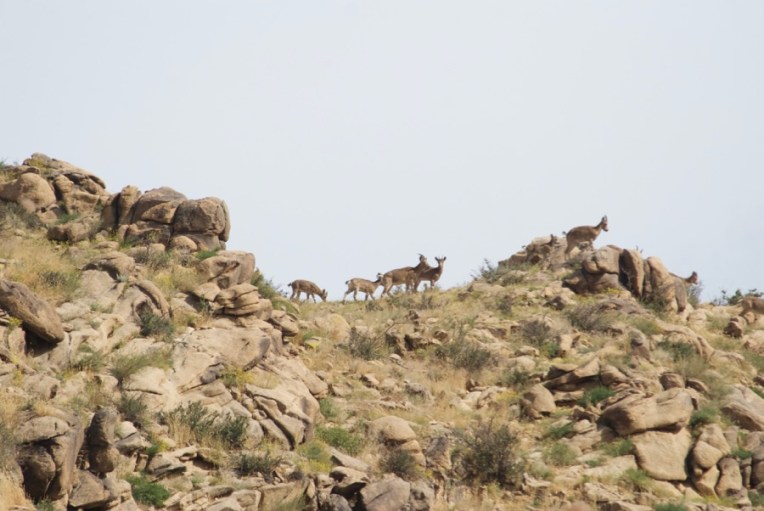
They finally moved off out of sight, but I’ve learned to hang around and wait. This time I was rewarded by having the whole group reappear and cross in a long line along the ridgetop, finally disappearing out of sight for good.

6-ibex
Ibex nanny group against the sky

There were a couple more long distance sightings of one or two ibex on my way back to camp, but they were either too far away or in the shade for photos anything other than “I saw them” shots, which I always take as a memory jog, if nothing else.

And that’s the tale of my “Ibex Day” which I will long remember.

Gallimauphry Friday…

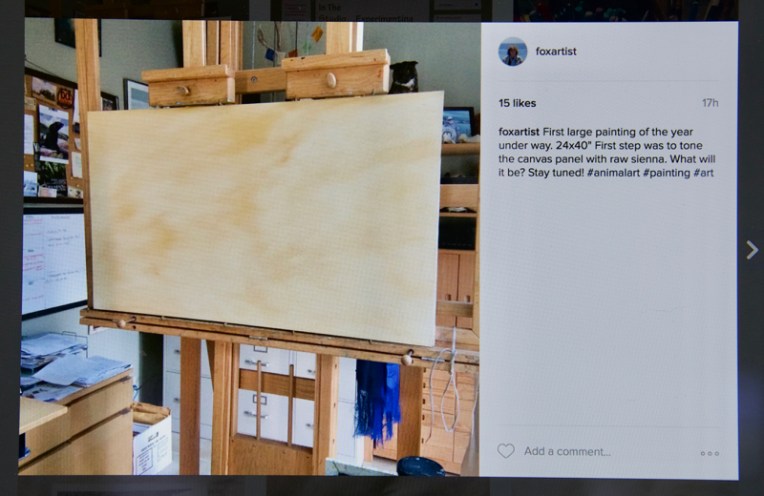
blank-canvas

“Gallimauphry” is great 16th century French term for “a jumble of things” or as we might say “this and that”. You never know what I’ll post on the final Friday of the month.

I tried an experiment last night on Instagram. I’d toned this 24x4o” canvas panel with raw sienna yesterday and plan to post the work in progress. Instagram has become known as a must-see/must-do place for artists and buyers since it’s the most purely image-oriented social media platform. So I thought it would be amusing to post a blank canvas and see what happens. In two hours I had eight Likes and this morning, about twelve hours later, there were fifteen, which is about what I get, give or take, for images of actual paintings. A few more will probably show up before it moves down the queue. What I think is going on is that people like seeing artist’s studios and watching their process, but I still think this is amusing. So if you’re on Instagram and want to follow along or if you’re not yet and are going to sign up, you can find me here. Come on along!

relaxed
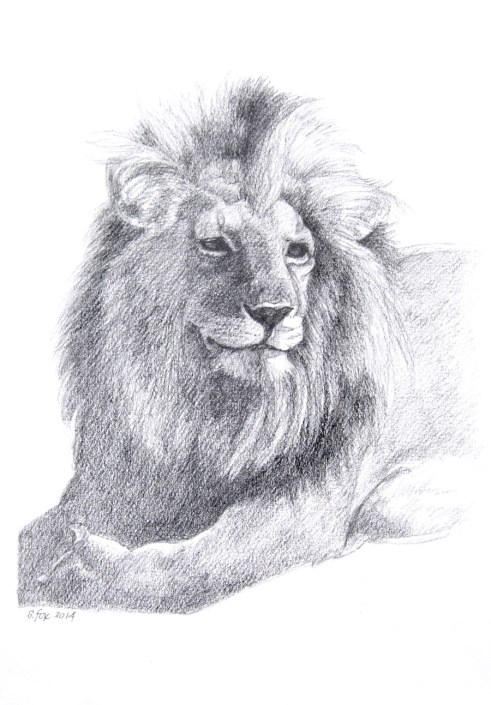
“African Lion” 13.5×9.5″ graphite on paper

In other news, my drawing “Relaxed (African Lion)” has been accepted into the Salmagundi Club‘s historic “Black and White Exhibition”! It was shipped off to New York yesterday.


In The Studio…Experimenting With Water Soluble Pencils And Various Papers

cam-2
Stillman and Birn Beta paper (a little smoother than a cold press watercolor paper)

Every year in the winter, I try to set aside time to review my painting process and experiment with new media and supports, both for painting and drawing. Last year in January I had to swing into action for the “Wildlife Art: Field to Studio” group exhibition at the Flinn Gallery, but after three exhibitions in four years I currently don’t have one scheduled for 2017 so have time to mess about and explore ways to improve my work.

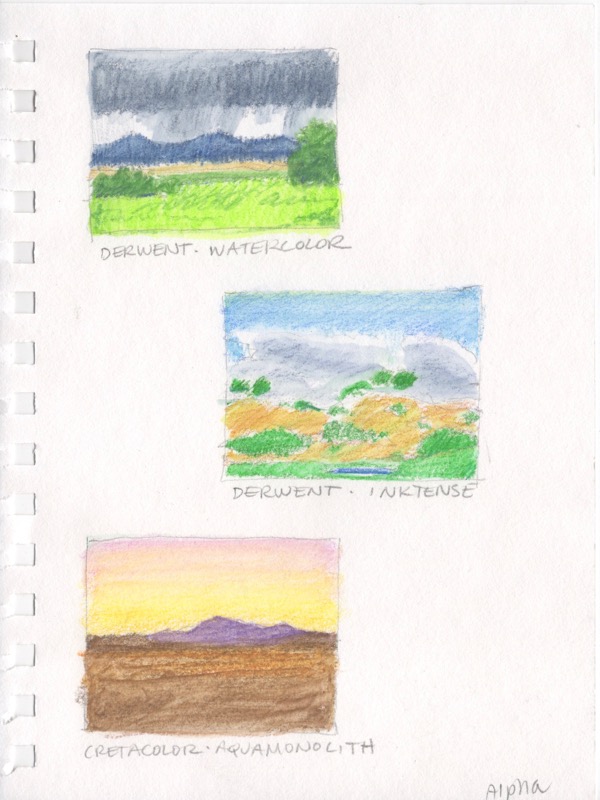
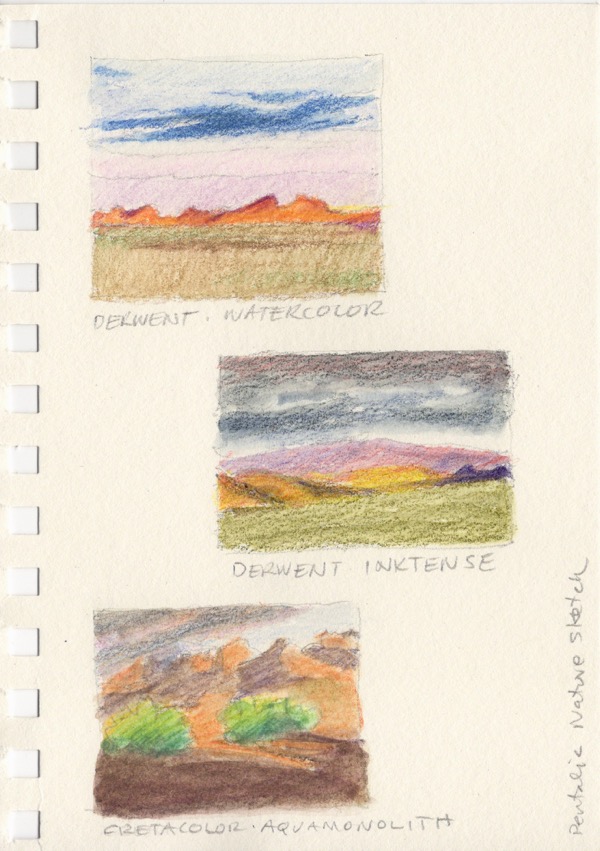
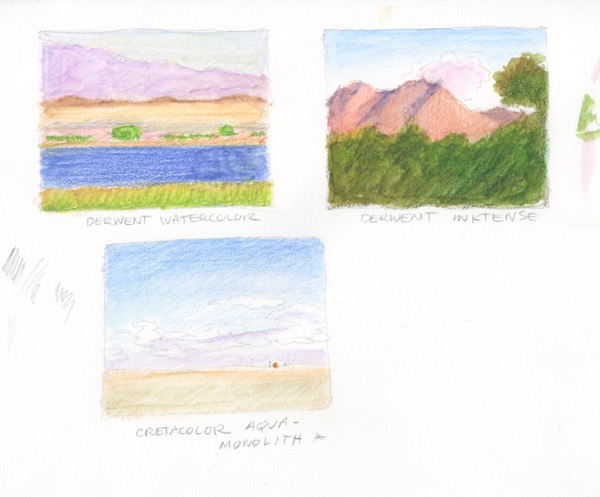
I purchased a set of Cretacolor AquaMonolith pencils last year, took them to Mongolia without much of a pre-departure tryout and wasn’t happy with what I did. Tough to test drive a new media in field conditions. I also had some Derwent Inktense water soluble pencils  that had been sitting around for a year or so with no time to play with them. I’d been using their regular water soluble colored pencils on and off for years. So a couple of weeks ago I sat down with all three and a bunch of different papers.

Cretacolor is an Austrian company. I’d already started to use their Monolith graphite pencils and I like them a lot. I use them now for my finished drawings. They and the AquaMonoliths are woodless graphite with a lacquer coating. The difference is that the latter are color and water soluble. Derwent is an English company, based in the Lake District, which was founded in 1832. Wood pencils were invented by them and we’ve visited the factory during a past trip to England (a definite stop for artists if you’re there). I’ve used a variety of their products for years, including their wood drawing pencils.

Once I laid down the colors I went back with a waterbrush (more on those in a future post) and did some blending. It’s a “hit it and leave it” for the most part. On most of the papers continuing to wet and push the color around makes a mess. I experimented with how hard and thick to lay on the strokes and found that I liked leaving them visible.

I’m posting them in the reverse order that I did them because of how Google and other sites will choose the header image and I’d like the “good ones” to show up. Fingers crossed. :0)

None of them are more than about 2×2″, so thumbnail size.

cam-3
Stillman and Birn Alpha paper (slight texture, a little on the thin side for adding water, but it didn’t buckle at all)

I had fun getting the rain effect in the top sketch.

cam-4
Stillman and Birn Zeta paper (smooth, almost a plate finish)

The pencils worked, but I like them better on a paper with more tooth.

cam-1
Pentalic Nature Sketch sketchbook (not thrilled with this first try, but I otherwise really like the paper so will experiment further; it does have some tooth and is off-white)

I’ve been using the Pentalic Nature Sketch sketchbooks for a couple of years, carrying a small one around with me and also to Mongolia. They’re reasonably priced, come in a variety of sizes including a 6×12″ which I like a lot. The paper is acid free and 25% cotton and really is multimedia, including watercolor if you don’t go too heavy on the washes.

cam-5
Strathmore 400 vellum bristol

I’ve been using this paper, along with Rives BFK, for my finished drawings that I frame for sale at my local gallery, Strawberry Rock Gallery in Trinidad, California. While it has a bit of tooth, it was the least successful and is off the list for now, but I really like it with the Monolith pencils.

Tales From The Field: “The Yak”


1-yakHappy New Year! I’m going to change things up on the blog for the coming year, my tenth as a blogger. I’ve been lucky enough to do a lot of traveling over the years to a variety of destinations. And do I have stories? I certainly do. So the first Friday of each month will be “Tales from the Field”, which will include Mongolia, of course, but also Kenya, Canada, Europe and the US. Then I plan to do a post on whatever I’ve got cooking in the studio or on location, followed the next week with one of useful tips and information on painting and drawing. The fourth Friday will be a “gallimauphry” post, a great medieval term for “this and that”… announcements, special offers, whatever has caught my fancy. There may be posts in between for news that just can’t wait.

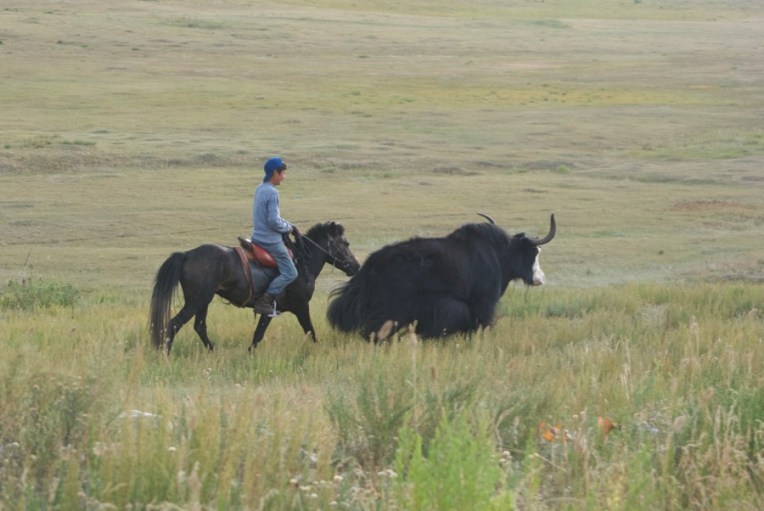
To start off Tales from the Field, here’s the story of my encounter with a yak in the northern mountains of Mongolia….

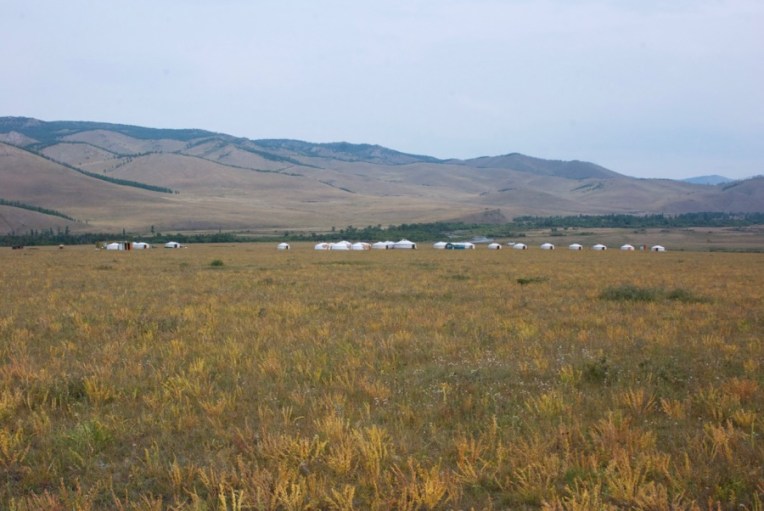
I was on my way to Jalman Meadows, a Nomadic Journeys ger camp located in the Han Hentii Strictly Protected Area at the northern reaches of the Tuul Gol (River), which wends its way down through Ulaanbaatar and on west.

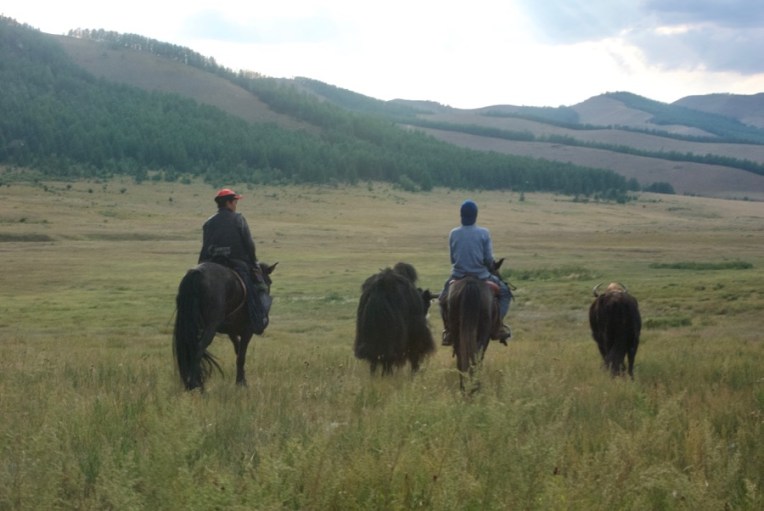
We had left the pavement behind and were traveling on earth roads through the beautiful late summer countryside, passing local herders and their livestock, along with their white gers, the quintessential Mongolian landscape. Driving along a slope overlooking a valley we came upon (top photo) these two young men and a couple of yaks, both of which appeared to be gelded yak/cow crosses, which are stronger for work than pure yaks. The intact bulls have their horns removed because otherwise they would be too dangerous to handle.

2-yak

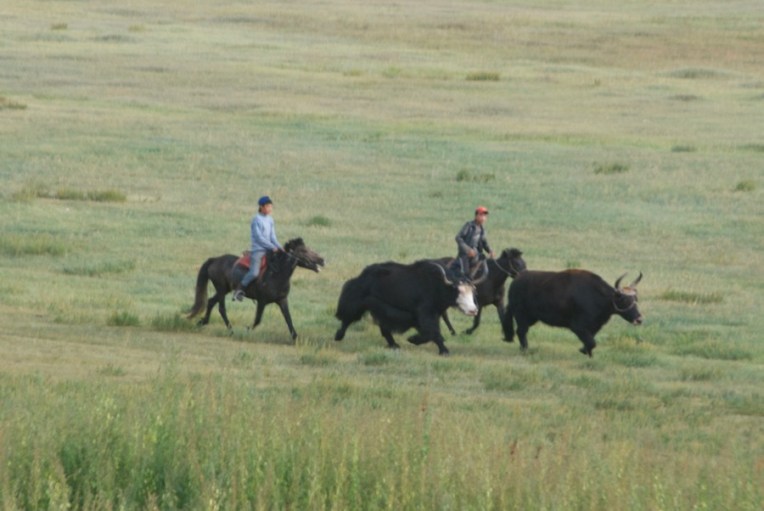
They were keeping a careful eye on their charges.

3-yak

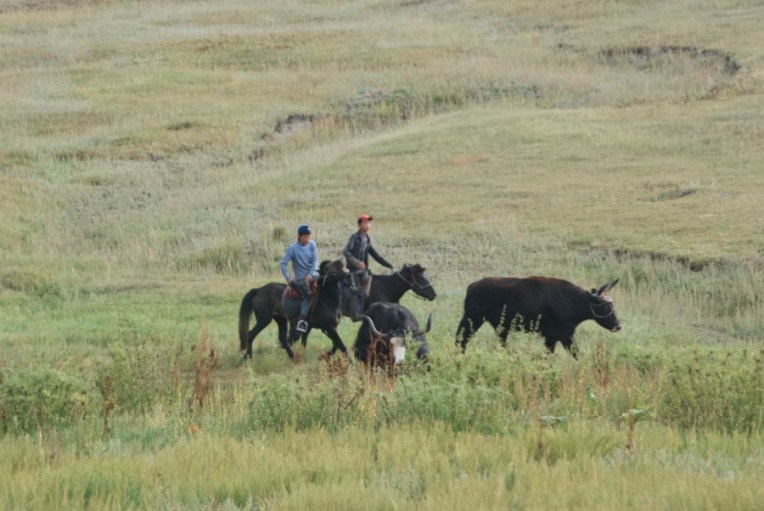
But clearly experienced in moving these big beasts along. The horses were as phlegmatic about it as they always are.

4-yak

We stopped while they crossed the road in front of us. I was sitting in the front seat of the Land Cruiser on the left side, the car being right-hand drive, and shooting photos through the windshield, but was able to have the window down next to me.

5-yak

The boys and their charges moved off down towards the valley floor and we drove on.

6-yak

There was a summer rain storm coming in and the light was spectacular at times. While we were stopped the riders and yaks caught up with us.

7-yak

Got more photos of them passing us, although this one was a little blurry, it was the best composed. Then things changed in a hurry…

8-yak

The bigger of the two yaks suddenly turned towards the car.

10-yak

And started to charge towards it, aimed right at the passenger door. The boy had been smiling, but became quite serious. I wasn’t going anywhere.

11-yak

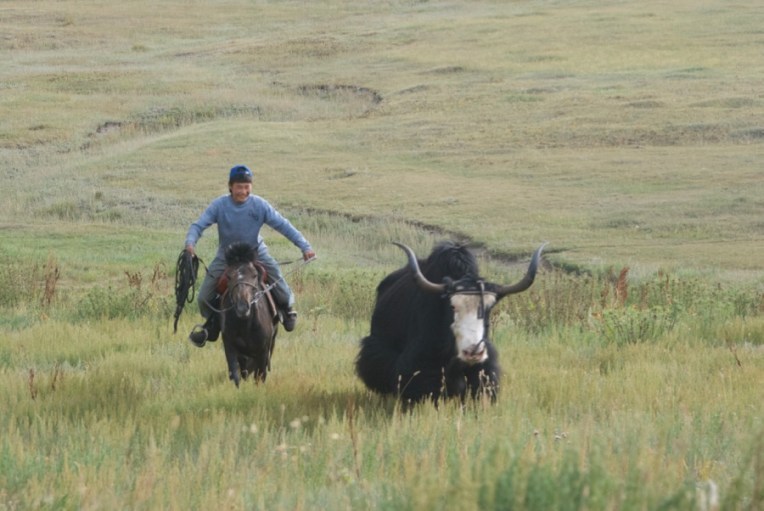
Now he needed to really get his horse moving to catch up. I remember thinking that there was going to be collision with the car door and I would be looking right at those horns from a very, very short distance.

12-yak

But he got the yak turning away and started to grin again. At this point he was about 15′ from the car. I and the driver exhaled. There had been no time for him to start the engine and no place to drive to anyway. Best to just stay put, stay quiet and not move. So I just kept, rather fatalistically, I suppose, taking pictures out the open window.

13-yak

The yak was now turned away from the car and going in the right direction.

14-yak

And the rider herded him towards the other boy and his charge.

15-yak

Our yak encounter over, the herders moved their charges on down the valley with a pretty good story to tell when they got home.

jalman-meadows

And we drove on to our destination, Jalman Meadows, set high on a bluff overlooking the river and the mountains. You can see photos of my stay there on a previous blog post here.

NEW! My Gallery Of Original Drawings For Sale!

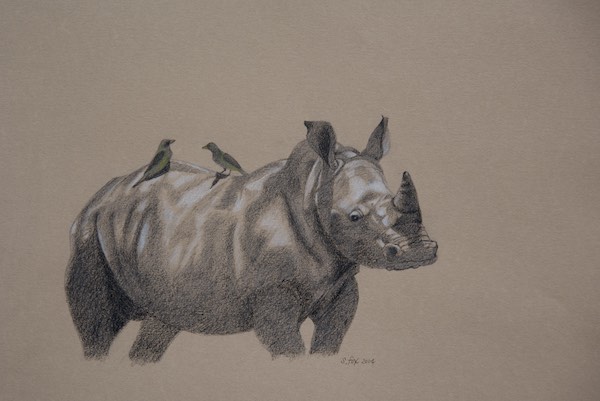
baby-rhino
“Baby White Rhino” colored pencil on toned paper $150

Just in time for the New Year….affordable original art by Susan Fox, Signature Member of the Society of Animals Artists, Juried Member of the American Academy of Equine Art and Artist Member of the Salmagundi Club. I’ll be adding more every month. They are one-of-a-kind originals so once they’re sold they’re gone.

You can view them here.

If there’s a particular species you’re interested in, let me know. I have many more drawings available and can send you an image on request if I have something.

Wishing you a very Happy New Year!


“The 12 Days Of Drawings Sale” 12- LAST DAY!

bobcat

Don’t miss out on these one-of-a-kind original drawings!

“Bobcat” This bobcat posed nicely for me when I was at the Arizona Sonora Desert Museum a few years ago for the opening of an invitational exhibition I was participating in, “The Sea of Cortez”. You can see the paintings I created for that show here.

14.5×9.5″ graphite on paper

$175

Payment accepted through PayPal (within 24 hours or piece will be made available again). US shipping is included, as is sales tax when applicable.

To purchase: Leave a comment with “Sold”. I will reply and request mailing information. All work subject to prior sale.

On Monday, January 2, all unsold drawings will be posted on a website page gallery.